
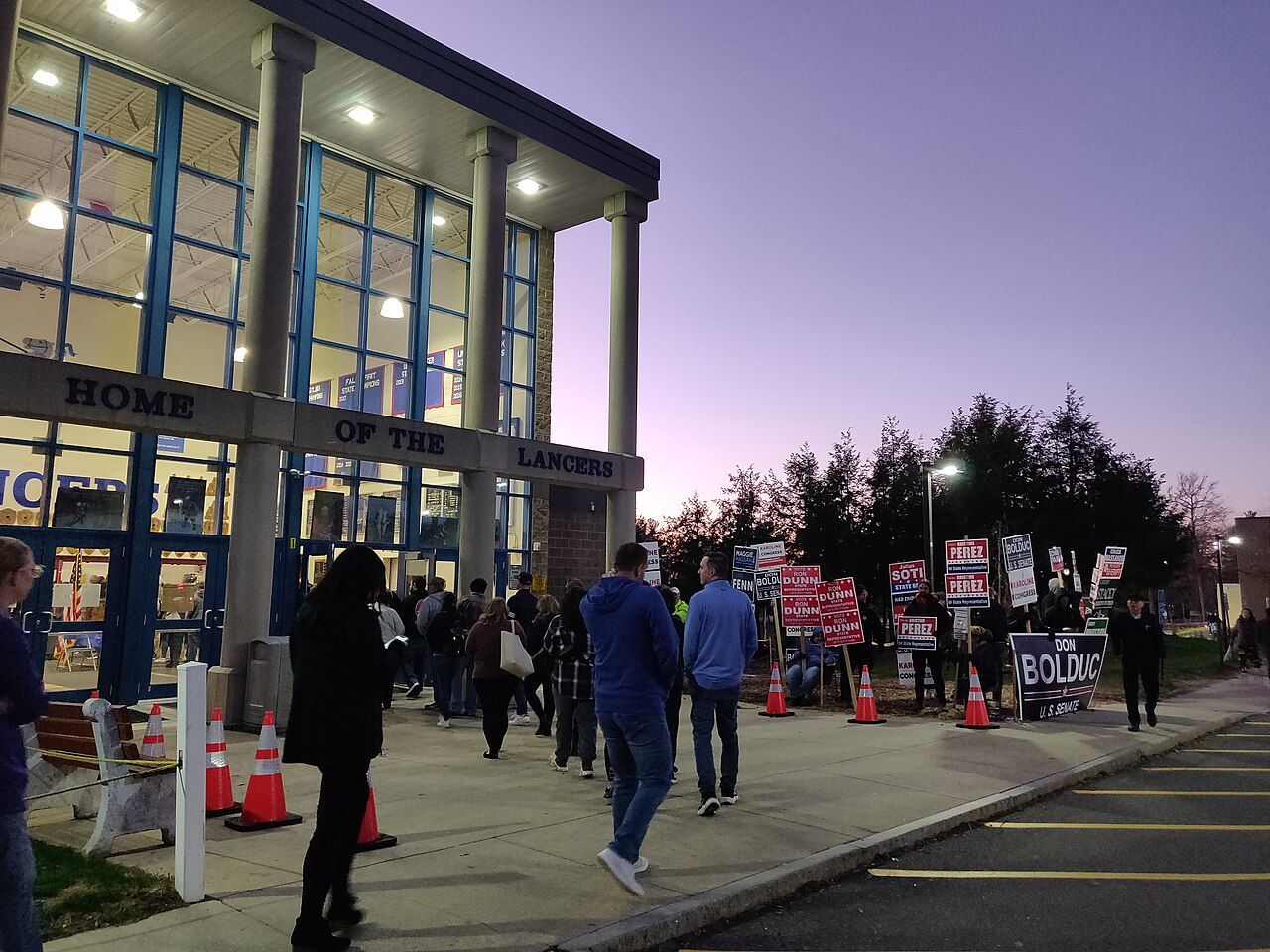

It is Election Day, November 3, 2026, and no results are in yet. This is a map of what gun owners have riding on today's ballots, state by state: the measures voters decide directly, the Senate and governor races where firearm policy is a live issue, and the legislatures that will write the next round of laws. I am not telling you who to vote for. I am telling you what your ballot touches.
A note on sourcing. Several of the best summaries come from advocacy groups on both sides, so I attribute their claims and keep the spending numbers tied to the outlet that reported them. Sources are at the bottom.
The short version, by state
- Arkansas: Issue 2 would put a fundamental right to keep and bear arms into Article 2 of the state constitution.
- Massachusetts: Question 9 asks voters to keep or repeal the state's 2024 firearms law.
- Colorado: a constitutional right to hunt, fish and harvest wildlife is on the ballot.
- Idaho: a non-binding vote on the official state gun.
- Michigan: a U.S. Senate seat, the governor's office and all 148 legislative seats.
- Texas: a U.S. Senate race with heavy NRA spending, plus a closely watched House seat.
- Ohio, Iowa, Pennsylvania, Arizona, California, Florida, Virginia, New Jersey: House and Senate races where outside gun-policy groups have put in six and seven figures.
Measures voters decide directly
Arkansas Issue 2
This is a legislatively referred constitutional amendment. The Second Amendment Foundation's weekly legislative report describes it as extending the state's arms guarantee to lawful hunting, recreation and other lawful purposes, including ammunition, accessories and components, and calling the right "natural, fundamental, and individual." If voters approve it, it takes effect January 1, 2027. State constitutional text like this is what Arkansas courts read first when a future restriction gets challenged, which is why these amendments matter even in states with few restrictions on the books. See where Arkansas stands today on our Arkansas gun laws page.
Massachusetts Question 9
Voters decide whether to uphold a 2024 law signed by Gov. Maura Healey (HB 4885). As reported by The Reload, it bans so-called ghost guns, raises the minimum age to own a semi-automatic firearm to 21, and expands who can petition for a red flag order. The Second Amendment Foundation's report adds privately made firearms and serialization, licensing, prohibited weapons and devices, and carry in specified locations. A "yes" vote keeps the law and a "no" vote repeals it. Our Massachusetts page tracks the current rules.
Colorado and Idaho
Colorado voters face a citizen-initiated right to hunt and fish. Ballotpedia says it qualified August 20, 2026; The Reload lists it as Amendment 83 and says it would require the state to prefer hunting and fishing over other wildlife preservation and control. Idaho's ballot has a lighter question: pick the official state gun from six options (Winchester Model 1894, Winchester Model 1873, Colt Single Action Army, M1 Garand, Colt M1911 or Remington Model 700). It was created by House Bill 932, signed April 2, 2026, and the result is non-binding because the legislature must vote again to ratify it.
Senate and governor races
Michigan
Michigan has the most at stake in one place. The U.S. Senate race is Democrat Abdul El-Sayed against Republican Mike Rogers. The governor's race is Democrat Jocelyn Benson against Republican John James. All 148 legislative seats are up, and the NSSF notes Republicans hold the House 58–52 while Democrats hold the Senate 20–18. A four-seat net gain would flip the House; a two-seat gain would flip the Senate.
The NSSF, a firearm industry trade group, points to recommendations from Gov. Whitmer's Gun Violence Prevention Task Force: an "assault weapon" ban, a ban on "large capacity" magazines, a purchase age of 21, waiting periods and state retailer licensing. The NSSF says these are recommendations, not enacted law, and that the task force was reestablished in June 2026. It also reports that James has committed to signing permitless concealed carry, a claim it attributes to the Michigan Coalition for Responsible Gun Owners' PAC. On the other side, Benson is endorsed by Giffords PAC, Everytown and Moms Demand Action. The Reload reports Giffords has spent more than $1 million opposing Rogers and the NRA has spent over $104,000 on mail supporting him.
Texas
Republican Ken Paxton faces Democrat James Talarico for the U.S. Senate. Per The Reload, Paxton opposes federal, state and local gun-control measures, while Talarico says he supports the Second Amendment and backs measures to "stop crime before it happens." The Reload reports the NRA has spent $495,380 on TV and radio ads against Talarico, plus more than $252,000 boosting Paxton. In Congressional District 23, "guntuber" Brandon Herrera (R), who backs national concealed carry reciprocity and opposes red flag laws, is in a race The Reload says is tied in the only recent poll, which a Democratic super PAC sponsored. Read the Texas gun laws page.
Ohio, Iowa and South Carolina
In Ohio's Senate race between Sherrod Brown (D) and Jon Husted (R), The Reload reports the NRA spent nearly $179,000 on text ads and over $300,000 on mail for Husted. In Iowa, it reports $19,684 from the NRA for Republican Ashley Hinson in her Senate race against Democrat Josh Turek. In South Carolina, Everytown has endorsed Democrat Dr. Annie Andrews in the Senate race.
Where the outside money is going
The Reload's October 29 reporting says gun-control groups hold a large spending advantage this cycle and describes the NRA's political operation as sharply diminished. Its House figures:
- Iowa: Everytown has spent $2.46 million in District 1, more than $930,000 in District 3 and $450,000 in District 2.
- California District 22: Giffords has spent over $1.8 million.
- Arizona District 6: Everytown, $1.5 million.
- Pennsylvania District 8: Everytown, $1.4 million, and Giffords, more than $860,000.
- Michigan District 10: Everytown, about $2 million, and Giffords about $495,000 for Christina Hines and $472,000 against Michael Bouchard.
- Virginia District 2: Giffords, more than $920,000.
- Florida District 13: Giffords, about $857,000.
- New Jersey District 7: Giffords, more than $378,400.
Treat these as snapshots as of that date. Totals change daily.
The NFA and your state's suppressor and SBR laws
This is the sleeper issue of the cycle. The federal $200 tax on suppressors, short-barreled rifles, short-barreled shotguns and Any Other Weapons went to $0 on January 1, 2026, under the One Big Beautiful Bill Act signed July 4, 2025. Registration, Form 1 and Form 4 paperwork, fingerprints and background checks still apply, and machine guns and destructive devices are still taxed at $200, according to FastBound's guide.
The Second Amendment Foundation's report says state attorneys general are now sorting out how state laws tied to the federal registration system fit with those changes. It points to Ohio AG Andy Wilson, who asked lawmakers on October 23 to reconcile state restrictions with federal changes; Mississippi AG Lynn Fitch, who says the state's suppressor statute allows voluntary Form 4 submission under current federal guidance but warns a future administration could reverse that; Montana, where legislators are pursuing repeal of restrictions tied to the federal process; and Alaska, where officials want lawmakers to settle the uncertainty. If you own or want a can or an SBR, today's legislative races in those states decide how clean the rules end up. Track wait times on our NFA tracker.
Local rules
On October 28, Portland, Oregon passed Ordinance 192245 by a 12–0 vote. According to the SAF report, it removes the concealed handgun license affirmative defense in designated city-owned buildings used for official government meetings, under authority from Oregon's SB 243. A designation only takes effect after signage and online notice are posted. It is a good reminder that carry rules change at the city level, not just the state level.
What happens after the polls close
- Arkansas: if Issue 2 passes, it takes effect January 1, 2027.
- Massachusetts: Question 9 decides whether the 2024 law stands.
- Michigan, New Jersey and Ohio: the SAF report says these legislatures remain in session through December 31, so lame-duck action is possible.
- Senate control: The Reload says Democrats need to gain four seats to take it, several in states Trump won in 2024.
Look up your own state's rules on My State, compare all fifty on All 50 States, and follow the court side on our 2A Cases Radar.
Sources
- The Reload: The Races Gun Owners Should Watch on Tuesday (Oct 29–30, 2026)
- TheGunMag: Grassroots Legislative Report, November 2, 2026
- NSSF: Michigan's 2026 Elections Put Gun Bans and Second Amendment Protections at Stake (Oct 26, 2026; industry advocacy)
- Ballotpedia: Firearms policy ballot measures and 2026 ballot measures
- FastBound: NFA Tax Stamp (2026 Update)
— DJ Cavalcanti, DownRange Founder