Michigan Senate Nominee El-Sayed Mocked Flint Residents in 2016
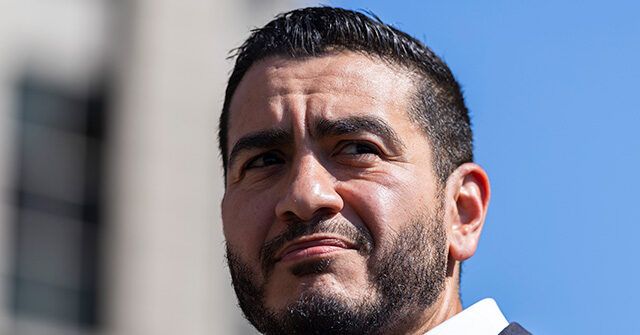
Michigan Democrat Abdul El-Sayed, his party's U.S. Senate nominee, asked a 2016 Boston University audience why anyone would want to live in Flint. The remarks came at a health policy symposium, where he answered a question about relocating residents after the 2014 lead-contaminated water crisis. Flint is a majority-black city. Chuck Ross first surfaced the clip for the Washington Free Beacon, and Breitbart's 2A desk picked it up. El-Sayed, a former Detroit health director, made the comments weeks before a general-election debate with Republican Mike Rogers in a race that could decide which party controls the Senate.
Key Details
The reported comments break down into several specific claims:
- Setting: A 2016 health policy symposium at Boston University, with an audience the outlet described as largely white.
- Topic: Whether Flint residents should be helped to relocate after the city's 2014 lead water crisis.
- The quote: El-Sayed said Flint residents "love Flint," then reacted with a mocking question about why they would stay.
- His own move: He said friends and colleagues questioned his decision to leave Columbia University in New York for Detroit. He said people told him "Detroit of all places," and that Detroit's winters were worse than Flint's.
- Background: He grew up in an affluent Detroit suburb and attended the University of Michigan, Columbia, and Oxford.
- Admission: He told the audience he had "ruined" his family's life by moving to Detroit.
- Property: His financial disclosure lists property in India and the United Arab Emirates. The outlet also reported a home in a Dubai luxury development.
- Rogers attack: El-Sayed has criticized Rogers for buying a Florida home after leaving Congress.
- Mackinac clip: A 2020 documentary clip, posted by The Midwesterner, shows El-Sayed saying "I hate Mackinac so much." He doubled down after it resurfaced, disputing the claim that Mackinac is "the most American place" in Michigan because it bans cars.
- Rogers response: Rogers posted on X: "There's no place like Mackinac," with a heart emoji.
- Flint population: The city has lost 36 percent of its population since 2000. General Motors was founded there.
Background
Flint switched its water source to the Flint River in April 2014 to save money while the city was under emergency management. Officials did not add corrosion control treatment, and lead leached from aging service lines into homes. The crisis became a national scandal, led to criminal charges and civil settlements, and left a lasting mark on the city's trust in government. Detroit has its own history of decline, bankruptcy, and a slow comeback, which El-Sayed has often cited as proof of what urban renewal requires. Mackinac Island sits in the Straits of Mackinac and hosts the governor's summer residence. Its ban on motor vehicles is longstanding, and it draws tourists who ride bicycles and horse-drawn carriages. The Senate seat is open because Debbie Stabenow is not seeking reelection, and the Michigan race is one of the most closely watched contests of the cycle.
Why It Matters for Gun Owners
Michigan gun owners should read this race for what it signals about the next Senate. A Senate majority decides which judges get confirmed, and federal judges decide Second Amendment cases. A nominee who talks down to a city and the people who live there is not likely to be a careful steward of constitutional rights. Michigan residents who carry, hunt, or own firearms in cities like Flint, Detroit, Grand Rapids, and Lansing will feel the policy consequences of whoever wins. Gun owners in urban areas also tend to be the ones who get labeled as the problem in gun policy debates. Before voting, check each candidate's record on firearms bills, concealed carry rules, and judicial nominees. Campaign statements about gun policy often differ from votes cast in office. Those votes are public record, and they're worth checking.
DownRange Analysis
This story has little to do with firearms on its face. Its relevance comes from the politics behind it. The clip is a character issue, and voters can judge it as they see fit. For gun owners, the useful question is what a Senate majority would do with the Second Amendment. The Supreme Court's Bruen decision requires the government to show that a gun regulation matches the nation's historical tradition of firearm regulation. That test pushes judges to examine the history behind every new law, which makes the next round of Senate confirmations important. Gun owners should track where both candidates stand on carry rights, federal firearm bills, and the judges they would support. Register to vote, verify your registration, and ask both campaigns for written positions on gun policy. Words about a city don't say much about a candidate's views on the Second Amendment. The votes and nominations will.