KRISS Vector Dominates Recoil Management Better Than Most Pistol Caliber Carbines
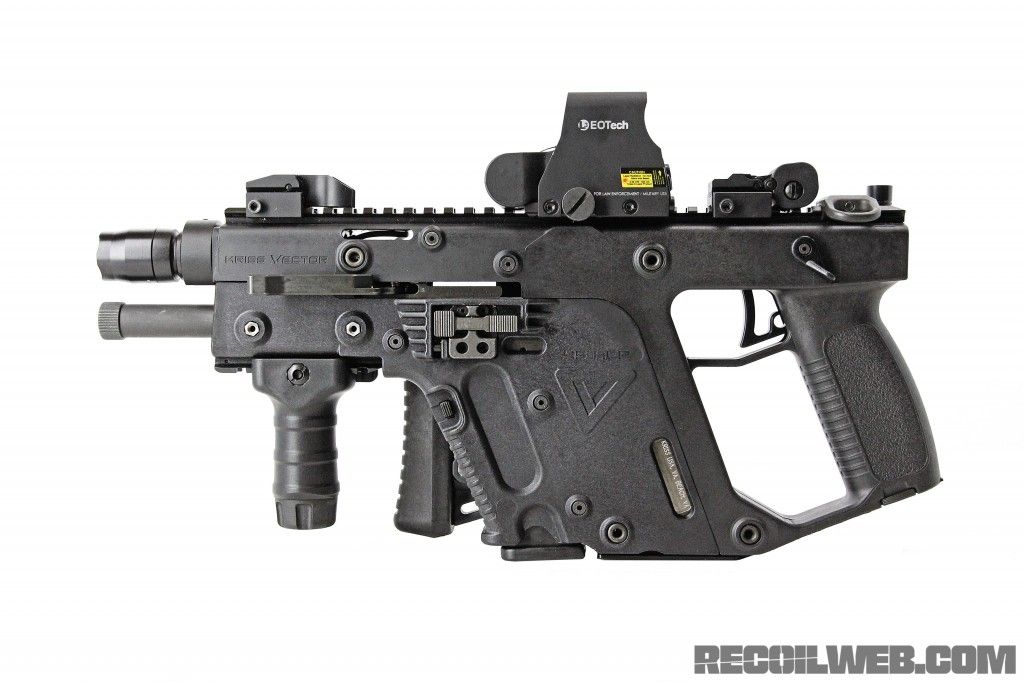
The KRISS Vector platform controls muzzle rise and recoil better than competing .45 ACP and 9mm carbines. That's the hard truth that made this gun worth featuring on RECOIL Magazine's cover in issue #3, and it remains relevant for shooters who prioritize handling over everything else.
The Vector uses a unique Super V recoil mitigation system. This mechanical design redirects energy downward into the magazine well instead of backward into your shoulder. Most shooters notice the difference immediately. Your follow-up shots land faster. Your sight picture stays cleaner.
Current KRISS production focuses on the Vector Gen II platform. The company chambers models in .45 ACP and 9mm Luger. Barrel lengths run 5.5 inches for the pistol configuration and 16 inches for rifle variants. Pricing sits around $1,100 for the 9mm rifle and $1,200 for the .45 ACP model, depending on your dealer and current inventory.
Why It Matters for Gun Owners
Pistol caliber carbines fill a real niche for daily carriers and home defense shooters. You get rifle-length sight radius and barrel length without committing to intermediate cartridge logistics. If you already stock 9mm or .45 ACP ammunition, your Vector runs the same supply chain.
The recoil handling means something. Recoil management directly impacts accuracy during fast strings. It also matters if you're smaller-framed, recovering from injury, or shooting from awkward positions. The Vector doesn't ask your body to absorb energy most carbines pass straight back.
Magazine compatibility varies by model year. Early Vectors ran proprietary magazines. Gen II models now accept standard GLOCK magazines in 9mm configurations. That lowers your total cost of ownership and simplifies logistics across your other firearms.
The platform attracts serious shooters for good reason. Law enforcement agencies tested the Vector. Military special operations evaluated it. Those aren't casual endorsements. Real professionals saw value in the design.
Background
KRISS designed the original Vector to answer a specific problem: full-power rifle cartridges generated too much recoil for some mission profiles. The company engineered the Super V system to control that energy. When they eventually built versions in pistol calibers, the advantage carried over.
The Gen I Vector launched roughly fifteen years ago. It proved the concept worked. Shooters praised reliability and accuracy. Magazine compatibility and ergonomics got refined for Gen II production.
KRISS eventually expanded beyond the Vector platform. They've built different receiver types and adapted the recoil system to various configurations. But the Vector remains their signature product. It represents their core engineering philosophy: mechanical solutions to ballistic physics.
That RECOIL Magazine cover wasn't a publicity stunt. The gun earned it through performance. Early adopters recognized something different. The design solved real problems that shooters faced every day.
DownRange Bottom Line
The KRISS Vector isn't the newest thing on the market. But newer doesn't mean better, and it never has. This gun controls recoil better than most options at the price point. It runs affordable ammunition. It accepts standard magazines in the 9mm model.
Buy one if you shoot a lot and want less felt recoil. Buy one if you're building a home defense battery around 9mm or .45 ACP. Buy one if you respect engineering that solves actual problems instead of chasing trends.
The Vector proves that a gun from ten years ago still outperforms plenty of current competition. Sometimes the best choice isn't the latest choice.