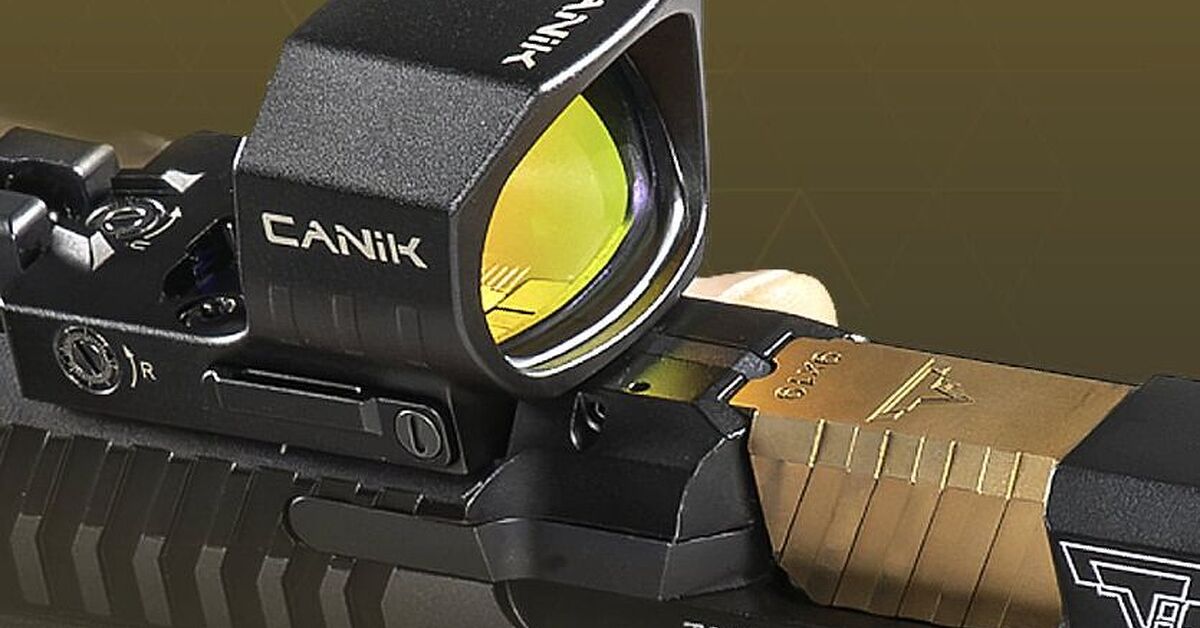
Canik's Phantom Red Dot Seals the Emitter and Fits Standard Mounts
Canik USA just launched four pistol red dots under a new CANIK OPTICS banner, split across two families. The ONYX family uses an open emitter. The PHANTOM family seals its emitter behind glass. The lineup runs from a micro carry sight to a competition window to a full-size duty optic, and every model uses an existing mounting footprint: either the Shield RMSc pattern or the Trijicon RMR pattern. The Firearm Blog covered the launch on October 28, 2026. Adam Ruonala, Canik USA's VP of Sales and Marketing, says customers asked for optics built to the same standard as Canik's pistols, and he wants the line to serve shooters beyond Canik owners.
Key Details
The four models break down this way:
- ONYXc: A micro sight aimed at concealed carry and defensive pistols. It uses an RMSc footprint and adds auto-brightness.
- ONYX XL: A competition and performance reflex sight with an oversized viewing window. It uses a Trijicon RMR footprint and trades concealment for a larger sight picture.
- PHANTOMc: A compact sight with an enclosed emitter. It uses an RMSc footprint, the same pattern as the ONYXc.
- PHANTOM full-size: A sealed-emitter optic on an RMR footprint. It adds solar assist, an external light sensor, and a backup rear sight.
The ONYX series and both PHANTOM models carry a rating of up to 50,000 hours of battery life and IP67 protection. The enclosed emitter keeps rain, snow, lint, and gun oil out of the optic. Those contaminants cause most failures in carry optics. The source does not list MSRPs for any of the four models. A reader comment in the post claimed the PHANTOM sells for less than half the price of a Trijicon RCR. Treat that as an unverified claim until Canik publishes a price.
Background
Canik built its reputation by selling pistols that offered features buyers normally pay more for elsewhere. The company has since expanded into accessories, including suppressors, and now into optics. The red dot entry shows the same pattern: a crowded category, a value pitch, and a focus on specs that match premium competitors.
Enclosed-emitter sights have long carried a price premium. Open-emitter designs have dominated the budget tier because they cost less to build and seal. Sealing the emitter adds glass and gaskets, and that cost usually shows up in the price tag. Canik's move to offer a sealed design on a standard footprint targets the price gap between those two tiers.
Footprints matter as much as optics. The Trijicon RMR pattern became one of the most common mounting standards for pistol optics. The Shield RMSc pattern serves the compact end of the market. Gun makers that design proprietary cuts lock buyers into one optic brand. Canik avoided that trap by using both established patterns.
Why It Matters for Gun Owners
If you carry a pistol with an RMSc or RMR cut, you have more options now. You can pick a sealed PHANTOM or an open ONYX without buying a new slide. Check your pistol's cut before you buy, because a footprint match does not guarantee a fit. Some slides use milled cuts with tolerances that vary between manufacturers. Verify the match with the actual optic and plate before you trust it with a carry gun.
For concealed carry, the sealed PHANTOMc deserves a closer look. An enclosed emitter reduces the risk of a lens or emitter fouling from lint, sweat, and oil that build up in a holster. If you carry in a Kydex or leather holster, run the optic through a few weeks of daily carry before you bet your life on it. Watch for moisture fogging, battery contact corrosion, and auto-brightness behavior under sunlight and low light.
Battery life claims deserve skepticism until independent testing confirms them. A 50,000-hour rating sounds impressive, but it depends on the reticle setting and the brightness mode. Check the battery replacement procedure, and confirm that the battery door seals properly.
DownRange Analysis
Red dots fall outside the Second Amendment regulatory fight, so Bruen does not apply here. The real pressure comes from the market. Every new sealed optic on a standard footprint pushes the price floor down for competitors. Canik is betting that buyers will trade brand loyalty for specs and price. That bet works only if the optics hold up under real carry and real rain.
Here is what a gun owner should do right now. Measure your slide cut and confirm the footprint. Ask Canik for an MSRP and a warranty term before you buy. Wait for independent durability tests, especially on the sealed PHANTOM line. If you already run a RMSc or RMR optic, compare the battery specs and the emitter design, then decide whether the sealed version justifies the cost. The PHANTOMc looks like the most interesting carry option in the lineup, but the proof will come from months of use, not a launch post.