Lafayette Homeowner Charged After Shooting Teen Who Threw Lawn Chair
Robert Loesch, 52, now faces attempted second-degree murder and first-degree assault charges after he shot 17-year-old Riley Murray outside his Lafayette, Colorado home on Oct. 1. The teen never entered the house. According to the arrest affidavit, Murray tried the storm door, banged on the door and a window, and then backed away and picked up a lawn chair. Loesch unlocked the door, stepped outside holding a handgun, and fired twice. Prosecutors now have to prove that stepping outside was not a reasonable act of self-defense. Loesch posted a $25,000 bond. The charges are allegations, and he is presumed innocent.
Key Details
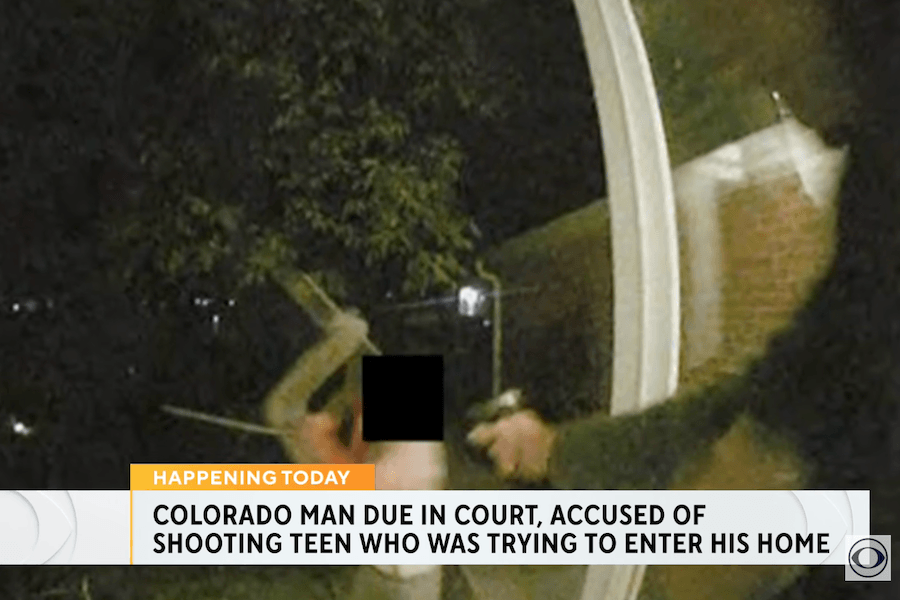
Police responded to multiple calls shortly after 10 p.m. about a disturbance along Sidon Circle. Witnesses described Murray as yelling, speaking incoherently and appearing intoxicated. Doorbell-camera footage cited in the affidavit reportedly shows the following sequence:
- Murray attempts to open the storm door and bangs on the door and a window.
- Loesch retrieves a Kahr PM9, a compact 9mm pistol, and aims a red laser at Murray from inside the house.
- Murray moves away from the entrance and picks up a lawn chair.
- Loesch opens the locked door, steps outside and fires. He blocks the thrown chair with his arm and fires again.
- Investigators recovered one bullet from the chair. The second round struck Murray in the abdomen.
- Loesch orders the wounded teen to stay still, then places a foot on Murray's hand while pointing the gun at his back.
The affidavit lists serious injuries to Murray's bowel, spine and kidney. His mother told CBS Colorado that he spent time in intensive care, underwent two surgeries and could remain hospitalized for two or three months. She said he might never walk again. Police arrested Loesch two days after the shooting, following a review of witness statements and video. His release conditions bar him from possessing weapons. Loesch told investigators that Murray's behavior frightened him and called the shooting a 'reactionary moment.' The affidavit also says he kept a standard ball round in the chamber, intended as a warning shot, with hollow points in the magazine.
Background
Colorado's Make My Day statute gives occupants broad legal protection when someone unlawfully enters an occupied dwelling. The law is narrower than many gun owners assume. It requires an unlawful entry. The occupant must also reasonably believe the intruder committed or intended another crime and might use physical force. The statute does not cover a threat that stays on the porch or at the door. CBS Colorado legal analyst Raj Chohan said the distinction likely places this shooting outside those protections. That does not end the self-defense question. Under Colorado's general self-defense law, the defense would argue that a thrown lawn chair posed an immediate threat of serious injury. Prosecutors would argue that Loesch created the confrontation by opening the door and stepping into the yard.
The U.S. Supreme Court's 2022 decision in New York State Rifle & Pistol Association v. Bruen established a text-and-history test for evaluating firearms restrictions. Bruen dealt with public carry licensing, not castle doctrine or the duty to retreat. Its test has shaped how courts review gun laws, but it does not decide whether a particular shooting was justified. Those questions still go to state law and to juries.
Why It Matters for Gun Owners
Every Colorado gun owner with a home defense firearm should understand where the statute's protection stops. A closed door protects you only while you stay behind it. The moment you open that door and step into a yard, a prosecutor may frame your actions as a choice rather than a response. Your home protection law does not travel with you across the threshold.
The warning-shot detail carries its own risk. Loesch reportedly loaded a ball round first with the intent to fire a warning shot. Prosecutors may argue that shows he was willing to fire at a person before the threat was clear, or that a warning shot in a residential neighborhood created its own danger. Gun owners in every state should treat any plan to fire a warning shot in a residential area as a legal liability, not a tactic.
Doorbell cameras now record the first minutes of nearly every home confrontation. That footage helped police make the case here, and it will likely shape both the criminal and civil cases. Assume your camera will be the most important witness in any incident at your door. Talk to a lawyer who handles self-defense cases before you speak with investigators.
DownRange Analysis
Bruen does not settle this case, and that matters. The Second Amendment protects the right to keep and bear arms, but it does not protect a shooting from state homicide and assault law. Colorado prosecutors must show that Loesch's use of deadly force was not justified under Colorado law. The defense has a real argument. A lawn chair thrown at close range can cause serious harm, and a homeowner facing a disturbed, erratic person at the door does not get to wait for the first blow. Still, the decision to unlock the door and step outside will carry most of the weight.
Here is what a gun owner should do right now. Learn your state's exact castle doctrine language, including what counts as entry and what triggers the right to use deadly force. Practice retreating to a locked room and calling 911 instead of confronting the threat. Store your firearm and ammunition with a plan that keeps you behind a barrier until police arrive. Keep your trigger finger off the gun until you have a clear target and a clear need to shoot. The gun is a last resort. The door is your first line of defense.