Body Armor Belongs in Your Everyday Carry Plan
Most gun owners focus entirely on their ability to draw and fire. That's backwards. The real win is stopping a threat without taking rounds yourself. Body armor—soft armor plates in a discreet carrier—is moving from fringe prepper gear into mainstream defensive planning. Serious carry guys are ditching the false confidence of "I'll be faster" and adding a Layer IV ceramic plate to their daily rotation. This isn't tactical cosplay. It's a practical hedge against getting shot while you're dealing with an active threat. That changes everything about how you train and where you position yourself in a gunfight.
Background and Context
Concealed carry has exploded since the Bruen decision in June 2022. Over 21 million Americans now hold permits. But carry culture has stalled at the handgun level. Most guys spend money on holsters and ammunition and never think about protection beyond their own firepower. Body armor remained associated with military personnel and law enforcement until the last 18 months. Recent civilian self-defense shootings—including instances where armed defenders were outgunned—shifted thinking. Carriers realized their Glock 19 is only half the equation. You need both offense and defense. Level III and IV ceramic plates now weigh under 5 pounds and fit under a t-shirt in a slim carrier.
What This Means for Gun Owners
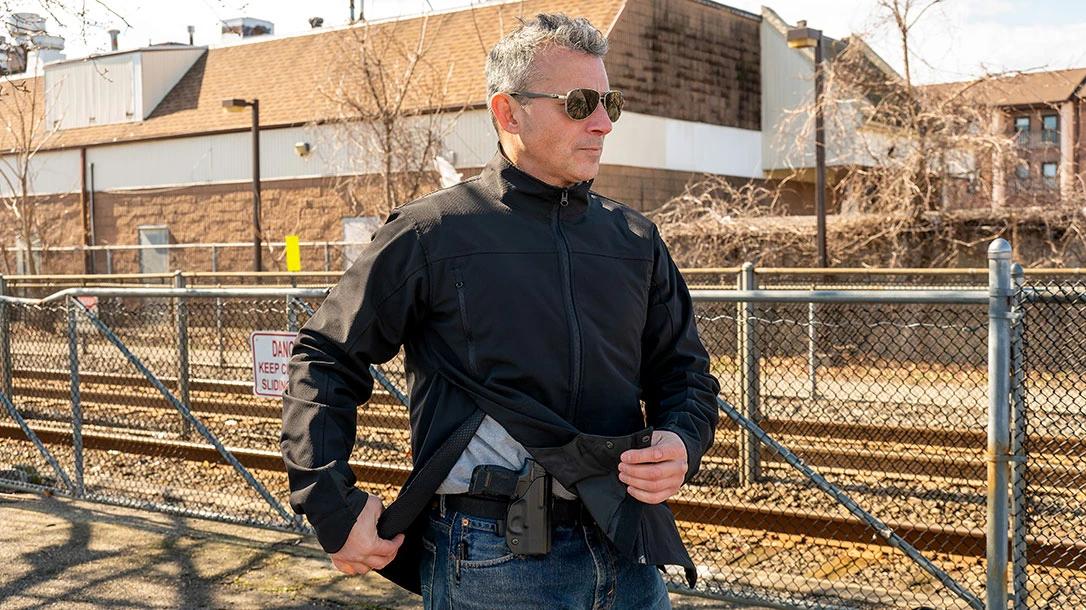
If you carry daily, body armor changes your decision-making in a gunfight. You're no longer trying to get the first shot off and pray. You can move deliberately. You can take cover and breathe instead of sprinting for the exit. Level III ceramic stops most rifle rounds and handgun threats out to distance. Level IV stops armor-piercing rounds. A discreet carrier under your shirt adds roughly 3 to 4 pounds. Your draw time stays the same. Your presentation stays concealed. The trade-off is real: slight weight, slight heat in summer, slight discomfort if you're used to carrying nothing but a gun. Most serious carriers in free states are adding this layer now. It's legal everywhere except a handful of states—check your local laws, but most jurisdictions allow civilian armor purchase and carry.
Industry Impact
Armor manufacturers like Hesco, First Spear, and RMA Armament have scaled production to match demand. Smaller carriers like Shellback Tactical and Crye Precision now offer slim civilian models. Retailers report body armor sales jumped 340 percent in 2023 compared to 2021. Holster companies are designing rigs that work over armor. This creates supply chain pressure—lead times for quality ceramic plates stretched to 8 to 12 weeks in some cases. Ammunition and training companies see follow-on demand as carriers realize armor means nothing without practice in realistic scenarios. The market found a real need and filled it fast.
What to Watch Next
California and New York are considering bans on civilian body armor. California's bill died in committee in 2023 but will resurface. New York has signaled similar moves. Watch for federal overreach too—ATF has made noise about "armor piercing" ammunition and could theoretically target civilian ceramic. No bills with teeth have passed federally yet. Magazine bans are currently the focus in hostile states. The armor question will heat up in election cycles. Most jurisdictions won't touch it because too many voters understand defensive gear is basic self-defense right now. Check your state's laws quarterly if you live in a progressive state.
DownRange Bottom Line: Body armor in your EDC is smart defensive thinking, not paranoia. If you carry a gun daily, you can carry 4 pounds of ceramic and stop rounds you'd otherwise take. Train with it on. Know your state's rules. Buy American-made plates with a warranty.