Senate Democrats Want DOJ to Keep Blocking Handgun Sales to 18-Year-Olds
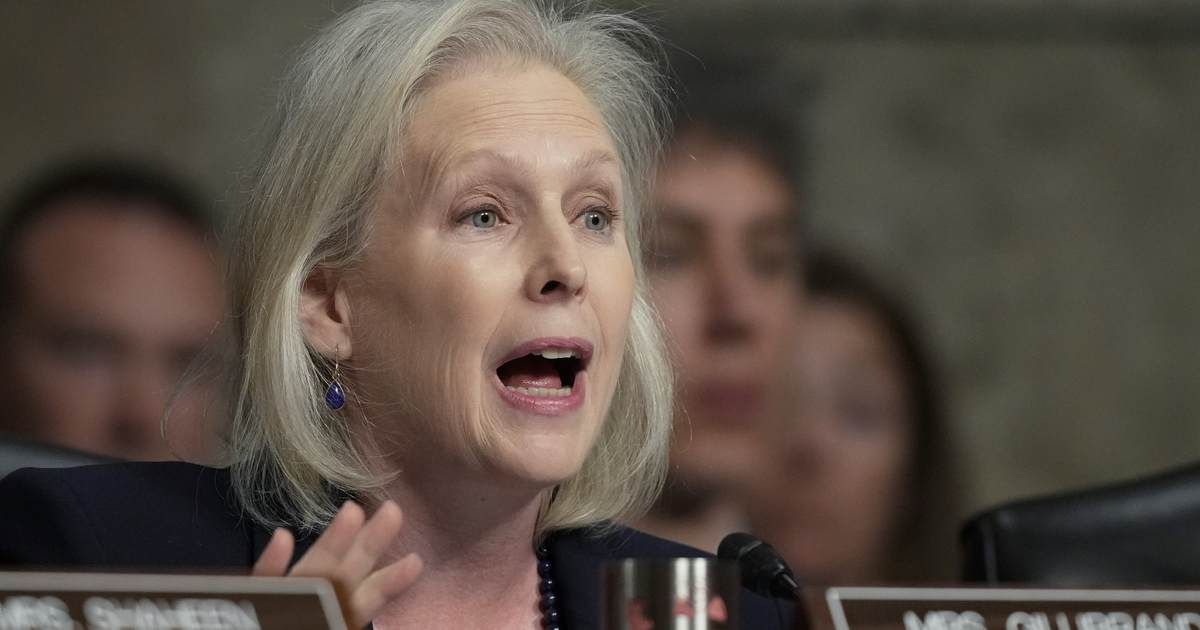
Twenty Democratic senators are pressing the Justice Department to keep enforcing the federal ban on commercial handgun sales to adults under 21. New York Senator Kirsten Gillibrand led the letter. The push comes even though the DOJ's Office of Legal Counsel has concluded that the statute violates the Second Amendment. The senators want federal dealers to keep refusing sales to 18-, 19- and 20-year-olds. They are asking the department to defend a law its own legal office calls unconstitutional. That fight now sits at the intersection of executive enforcement and a split among federal appeals courts.
Key Details
The letter targets the federal prohibition on licensed dealers selling handguns to people under 21. The OLC opinion concluded that this prohibition does not survive Second Amendment scrutiny. Gillibrand argued that the administration "should be doing more to keep guns out of the wrong hands," and called non-enforcement a "direct surrender to the gun lobby." The letter's signers cite public safety as the core reason to keep the ban in place.
- Signatories: 20 Democratic senators, led by Gillibrand (D-NY)
- Target: The federal ban on FFL handgun sales to under-21s
- Executive position: OLC opinion finds the ban unconstitutional
- Judicial status: Federal circuits remain split; the Supreme Court has not resolved the conflict
- Examples cited: Robb Elementary School in Uvalde, Texas (2022), where an 18-year-old killed 19 students and two teachers; shootings in Buffalo, New York; Indianapolis; and Parkland, Florida
The senators also stress that young adults commit violent crime at higher rates than older Americans. They frame the OLC opinion as a policy choice rather than a legal conclusion. Every example they name involved a rifle, not a handgun. That detail matters, because the statute they want enforced covers only handguns.
Background
The federal handgun ban for under-21s sits in 18 U.S.C. 922(b)(1). It bars licensed dealers from selling handguns to people between 18 and 20. Private sales and long guns fall outside that specific federal restriction. Congress wrote the rule in 1968 as part of the Gun Control Act. Since then, the law has been challenged repeatedly. The Fifth Circuit ruled in Reese v. ATF that the ban violates the Second Amendment. The Fourth Circuit reached the opposite result in McCoy v. ATF, upholding the statute. That split is the reason the question keeps landing at the Supreme Court's door.
The Supreme Court decided New York State Rifle & Pistol Association v. Bruen in 2022. Bruen requires the government to show that a gun restriction fits the nation's historical tradition of firearm regulation. In United States v. Rahimi (2024), the Court clarified that courts should read historical analogues at a higher level of generality. Lower courts now fight over whether 1791 treated 18-to-20-year-olds as adults for arms purposes. Some judges point to the age of majority for contracts, which was 21 at the time. Others note that the militia system drew from men 18 and older. The Eleventh Circuit, sitting en banc, upheld Florida's under-21 purchase restrictions in 2025. That ruling gave the senators an argument that the law remains valid in some jurisdictions.
Why It Matters for Gun Owners
Right now, the practical effect falls hardest on 18-to-20-year-olds in states where the federal rule applies. A licensed dealer in Texas, Louisiana or Mississippi operates under a different legal environment than one in Virginia or Florida. The Fifth Circuit covers Texas, Louisiana and Mississippi. The Fourth Circuit covers Virginia, Maryland and the Carolinas. The Eleventh covers Florida, Georgia and Alabama. A young adult can buy a handgun in one federal circuit and get turned away in another. That patchwork makes compliance confusing for dealers and frustrating for buyers.
Gun owners should watch three things. First, watch whether DOJ keeps defending the ban in court or formally stops. Second, watch whether the Supreme Court grants a petition to settle the split. Third, watch state legislatures. Several states have passed their own under-21 laws, and those laws will survive or fall on their own analysis. If you are 18 to 20 and want a handgun for home defense, check your state's rules before you walk into an FFL. If you run a store, get your legal counsel to map your circuit's current case law against your sales policy.
DownRange Analysis
The senators' argument runs on a dangerous logic. They point to a small group of violent offenders and treat the whole age cohort as suspect. Bruen does not allow that shortcut. The Second Amendment protects individuals, and the government must justify restrictions with historical analogues. Violent crime rates by age do not carry that burden. If the logic works for 18-to-20-year-olds, it works for any group with elevated crime or suicide rates. The senators have not explained why the principle stops at 21.
The letter's own examples undercut its case. Every shooter they named used a rifle. A handgun-only ban does nothing to address those cases. That gap exposes the argument as symbolic. Gun owners should not accept symbolic restrictions as public safety policy. What should you do now? Document your state's current rules. If you are a young adult, understand the federal and state layers that apply to you. If you are a dealer, keep your compliance file current and track the Supreme Court docket. Pressure your representatives to support clear, uniform federal standards that respect the constitutional rights of adults.