Muzzle Brakes Can Help Suppressor Life, But Not Like You Think
A muzzle brake built for a specific suppressor can extend the can's life, but a generic brake with a suppressor-friendly thread won't. Dead Air, SilencerCo, Thunder Beast, and Precision Defense all sell brakes designed to mate with their own suppressor systems. The benefit comes from alignment and from giving blast gas a controlled first stop before it reaches the baffle stack. The question comes up at gun counters and ranges constantly, and the answer is more complicated than the logic suggests. A brake pulls gas sideways and upward to fight recoil and muzzle rise. Under a can, that gas still has to go somewhere, and it hits the baffles from different angles. The real damage comes from hot, high-pressure gas and unburned powder, not from recoil.
Key Details
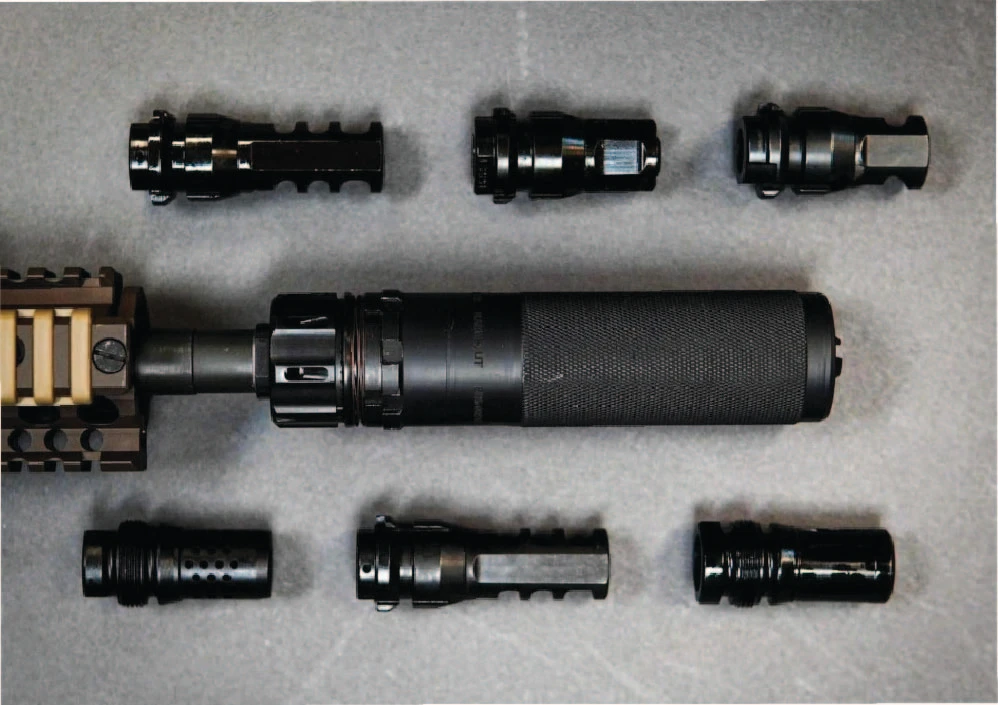
The product examples the source cites show how manufacturers approach this problem. Each one ties the brake to a specific suppressor platform.
- Dead Air KeyMo: serves as the quick-detach interface between a rifle and Dead Air's Sandman suppressors.
- SilencerCo ASR: includes quick-detach features, so the shooter keeps the brake's recoil reduction when the suppressor comes off.
- Thunder Beast compact brake: made for precision rifle suppressors and provides a solid mounting surface.
- Dead Air Direct Thread Brake Mount: directs gas into the blast chambers to reduce focused erosion.
- Precision Defense Plan B: uses dual chambers to reduce blast baffle wear.
Three mechanisms drive any longevity gain. First, a purpose-built mount keeps the can concentric with the bore, and baffle strikes are the classic killer of suppressors. Second, the brake's steel body takes a large share of the concussion before it reaches the blast baffle. The amount of life it adds depends on cartridge, rate of fire, and design. Third, some brake geometries spread gas more evenly and reduce erosion at the blast baffle.
The trade-offs are real. Brakes that push more blast rearward build carbon on the mount surface faster than a flash hider does. That means more frequent cleaning so the can does not seize on the brake. Setting up a brake also requires proper timing, which takes a few minutes. Shot without a suppressor, a brake is louder, more concussive, and produces more flash than a standard flash hider.
Background
Suppressors are regulated under the National Firearms Act of 1934. Buyers must pass through the ATF approval process, and the $200 transfer tax has long set the price floor for cans. That cost explains why owners protect their suppressors and why replacement baffles or a full can are expensive purchases. Most of the wear inside a suppressor comes from the blast baffle, the first chamber that catches the bullet's exit gases. Baffle strikes happen when the bullet clips the baffle stack, usually because the can shifts out of alignment with the bore. Each strike chips or deforms the baffle and degrades accuracy.
Muzzle brakes gained popularity in competition and among precision shooters who wanted to control muzzle rise for faster follow-up shots. Flash hiders have been standard on rifles for decades. Suppressor makers began designing brakes that serve as mounts once shooters started asking for a single device that handles recoil and sound. What changed is that manufacturers now engineer the brake, mount, and can as one system, rather than treating the brake as an afterthought.
Why It Matters for Gun Owners
This affects anyone who runs a suppressor on a rifle, especially shooters who swap a can between a brake and a flash hider. If you own a suppressor in a state where cans are legal, the mount decision directly affects what you pay over the life of the can. A mismatched brake can cause misalignment, and misalignment shortens baffle life. Before you buy, confirm that the brake or mount is listed by the suppressor maker as compatible. Check the manufacturer's documentation, not a forum post.
Hunters should weigh the flash and concussion trade-off carefully. A brake that feels fine at the range may throw more flash at last light, when you can least afford to lose your night vision. Shooters who run unsuppressed around others, including in training classes or on shared ranges, should consider that the same brake that tames a suppressed rifle can be a nuisance without the can.
Watch your bore and can alignment. A sudden change in point of impact or a pinging sound can signal a baffle strike. Clean the brake mount on a set schedule, because carbon buildup can lock a can in place and turn a simple cleaning into a repair job.
DownRange Analysis
This is not a Second Amendment fight. Nothing here touches Bruen, and no court is weighing in on accessory design. The issue is cost and performance. Suppressor owners pay real money to replace cans, so any credible claim about extended life matters. The claim holds up only in narrow terms. A system-matched brake helps by keeping the can aligned and taking some blast, but no brake turns a suppressor into a lifetime purchase. Wear on the baffle stack still tracks round count, ammunition quality, and how often you strike baffles.
The market note is simple. Quick-detach systems lock you into one manufacturer's ecosystem. If you buy a Dead Air brake, you will likely stay with Dead Air mounts and cans. That is fine if you plan to stay put, but it limits your options later. Weigh the lock-in against the convenience before committing.
Here is what to do right now. Buy the brake for recoil control and quick-detach convenience, not for a promised longevity bonus. Choose the brake your suppressor maker designed or recommends. Schedule mount cleaning, inspect for baffle strikes, and keep the can aligned. Treat any lifespan gain as a bonus, because the habits that protect your can matter more than the device on its end.