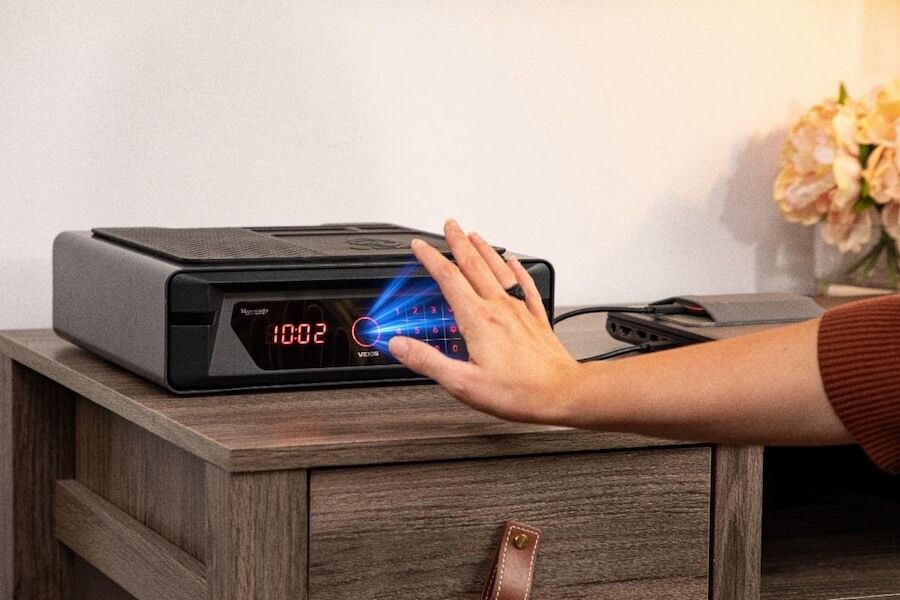
Hornady VEXIS: Palm Vein Reader Replaces Fingerprints on Smart Guns
Hornady has released VEXIS, a patent-pending biometric authentication system that uses palm vein recognition to authorize firearm access. The technology scans the unique vein pattern beneath a user's skin rather than relying on fingerprint sensors or manual PIN entry. The system aims to provide faster, more reliable authentication for smart guns while reducing the friction between drawing and firing compared to existing biometric methods.
Key Details
VEXIS operates through vascular pattern recognition—each person's vein structure is individually distinct and cannot be copied or spoofed using fingerprint replicas or photographs. The system authenticates access in milliseconds without requiring the user to touch a sensor pad or input a code. Hornady designed the technology to function as a drop-in safety module for compatible firearm platforms, positioning it as an upgrade path for existing gun owners rather than requiring new hardware purchases across the board.
Why It Matters for Gun Owners
Smart gun adoption has stalled for decades due to reliability concerns, slow unlock speeds, and the added cost of electronic systems. VEXIS addresses the speed problem—palm vein scanning happens faster than the time needed to present a firearm on target, a critical factor in defensive scenarios. For parents storing firearms safely, the technology offers genuine quick-access security without the mechanical failure points of traditional biometric readers. Competitive shooters may benefit from faster transitions between holstered and ready positions if the system proves reliable under stress. The main uncertainty remains durability: will repeated scanning in dust, sweat, and adverse conditions maintain authentication consistency? Gun owners considering adoption should demand independent testing data before trusting this system over proven mechanical safeties.
DownRange Analysis
Hornady's move signals confidence that smart gun liability and market skepticism are finally receding. Vein recognition is objectively superior to fingerprint readers—it's harder to spoof and works consistently across skin conditions and aging. However, the Second Amendment question remains unanswered: does a patent-pending biometric system expose gun owners to wireless hacking, software updates that disable authentication, or government mandate requirements? The manufacturer's ability to remotely patch or lock users out should concern any serious 2A proponent. Watch Hornady's stance on source code transparency and over-the-air updates. If they refuse to open this system to independent security audits, VEXIS becomes a liability, not a feature.