Every State Banned Hidden Carry by 1900 — Bruen Got History Wrong
By 1900, every state had outlawed carrying concealed weapons. That finding comes from a new book, Gun Law History: How Three-Hundred Years of Weapons Laws Built the Nation, previewed on Duke Firearms Law on November 4, 2026. The research tracks colonies, states, and localities enacting thousands of weapons laws from the early 1600s through the early twentieth century. It directly contradicts the Supreme Court’s claim in NYSRPA v. Bruen that America had little tradition of regulating public carry. The author’s core argument is blunt: regulating weapons was the default in American history, not the exception.
Key Details
The research pulls together several measurable findings from the historical record:
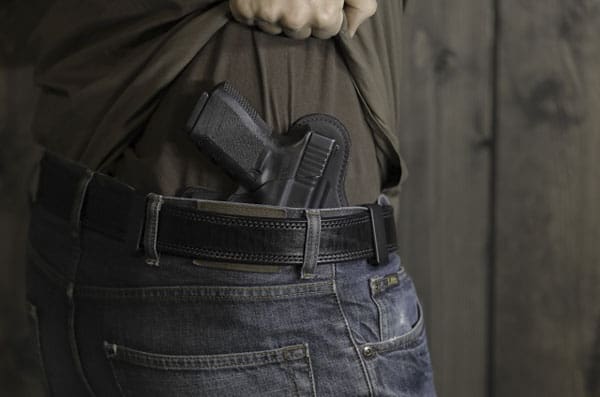
- Concealed carry: No-carry laws date to the 1600s and multiplied as the country grew. By the start of the twentieth century, every state prohibited concealed carry.
- Open carry: At least three-quarters of states restricted open carry.
- All carry: Nearly half of states restricted carrying weapons of any kind, with customary exceptions for the military, police, travelers, and justifiable self-defense. In those states, the defender bore the burden of justifying the carry.
- Public displays: At least three-quarters of states punished public weapons displays. About half targeted threatening brandishing. The other half punished the mere public appearance of a weapon.
- Licensing: Weapons licensing laws date to the 1600s. By 1900, every state had enacted them, totaling more than 350 statutes.
- New York’s 1911 pistol law: The research disputes the idea that this was the first licensing law. It also argues that the law’s discretionary structure was typical for its era, not an outlier.
The author also credits the digitization of historical gun laws by Duke Law School’s Center for Firearms Law over the past decade. That project made the broad historical record searchable for the first time in practical terms.
Background
The Supreme Court began its modern Second Amendment era in 2008. In District of Columbia v. Heller, the Court held for the first time that the amendment protects an individual right to keep a handgun for self-defense in the home. Justice Antonin Scalia wrote the majority opinion, which relied heavily on historical sources. The Court rejected the militia-centered reading of the amendment’s preamble.
Heller left open how far historical analysis would reach. In 2022, the Court answered that question in NYSRPA v. Bruen. Justice Clarence Thomas wrote the majority opinion, which struck down New York’s discretionary carry permitting system. The Court then announced a test: modern gun laws must be consistent with “this Nation’s historical tradition of firearm regulation.” Lower courts have applied that test ever since, asking whether a modern law has a historical analogue from the founding or Reconstruction eras.
The Bruen majority said there was “little evidence of an early American practice of regulating public carry by the general public.” Historian Saul Cornell has taken direct aim at that claim. He concluded that “there was no general right of armed travel when the Second Amendment was adopted, and certainly no right to travel with concealed weapons.” The new book builds on that line of scholarship with a broader, state-by-state record.
Why It Matters for Gun Owners
This research lands in the middle of active Second Amendment litigation. States with discretionary carry permit regimes, like New York and California before Bruen, face the strongest pressure from this kind of evidence. Any state that still requires a permit or restricts carry locations will see its defenders cite these historical findings in briefs. Plaintiffs will cite the Bruen language. Both sides now argue history, and the side with the deeper archive usually wins the debate in court.
For everyday carriers, the practical picture remains unchanged. Concealed carry rules vary by state, and some states still require a license, a training course, or a permit to carry in public. Carrying in violation of local ordinances or sensitive-place restrictions can still produce arrests. Check your state statutes before you carry across state lines. Keep your permit, your registration, and your receipts in order. Watch for appellate decisions in your circuit, because they set the rules you actually live under.
DownRange Analysis
Under Bruen, this research is exactly the evidence gun owners need. The Court said history controls, so history is the battlefield. The author’s findings show that the Court’s premise was shaky. Still, gun owners should not assume history automatically wins. The Bruen test cuts both ways. A court can read the same colonial statutes as proof that regulation was common, or as proof that courts treated carry rights differently in different places. Judges pick their analogues. Lawyers build them.
Market impact is limited in the short term. Demand for holsters, carry gear, and training tracks permit law and personal risk, not academic debate. A book does not change a permit requirement.
What should you do now? Know exactly what your state allows and forbids. Get trained, carry a permit where your state issues one, and keep your documentation organized. Donate to or follow the organizations filing amicus briefs in your circuit. Pay attention to the cases that will test the historical tradition standard next. The history is on the table. Make sure your side reads it.