Highland Park Lawsuit Subpoenas Gun Reviewer James Reeves
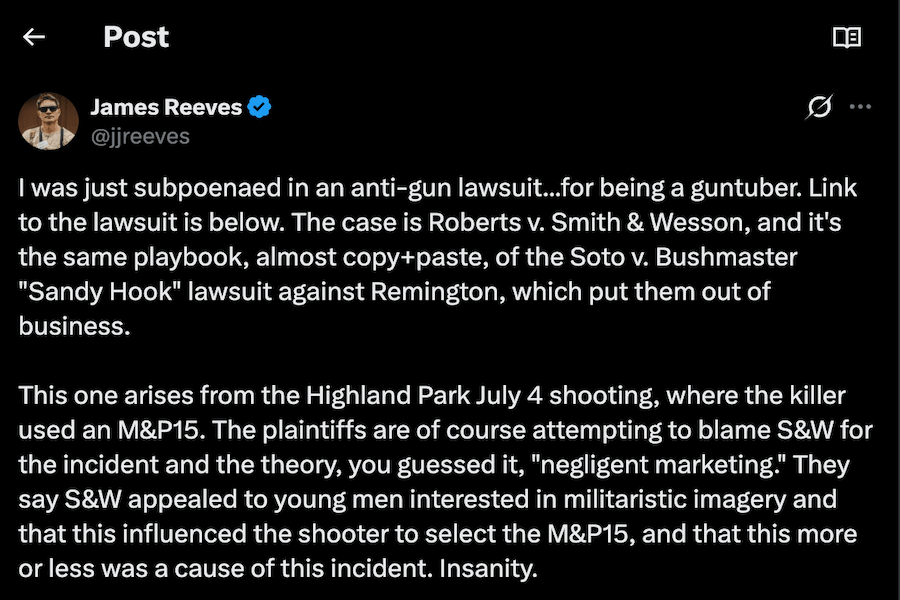
James Reeves, a prominent gun reviewer and licensed attorney, received a subpoena from attorneys handling the Highland Park shooting civil lawsuit. The subpoena demands records related to his firearms content and communications. Reeves disclosed the legal action on his social media channels and website.
The lawsuit stems from the July 4, 2022 Highland Park parade shooting that killed seven people and wounded dozens more. Plaintiffs are suing Smith & Wesson Manufacturing Company, claiming the AR-15-style rifle used in the attack was marketed irresponsibly. Reeves' content discussing AR-15 platforms apparently triggered the records request.
Reeves stated the subpoena seeks "various documents and communications." He did not immediately disclose the full scope or deadline for compliance. Legal experts note such subpoenas in mass shooting litigation typically target prominent voices in the firearms industry and media space.
Why It Matters for Gun Owners
This subpoena signals a legal strategy shift in anti-gun litigation. Plaintiffs are not limiting targets to manufacturers and retailers. They're now pursuing private citizens—reviewers, educators, and content creators—who discuss firearms openly.
Reeves holds both a law degree and credentials as a firearms instructor. His YouTube channel reaches hundreds of thousands of viewers seeking honest, technical firearm analysis. His dual background makes him an attractive target for litigation discovery.
The subpoena raises serious questions about First Amendment protections. Gun owners and creators face potential legal costs defending against document demands simply for discussing lawful products and Second Amendment rights. Even winning these legal battles requires substantial attorney fees and preparation time.
If this pattern continues, firearms educators and reviewers may face chilling effects on their content. They could self-censor legitimate product discussion to avoid litigation exposure. That directly impacts gun owners seeking honest information about firearms they own or want to purchase.
The broader implication: anti-gun litigation strategies are expanding from suing manufacturers to targeting the voices that educate gun owners. This could reshape how the firearms community shares information online.
Background
The Highland Park shooting occurred during a Fourth of July parade in this affluent Chicago suburb. The shooter, Robert Crimo III, used a Smith & Wesson M&P15-22 rifle he obtained legally. Survivors and family members filed a civil lawsuit naming Smith & Wesson as a defendant.
The lawsuit claims the manufacturer marketed the rifle to civilians using military-style imagery and rhetoric. Plaintiffs argue this marketing philosophy led to the shooter obtaining and using the weapon.
Similar litigation strategies have emerged after other mass shootings. The Sandy Hook Elementary shooting led to successful litigation against Remington Arms. Courts allowed that case to proceed to jury trial, creating legal precedent for manufacturer liability in certain circumstances.
Reeves has built his reputation on detailed, balanced firearm reviews and legal analysis. He frequently discusses Second Amendment law, constitutional carry legislation, and firearms policy. His audience includes both casual gun owners and serious practitioners.
DownRange Bottom Line
Gun owners and creators should understand: litigation targeting private firearms voices is accelerating. Reeves' subpoena isn't isolated. It represents an intentional legal strategy to drain resources from prominent pro-Second Amendment voices.
Whether Reeves ultimately prevails matters less than the precedent being set. Each successful subpoena encourages additional litigation targeting other creators and educators. This financial and legal burden falls on individuals without corporate resources to fight back.
Gun owners should support content creators facing these attacks. Follow their work. Donate where possible. Understand that every subpoena, every legal threat, and every court battle represents an attempt to silence honest discussion about firearms and constitutional rights.