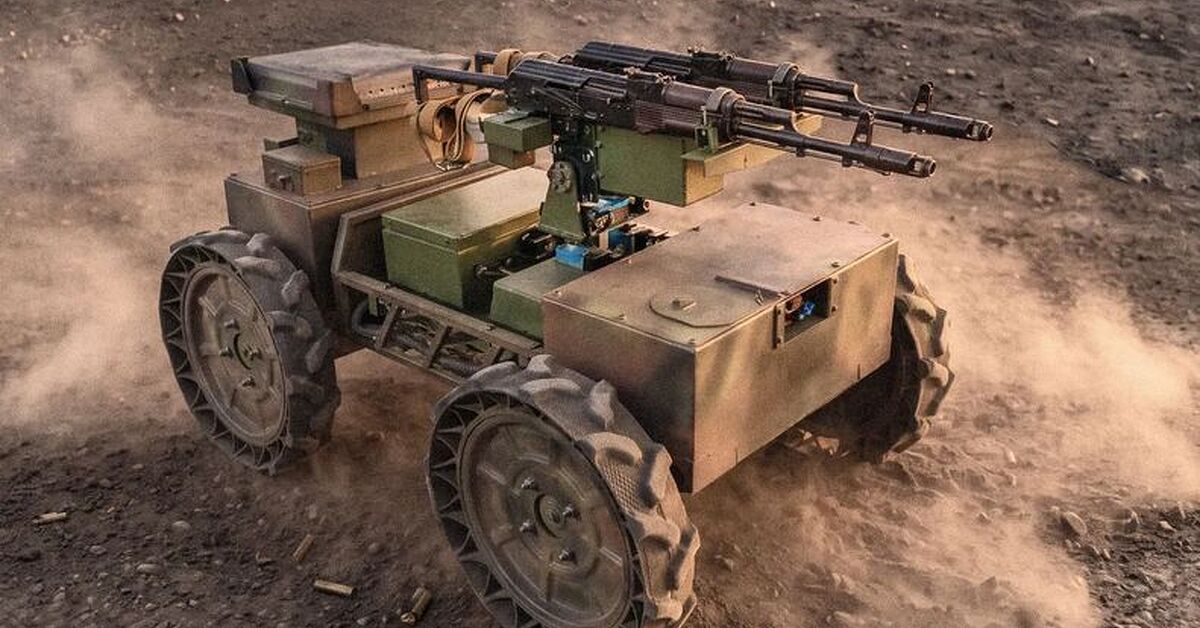
Ukrainian Military Tests Remote-Fired Kalashnikov Turrets on Front Lines
Ukrainian Defense Forces have begun field testing robotic turrets armed with Kalashnikov-pattern rifles in active combat zones. The remote weapon stations mount standard PKM and AK-pattern rifles on unmanned platforms, allowing operators to engage targets from protected positions. Brave1, Ukraine's state defense innovation cluster, coordinated development and provided grant funding for the systems.
The turrets represent a direct response to modern combat realities. Troops operating exposed firing positions face constant drone surveillance and counter-fire. Remote turrets reduce personnel risk while maintaining firepower. Operators control guns from fortified positions or armored vehicles, eliminating the need for exposed gunners.
Why It Matters for Gun Owners
This deployment signals the future direction of rifle-caliber weapons systems. Military adoption of remote-firing platforms validates what many gun owners already understand: the rifle remains relevant when properly integrated with modern technology. The Kalashnikov's selection—not proprietary military firearms—confirms the platform's reliability and adaptability.
For American gun owners, the story matters for several reasons. First, it demonstrates how standard rifles become force multipliers through mechanical innovation rather than cartridge or design changes. The 7.62x39 and 5.45x39 systems prove effective in unmanned roles, suggesting American 5.56 and 7.62x51 platforms will similarly evolve.
Second, remote weapon stations challenge traditional anti-gun arguments about civilian rifle purposes. Military necessity for semi-auto rifles is now documented in peer-reviewed combat. Ukraine's experience proves rifles serve legitimate defense roles when threats are existential.
Third, this technology will eventually commercialize. Private security, agriculture, and border operations will adopt similar systems. Understanding how militaries integrate rifles into remote platforms informs debates about civilian rifle ownership and purpose.
Background
Ukraine has emerged as a testing ground for rapid defense innovation since Russia's 2022 invasion. Brave1, created in 2022, functions as Ukraine's defense tech accelerator. The cluster connects military requirements with private manufacturers and innovators, expediting development cycles.
Remote weapon stations aren't new. Russia deployed them extensively during its Syria campaign (2015-2023). Israel, Turkey, and South Korea operate remote turrets in various configurations. Ukraine's adaptation reflects urgent battlefield needs and limited personnel.
The Kalashnikov platform's selection highlights practical advantages. Ammunition is abundant. Maintenance requires minimal training. Parts interchange across multiple rifle variants. Operators already understand the system's manual operation, reducing retraining time for remote control.
Combat data from Ukraine shows unmanned turrets reduce casualties among gun crews. Static firing positions, whether manned or remote, remain vulnerable to indirect fire. However, remote operation allows faster position changes and reduces lingering exposure time.
DownRange Bottom Line
Standard rifle platforms are becoming integrated into autonomous and remote-operated systems. Ukraine's deployment of Kalashnikov turrets confirms what American gun owners should recognize: rifles remain militarily relevant because their fundamental design works.
The move toward remote operation doesn't diminish rifles—it extends their combat utility. For civilian owners, this reinforces the practical argument for modern rifle ownership. Rifles solve real problems for armed forces facing existential threats.
Watch for commercial remote turret systems entering U.S. markets within five years. Agricultural operations will adopt them first for predator control and perimeter security. Private security will follow. Understanding how militaries are already using rifles in automated platforms today prepares gun owners for policy conversations happening tomorrow.