ATF Data Shows NFA Applications Nearly Tripled, Processing Times Collapse
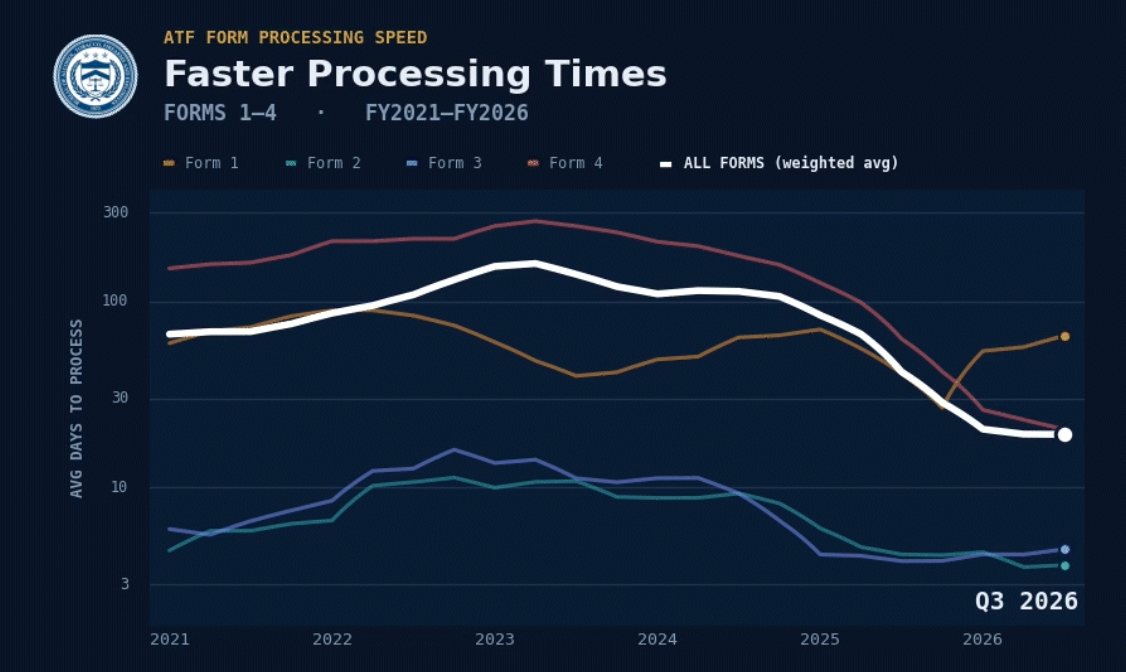
The National Shooting Sports Foundation released fresh ATF data revealing a seismic shift in NFA processing. Applications nearly tripled while average wait times dropped eighteen days. The numbers represent the most dramatic acceleration in suppressor and short-barrel rifle approvals since the NFA's inception in 1934.
ATF processing times now average significantly faster than the previous decade. Gun owners filing Form 4s for suppressors or SBRs experience dramatically reduced delays. The agency's operational changes directly address the backlog that plagued applicants for years.
Why It Matters for Gun Owners
Faster NFA approvals translate to actual ownership. A suppressor purchase no longer means waiting nine months to two years for a stamp. That timeline compressed substantially. For daily carriers and range shooters, approved stamps arrive within months instead of seasons.
More applications filed indicates confidence in the process itself. When wait times drop, buyers stop delaying purchases. Manufacturers report increased orders. Dealers stock more inventory. The entire NFA market accelerates downstream.
This affects your next suppressor purchase directly. Planning a .300 Blackout build? Your Form 4 moves faster now. Want to SBR that AR-15 pistol? Processing times no longer stretch across calendar years. The practical reality: you get your approved stamp sooner.
Renewed demand changes dealer behavior too. Shops willing to stock inventory again. Prices stabilize. Selection improves. The secondary market for approved stamps becomes less necessary when primary applications process faster.
Background
The NFA backlog became legendary by 2021-2022. Form 4 wait times exceeded 300 days. Frustrated gun owners formed suppressor trusts just to avoid fingerprinting delays. Some applications sat untouched for eighteen months.
The ATF claimed staffing limitations. Processing centers operated below capacity. Examiners retired faster than replacements arrived. The agency lacked funding for technology upgrades. Paper-based systems dominated an agency processing thousands of applications monthly.
Congressional pressure mounted. Gun owner advocacy groups publicized wait times constantly. The NSSF pushed for modernization. Stories of hunters missing seasons due to pending stamps fueled political action. Media coverage highlighted the dysfunction regularly.
Recent operational changes accelerated processing significantly. The ATF hired additional examiners. Digital filing systems replaced paper-heavy procedures. Workflow improvements streamlined approvals. Electronic fingerprinting reduced submission delays. Remote processing allowed geographically distributed workforces.
The data proves these changes work. Nearly tripled applications processed without lengthening wait times—actually shortening them—demonstrates real capacity improvement. This isn't projection or promise. These are ATF's own numbers showing actual results.
DownRange Bottom Line
NFA processing is finally moving. If you've delayed a suppressor purchase or SBR project waiting for reasonable timelines, conditions improved dramatically. The backlog that once defined NFA ownership no longer applies.
File your Form 4 now. Processing speed supports it. Whether you're suppressing a bolt-gun or registering an AR-pistol, expect significantly faster approval. The wait—at least the unreasonable portion—has ended.
Check your dealer's current pricing on the suppressor you want. Many shops are re-stocking confidence in faster approvals. Inventory availability and pricing reflect the processing improvements. Act while supply stabilizes and before demand spikes further.