Post-WWII M14 Became U.S. Military's Standard Combat Rifle
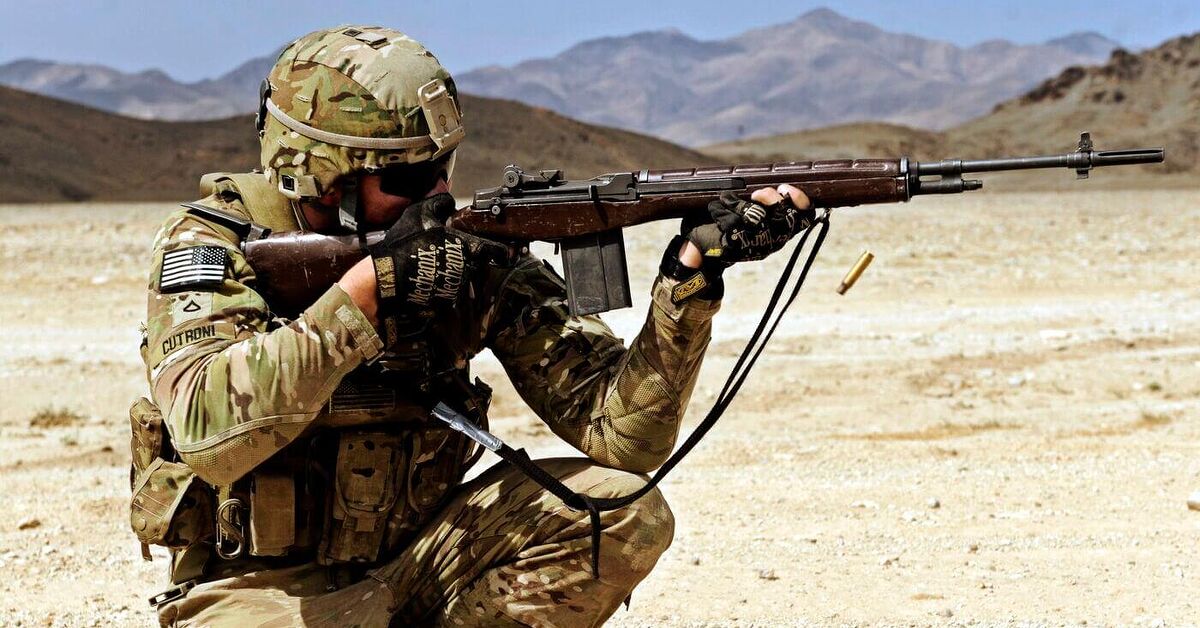
The M14 rifle defined American military firepower during the Cold War transition. Developed after World War II, the M14 replaced aging .30-06 Springfield bolt-actions and established the template for modern battle rifles. The rifle chambered 7.62×51mm NATO ammunition—a cartridge still in use today across military, law enforcement, and civilian marksman circles.
Design and adoption moved fast. The M14 entered service in 1959, just over a decade after WWII ended. Engineers combined semi-automatic and selective-fire capability into one platform, a technical leap forward from the single-shot discipline required by bolt-action rifles. The 20-round detachable magazine gave infantry unprecedented firepower compared to fixed internal magazines of earlier generations.
The rifle weighed 8.6 pounds empty, manageable for extended field operations. Its 22-inch barrel produced muzzle velocities around 2,800 feet per second with standard military rounds. Effective range exceeded 500 yards, crucial for engagement distances soldiers encountered in Korea and Vietnam.
Why It Matters for Gun Owners
Civilian M14-pattern rifles remain popular among serious shooters today. Original military surplus M14s command premium prices—often $2,500 to $4,500 depending on condition and manufacturer. Semi-automatic civilian variants from companies like Springfield Armory and LRB Arms cost $1,800 to $3,200 new.
Modern owners value the M14 platform for several reasons. The 7.62×51mm cartridge delivers genuine long-range accuracy out to 800+ yards. Aftermarket stocks, optics mounts, and upgrade parts flood the market, allowing shooters to customize rifles for precision or tactical applications. Ammunition availability remains strong—commercial manufacturers produce thousands of rounds monthly.
The M14 fits the "battle rifle" category that appeals to shooters rejecting modern intermediate cartridges. Hunters use M14 variants for elk and larger game. Precision competitors field M14-based rifles in long-range matches. Military and law enforcement still keep M14s in armories for specialized roles.
Collectors pursue original military-issued examples. Rifles produced by Springfield Armory, Winchester, and Harrington & Richardson carry historical value. Matching serial numbers, correct finishes, and original furniture push prices higher. Some rare variants exceed $6,000.
Background
WWII ended with American infantry armed primarily with M1 Garand rifles. The military recognized the need for a modernized replacement featuring detachable magazines and select-fire capability. Development began immediately post-war, with extensive testing throughout the 1950s.
Combat deployment came first in Vietnam (1964-1973), where M14s proved effective in the jungle environment despite the emergence of the M16 carbine. Snipers favored accurized M14 variants—the M21 designation—for precision work. The M14 remained in limited military service until the 1990s and still appears in ceremonial roles today.
Foreign militaries adopted M14-pattern rifles extensively. Canadian forces used the C1A1 variant. Germany, Italy, and other NATO allies manufactured licensed versions. Japan produced the Type 64—a modified M14 design. These international examples create additional collector interest.
DownRange Bottom Line
The M14 remains a legitimate choice for shooters wanting full-power rifle performance. Original military rifles hold value and historical significance. Modern civilian production offers reliable, accurate platforms at accessible prices. The 7.62×51mm cartridge delivers performance no intermediate cartridge matches at extended ranges. For serious shooters committed to mastering a larger, heavier platform, the M14 offers proven reliability and documented combat effectiveness. Civilian and military demand sustains ammunition manufacturing and parts availability for the foreseeable future.