Luxembourg's Military Switches to HK416A7 for Operator Development
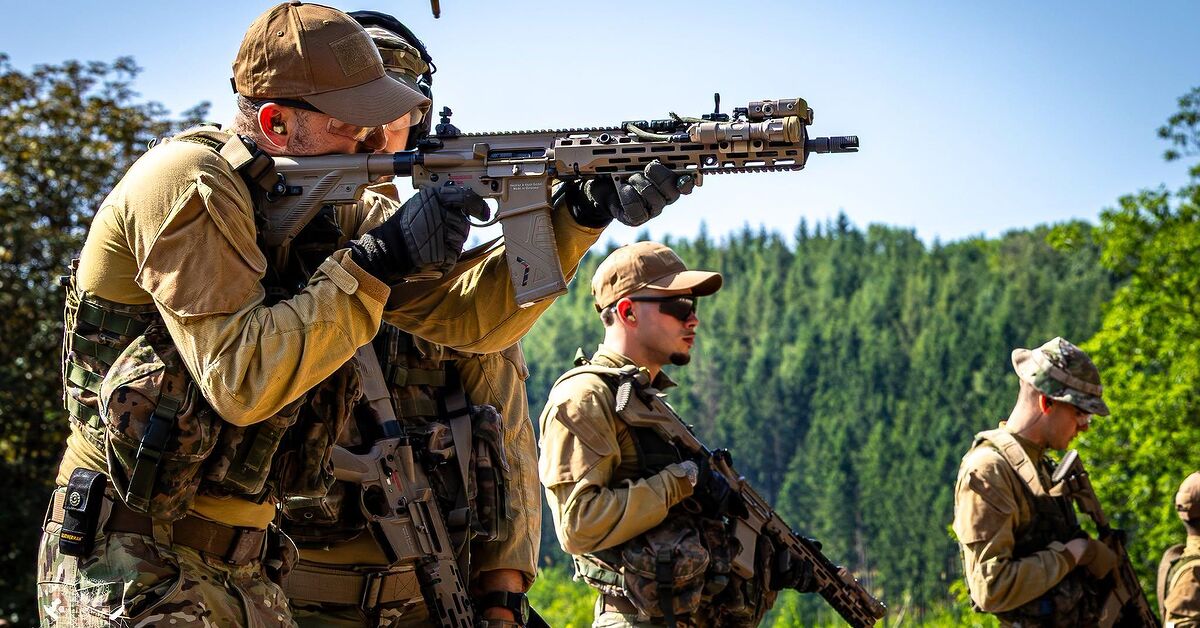
Luxembourg's armed forces now field the Heckler & Koch HK416A7 during specialized advanced instruction courses. The Lëtzebuerger Arméi's Instruction avancée spécialisée (IAS) recently conducted operational shooting exercises—called Tir Opérationnel—to validate marksmanship under pressure. This shift signals the small European nation's commitment to modern, combat-proven rifle platforms for frontline troops.
Basic training teaches recruits mechanics. Advanced instruction teaches soldiers to fight. The HK416A7 gives Luxembourg's IAS students a weapon system trusted by NATO allies and special operations forces across Europe and North America. The rifle's pedigree matters: it evolved from decades of battlefield feedback and continuous refinement.
Why It Matters for Gun Owners
The HK416A7 adoption by a NATO member reflects what professional military users demand: reliability under stress, accuracy beyond 300 meters, and modularity for mission flexibility. Gun owners watching military procurement decisions see validation of piston-driven AR platform design. When small nations with tight budgets choose premium rifles, they vote with euros.
The HK416A7 fires 5.56 NATO from a 16.5-inch barrel. Its short-stroke piston system reduces fouling and heat compared to direct-impingement designs. For civilian carriers, this means the engineering principles behind Luxembourg's choice apply directly: cleaner operation, easier maintenance, and consistent performance across temperature extremes.
Military adoption also signals ammunition supply stability. 5.56 NATO remains the global standard. Luxembourg's choice ensures parts compatibility with allied forces and commercial supply chains for decades. Civilian shooters benefit from proven logistics and competitive pricing tied to military demand.
Background
The HK416 platform debuted in 2004 after extensive testing by German special forces. It addressed shortcomings in the M16/M4 platform's long-stroke gas tube system. The "A7" variant represents the current production standard, incorporating improvements from 20 years of operational use across multiple continents.
Luxembourg's military totals roughly 900 active personnel. Small force size means equipment choices reflect precision, not quantity discounts. The nation participates in NATO training exercises and multinational operations. Weapon standardization supports interoperability with larger allied forces.
The IAS course represents advanced operator training—not recruit basic. Soldiers entering this pipeline already understand rifle fundamentals. Tir Opérationnel exercises stress decision-making under fatigue, time pressure, and simulated threat conditions. These aren't target range drills; they're stress inoculation for combat scenarios.
The HK416A7 handles this mission profile reliably. Its reputation stems from use by US Army Special Forces, German KSK commandos, and NATO special operations units. When elite units standardize on a platform, failure rates drop to near-zero tolerances.
DownRange Bottom Line
Luxembourg's adoption of the HK416A7 matters because small, fiscally conservative nations don't buy premium rifles without justification. They buy what works. The piston-driven design, modular construction, and proven track record directly influence civilian market confidence in similar platforms.
For daily carriers evaluating AR platform choices, military adoption data points toward reliability. Luxembourg's investment signals that modern piston-driven rifles perform at operational standards professional soldiers demand. That same engineering works equally well for defensive carry at home or sport shooting downrange.
The rifle's 5.56 NATO caliber ensures ammunition availability and parts compatibility for decades. That stability matters more than flashy features or marketing claims. Luxembourg's choice reflects operational reality: choose platforms with staying power, proven performance, and global support networks.