One Ruger Single-Shot Just Punched a 0.96-Inch Group at 100 Yards
One of the Ruger rifles in a recent GunsAmerica Digest review shot a 0.96-inch group at 100 yards, and that result should get the attention of any hunter who still thinks a single shot is a handicap. The review compares the Ruger No. 1 and the Ruger No. 3, two takes on the falling-block single-shot. Ruger introduced the No. 1 in 1967 as a hunting rifle for traditionalists who want one good shot instead of a full magazine. The No. 3 is the second model in that comparison, and the review puts both through live fire.
Key Details
The facts that matter from the review:
- Introduction: Ruger launched the No. 1 in 1967.
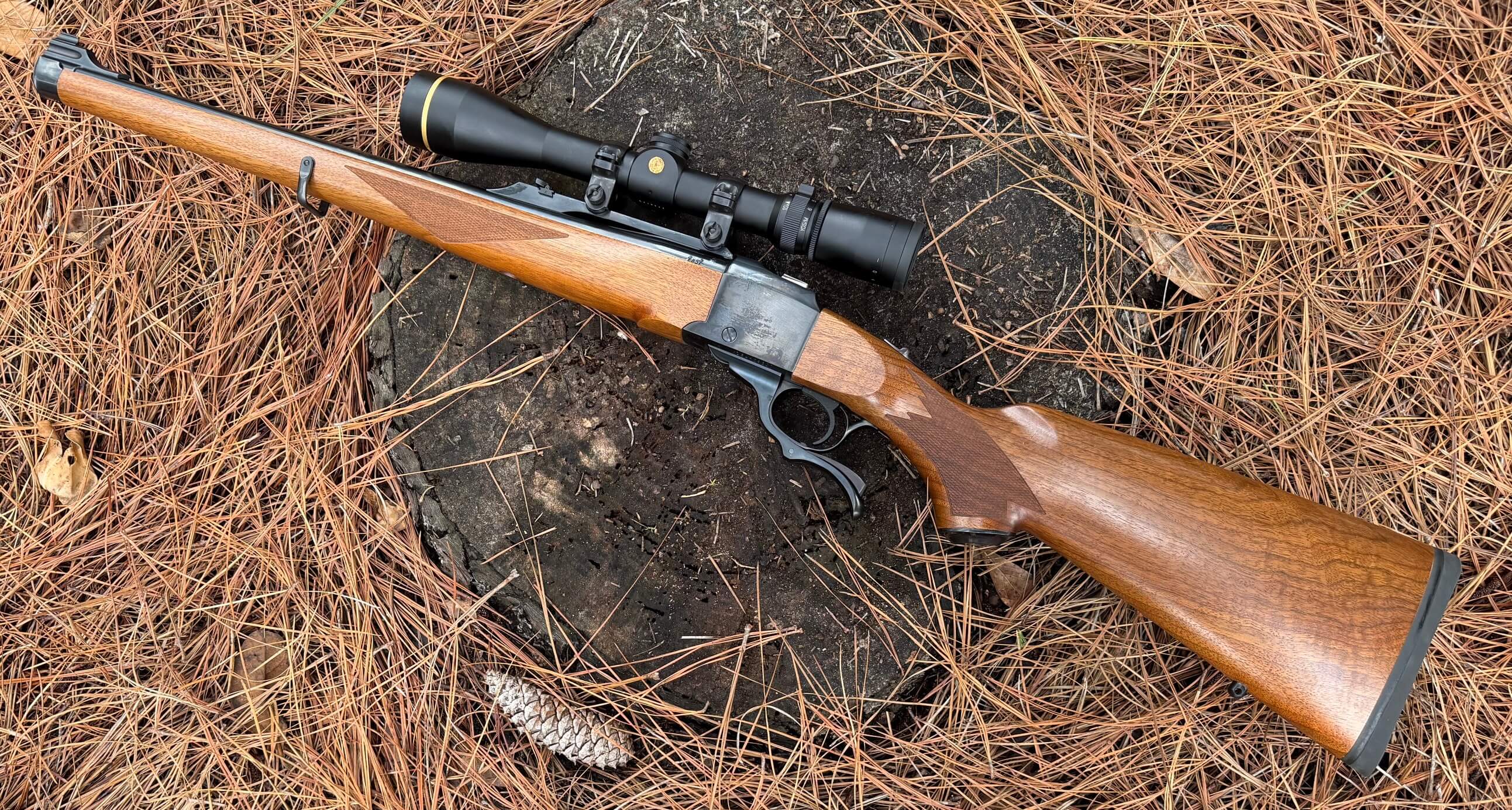
- Action: A modified Farquharson-style hammerless falling-block design. The original Farquharson action dates to 1872, and its patent had expired long before Ruger built the No. 1.
- Variants: Six main No. 1 variants during production, differing in barrel length, weight, caliber, and stock configuration.
- Finishes: Most used blued steel with checkered walnut stocks. Stainless versions came with walnut or black laminated stocks.
- Chamberings: The No. 1 has appeared in everything from .204 Ruger to .480 Ruger.
- Length: A No. 1 with a 26-inch barrel measures shorter overall than a bolt-action with the same barrel length.
- Controls: A lever that drops the block for loading, and a tang-mounted safety that works for left- and right-handed shooters.
- Accuracy: One rifle punched a 0.96-inch group at 100 yards. A separate section reports 1-inch groups with 7mm Mauser.
- Testing: The No. 3 section covers .45-70 recoil, velocity, and accuracy on a boar target.
Background
Single-shot rifles built America's early firearms history. Muzzleloaders gave way to metallic cartridges, and designs like the Sharps Model 1874, the Remington Rolling Block, and the Winchester Model 1885 followed. Hunters used them on game, and competitors used them at long range. Bison hunters on the Plains carried Sharps rifles, and those actions handled heavy black powder loads. The common thread was a steel block that closed behind the cartridge and held up under pressure. The Sharps and Winchester actions use a falling block that drops when the lever opens. The Remington uses a rolling block that rotates to expose the breech. Ruger's No. 1 borrows the falling-block concept but builds it on a hammerless design, with the hammer cocking as the lever closes. Ruger built its reputation by refining proven designs, making them cheaper to produce and tougher in service. Winchester still produces the 1885, and Uberti builds it in Italy, which tells you how much demand remains for these actions.
Why It Matters for Gun Owners
The No. 1 solves a problem that bolt guns create. A bolt rifle invites a second shot, and that second shot often leads to a rushed first shot. A single-shot forces a pause. You load one round, you check the wind, you break the shot. Hunters who learned on a muzzleloader already know this rhythm. The platform also matters where regulations apply. Some states restrict straight-wall cartridges for deer hunting, and certain single-shot firearms can fit within those rules. Check your state's current regulations before you buy a specific caliber for a specific season. A rifle that legally fits your state's rules at the counter still needs to match the game you hunt. The compact action gives the No. 1 an edge in the field. A 26-inch barrel on a shorter receiver means a handier carry through brush and from a truck. If you carry a heavier rifle for big game, weigh that against the lighter No. 1 action. Shop for the barrel length and caliber you will actually use, not the one that looks best on a rack.
DownRange Analysis
A 1872 action still earns a place in a modern hunting rifle. The Farquharson design survived because it works. The No. 1 does not need to win a volume contest with a bolt gun. It needs to hit where you aim, and the 0.96-inch result shows it can. Does it survive Bruen scrutiny? The question does not really apply here. The No. 1 is a lawful, ordinary hunting rifle with a long historical pedigree, and nothing in this review raises a constitutional issue. The regulatory question is about hunting rules, not 2A limits. What should you do? If you hunt with a single shot already, the No. 1 deserves a look at the range before you spend money. Shoot five-shot groups at 100 yards with the load you plan to hunt with. If you want a single-shot for the challenge, buy the caliber that suits your game and your state's rules. Then practice the one shot until it becomes automatic.