Russia Deploys Four-Gun Zubr System Against Ukrainian Drone Attacks
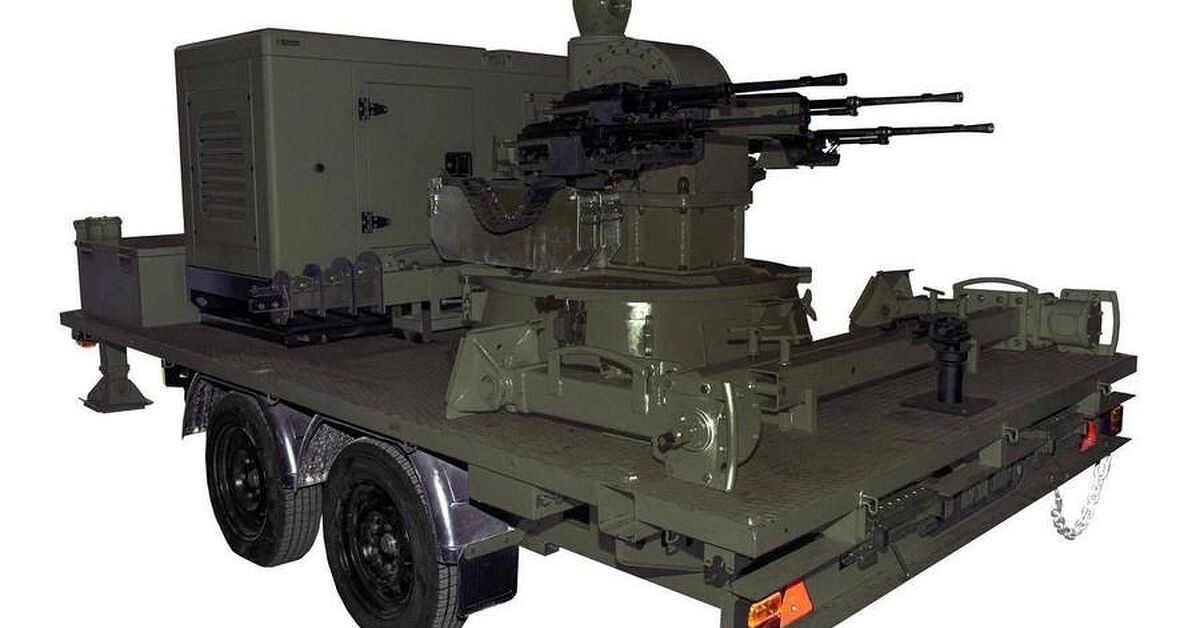
Russia has introduced the Quad PKT Zubr counter-unmanned aerial system (C-UAS) to defend against accelerating drone strikes on Russian territory. The system mounts four 7.62×54R PKT machine guns on a single platform, designed to saturate airspace with sustained fire against fixed-wing and rotary-wing targets. This move reflects Moscow's shift toward defensive operations as Ukrainian aerial attacks penetrate deeper into Russian airspace.
The Zubr represents a low-tech, high-volume answer to an escalating problem. Four PKT guns firing standard rifle-caliber ammunition deliver continuous suppressive fire without requiring radar guidance or missiles. Each PKT fires 600-700 rounds per minute. Four guns operating simultaneously create a wall of steel—roughly 2,400-2,800 rounds downrange every minute.
Why It Matters for Gun Owners
The Zubr deployment signals how modern conflict demands evolved small-arms applications. Rifle-caliber machine guns, dismissed by some as obsolete, prove tactically relevant against contemporary threats. The 7.62×54R round—essentially Russia's .308 equivalent—demonstrates lasting utility across platforms and generations.
For American shooters and carriers, this highlights an ongoing debate: specialized systems versus reliable, simple alternatives. The Zubr chose four proven PKT guns over exotic electronic systems. No computer locks. No proprietary ammunition. No software vulnerabilities. Ammunition remains interchangeable with decades of existing Russian inventory.
The system also illustrates how drone warfare shifts tactical thinking. Unlike traditional anti-aircraft defense expecting high-altitude jets, counter-drone work engages slow-moving targets at ranges under 2,000 meters. Volume of fire replaces precision. This principle applies to concealed carry and home defense: speed and accuracy beat specialized solutions every time.
Background
Ukraine's drone operations have repeatedly struck targets inside Russia—airfields, ammunition depots, command posts, fuel storage. These attacks, mounted primarily on commercial quadcopters modified with explosives, forced Russian planners to address air defense gaps. Traditional air defense systems designed for supersonic aircraft prove ineffective against $500 drones.
The PKT machine gun dates to World War II Soviet design. Millions exist globally. The weapon fires 7.62×54R ammunition—the same cartridge loaded in Russian rifles and designated marksman rifles. Logistical compatibility ensures no separate ammunition supply chains.
Zubr mounting provides 360-degree coverage and allows crews to acquire targets visually or via optics. Mounting four guns multiplies effective firepower while keeping crew size manageable. The system reportedly entered service in 2024, deployed to actively contested zones.
Ukrainian forces operate hundreds of modified commercial drones. The altitude advantage and stand-off range create asymmetric problems for ground defenders. Traditional trenches and foxholes offer no protection against aerial observation and precision strikes. Zubr-equipped positions deter hovering drones and force operators to maintain distance.
DownRange Bottom Line
Russia's adoption of the Quad PKT Zubr reflects timeless military principle: proven systems beat novelty when lives matter. Four machine guns firing 7.62×54R ammunition accomplish what complex electronics and exotic solutions cannot—sustained denial of airspace at reasonable cost and with minimal logistics burden.
For gun owners, the lesson endures: reliability and volume beat specialization when seconds count. A carry gun's simplicity beats features you'll never use under stress. A rifle that runs beats one requiring perfect conditions. The Zubr proves this principle scales from squad tactics to theater defense.
Ukraine's drone advantage ultimately derives from adapting commercial technology to military application—precisely what independent operators and everyday carriers do. Russia's response chooses fundamental firepower. Both lessons serve American shooters planning for uncertainty.