Striker-Fired Pistols Own Market Share, But Hammer-Fired Guns Own Reliability
Striker-fired pistols command 70% of the handgun market today. Glock's polymer-framed design revolutionized concealed carry and duty use since 1982. Yet hammer-fired platforms—revolvers, 1911s, and DA/SA autos—remain superior for specific missions and shooter preferences.
The choice between striker and hammer isn't about which action "wins." It's about matching the gun to your carry mission, training level, and what your hands demand under stress.
How Striker-Fired Actions Work and Why They Dominate
Striker-fired pistols use a spring-loaded firing pin that ignites the primer directly. No separate hammer. Pull the trigger—the striker releases and fires the round. Models like the Glock 19, Smith & Wesson M&P9, and Sig Sauer P365 all operate on this principle.
Advantages are clear: simpler design means fewer parts to break. Straight-line trigger press requires less hand strength. A consistent, predictable trigger reset helps rapid follow-ups. Maintenance is straightforward. A Glock 19 costs $550–$650 new and runs for 50,000+ rounds with minimal service.
The flat profile of striker guns makes them thinner than hammer-equipped pistols. That matters for pocket carry and appendix rigs. Most modern duty forces and military units standardized on striker-fired platforms for these reasons.
Hammer-Fired Actions Deliver What Strikers Can't
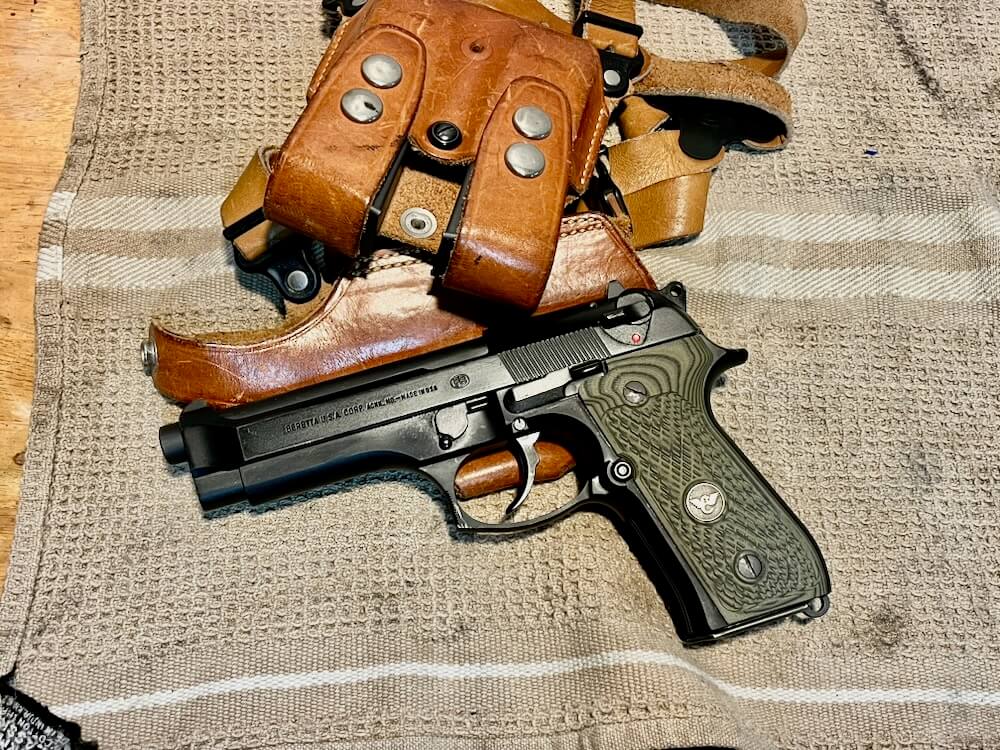
Hammer-fired pistols—especially DA/SA autos—offer something strikers struggle with: a manual safety that directly blocks the hammer. A 1911 or Beretta 92FS lets you holster with the hammer cocked and safety engaged. That's objectively safer for leather carry under retention.
Double-action triggers on hammer guns fire the first shot with a long, heavy press (12–14 pounds typical). Subsequent shots use single-action (4–5 pounds). This built-in safety margin prevents accidental discharge if the gun gets drawn without intention.
Revolvers—the ultimate hammer-fired design—eliminate feeding failures entirely. No magazines. No jams. No slide-lock issues. A .357 Magnum revolver loaded with 125-grain hollow points hits harder than any 9mm defensive load. Police still carry .357 Magnums in rural counties because they work, period.
Sig Sauer P226 and Beretta 92FS pistols see active military and law enforcement use globally. They're tougher to clean than Glocks but more forgiving of abuse. Their hammer allows visual and tactile confirmation of ready status.
Striker vs. Hammer: The Real Decision Matrix
Concealed carry? Striker-fired wins. The thinner profile, lighter trigger, and lack of hammer snag make daily carry easier. Glock 43X, M&P Shield Plus, or P365 are the standard answers.
Duty holster wear? Hammer-fired pistols last longer. Leather stays intact. Retention devices work better against the hammer profile.
Home defense? Revolver beats everything. No mag changes needed. One trigger type (hard first press). Dead reliable.
Speed shooting competitions? Striker-fired dominates. Shorter reset, lighter trigger, faster splits.
DownRange Bottom Line
Striker-fired pistols earned their market dominance through smart engineering and reliable performance. They're excellent choices for most shooters. But "best" remains subjective. Hammer-fired platforms deliver manual safety, stronger defense against liability, and proven durability that strikers still haven't matched. Know what your mission demands, train accordingly, and ignore the false binary. Both actions work. The gun you train with beats the gun that's theoretically superior.