SCOTUS Declines Maine's 72-Hour Gun Wait Challenge, For Now
The U.S. Supreme Court declined to hear Beckwith v. Frey, which means Maine’s 72-hour waiting period on firearm transfers stays in force. The justices denied certiorari on the plaintiffs’ petition challenging the appellate reversal of a preliminary injunction. A U.S. District Judge had blocked enforcement of the law before a First Circuit panel overturned that order. The panel ruled that a waiting period is simply a condition on sales and does not touch the Second Amendment at all. The denial leaves the underlying lawsuit alive in district court, where it will proceed toward final judgment. Maine Attorney General Aaron Frey remains the named defendant.
Key Details
The facts that matter in this order are specific, and they are worth tracking:
- Case: Beckwith v. Frey, a challenge to Maine’s 72-hour waiting period on firearm transfers.
- Lower court history: A U.S. District Judge granted a preliminary injunction. A First Circuit panel reversed it.
- First Circuit reasoning: The panel held that the waiting period is a condition on the sale of firearms and does not implicate the Second Amendment. The opinion suggests a state could impose a delay of weeks or months under the same logic.
- Supreme Court action: The Court denied the cert petition filed by the Beckwith plaintiffs. The case continues in district court.
- Circuit split: The Tenth Circuit granted a preliminary injunction against New Mexico’s seven-day waiting period. New Mexico did not seek Supreme Court review after losing at the circuit level.
- Prior grant: The Court took up Wolford, a Second Amendment challenge to Hawaii’s “vampire rule,” at the preliminary injunction stage. The Court struck that rule down last term.
- Signal before the order: On September 24, Frey waived his right to respond to the petition. No justice asked for a reply.
- Next vehicle: The source flags Ortega, the New Mexico case, as a possible appeal after final judgment.
- Publication date: The source report ran October 19, 2026.
Background
The Supreme Court’s framework for Second Amendment cases comes from New York State Rifle & Pistol Association v. Bruen, decided in June 2022. Bruen requires the government to show that a firearm regulation fits within the nation’s historical tradition of firearm regulation when the Second Amendment’s plain text covers the conduct at issue. In United States v. Rahimi in 2024, the Court refined that test and emphasized analogical reasoning over strict historical matching. Waiting periods have since become the testing ground for how lower courts apply those rules. Maine’s 72-hour wait and New Mexico’s seven-day wait are the two most-litigated examples. Courts in the First and Tenth Circuits have now reached opposite conclusions on whether these delays touch the right at all. That disagreement is the reason the Beckwith petition drew attention in the first place.
Why It Matters for Gun Owners
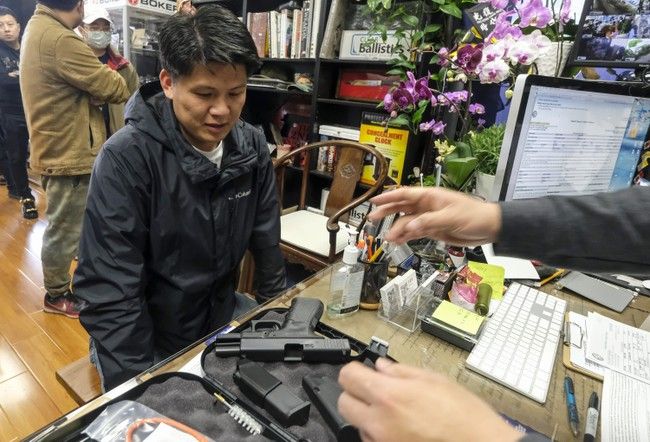
Anyone buying a firearm in Maine feels this order first. A transfer that requires a three-day wait turns a same-day purchase into a multi-day process. Buyers who travel for a gun, or who want to take a firearm home the day they choose it, lose that option. Dealers in Maine will continue to build the wait into their paperwork and scheduling. Gun owners in other states should not assume they are safe. A First Circuit opinion that treats delays as mere sales conditions gives other legislatures a template. Look at your own state’s transfer rules, especially for private sales and out-of-state purchases. Check whether any permit or license holders receive an exemption. If your state has a waiting period, read the statute’s text rather than relying on a dealer’s summary. Watch the Tenth Circuit line of cases closely, because New Mexico, Colorado, Kansas, Oklahoma, Utah, and Wyoming all sit within that circuit.
DownRange Analysis
The First Circuit’s position looks weak under Bruen. The operative text protects the right to “keep and bear” arms. A rule that stands between a lawful buyer and possession of a lawfully purchased firearm is hard to square with that text, even if the court calls it a sales condition. Calling the wait “merely a condition” does not answer the constitutional question. It only avoids asking it. The Tenth Circuit, by contrast, asked for historical analogues and found New Mexico unable to supply them. That is the more defensible approach under current doctrine. The denial of cert does not validate either side. It just postpones the fight. Gun owners should not treat the order as a green light for cooling-off laws. Contact your state firearms rights organization, and support litigation that puts the burden on the government to produce historical analogues. Keep records of every transfer and delay you experience, because that evidence matters in future cases.