Six Shots of .32 S&W Long in a 17-Ounce Smith & Wesson
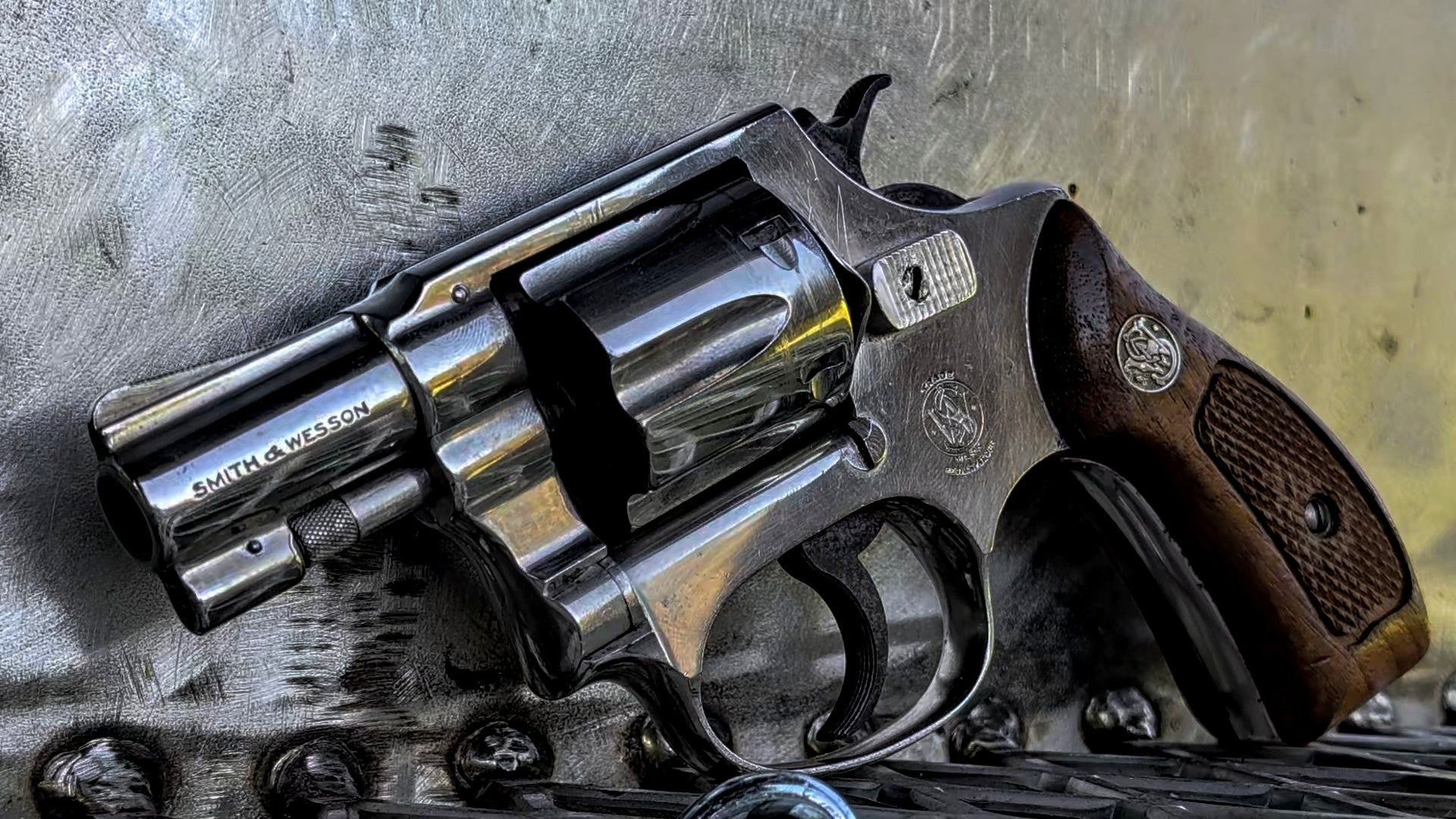
A post-war Smith & Wesson .32 Hand Ejector, the gun collectors call the Pre Model 30, holds six rounds of .32 S&W Long in a snub-nose I-frame that weighs 17 ounces. TTAG contributor Robert Farago's collector-minded writer bought one as his newest I-frame. The revolver has a shiny nickel finish, four frame screws, and a flat-latch cylinder release that most shooters never handle. The piece reads as a personal collecting story, not a product launch. Its real value sits in the details: the cartridge, the frame's history, and why S&W stopped building I-frames. Those details matter to anyone who carries a small revolver or wants a cheap, light pocket gun to shoot.
Key Details
The gun's collector name separates it from the original 1903 Hand Ejectors the owner also keeps. S&W began assigning model numbers in 1957, and this design became the Model 30. The owner says the revolver matches a four-screw, new I-frame pattern, though he hedges that the I-frame changed many times across its run. Other identifiers include a ramped front sight and an egg-shaped trigger guard.
- Weight: 17 ounces, with a bright electrolytic nickel finish and wood grips
- Capacity: six rounds of .32 S&W Long, compared with five rounds in a .38 Special J-frame
- Length: about a quarter inch shorter than a J-frame, and a couple ounces lighter
- Cartridge: .32 S&W Long introduced in 1896 with the original S&W .32 Hand Ejector
- Load tested: 98-grain bullets at roughly 650 feet per second
- Flat latch: seven documented designs, with historian Roy Jinks crediting concealment and a snag-free draw
- Cost: around 50 cents per round, or $28 to $30 for a 50-round box
Lucky Gunner gel testing found that the 98-grain load reaches minimum penetration depth from short barrels. It does not expand. The owner also notes the cartridge still appears in wadcutter form in semi-automatic pistols for ISSF 25-meter bullseye matches.
Background
S&W built the I-frame before the J-frame existed. The I-frame could not handle the longer .38 Special, so S&W developed the J-frame to take that round. For a stretch, both lines ran at once. The duplicated tooling and production costs eventually outweighed the benefit. The .38 Special became the dominant chambering, and S&W ended I-frame production. The result left collectors with a short run of guns that carry a different heritage from the J-frames that followed.
The .32 S&W Long grew out of the earlier .32 S&W, an early centerfire round built for compact revolvers. S&W launched the Long version in 1896. Black powder gave way to smokeless powder while chamber pressure stayed close to the original, and the new Long revolvers still fired the shorter round. Pocket revolvers in this caliber became a staple for decades. Modern J-frames now weigh far less than the Pre Model 30 did, which weakens the case for the older frame on weight alone.
Why It Matters for Gun Owners
If you own a J-frame, the Pre Model 30 shows how S&W tuned its small-frame lineage. Collectors who hunt pre-1960s S&W revolvers should check screw count, latch style, and finish before paying a premium. Nickel finishes on this model are uncommon, and most examples left the factory in carbon blue. An original-looking nickel gun with a flat latch commands more attention, but buyers should verify the finish is factory and not an aftermarket refinish. The owner noted the hammer and trigger remained uncoated, which points toward factory work.
Shooters in any state can legally buy and own these revolvers, since the design is old and standard. Ammunition is the real obstacle. At roughly 50 cents a round, .32 S&W Long shooting costs far more than .38 Special or 9mm. Reloading becomes the practical path for anyone who plans to shoot regularly. Check your local supply before you buy a box, because .32 S&W Long shelves are thinner than common pistol calibers. Carry is a separate question. Six rounds of a light .32 load offer limited stopping power, so treat this gun as a backup or a range toy, not a primary defensive handgun.
DownRange Analysis
Under Bruen, a revolver like this sits comfortably inside the Second Amendment. The Supreme Court's text-and-history test points to firearms in common use for lawful purposes, and a 1957-era S&W revolver fits that category without argument. Any state law that targets it would need to prove a historical analogue, and that burden would fail for a standard pocket revolver. The market angle is simpler. Clean nickel I-frames and early flat-latch S&Ws draw collectors who pay for originality, so verify finish and configuration before you buy. Your action items are straightforward. Dry-fire the double-action trigger to learn it. Shoot a box of factory loads to confirm function. Then decide whether you want a reloading setup for a cartridge that rewards patience more than volume.