Tomb Guard Candidates Memorize 300 Graves Before Earning Their Badge
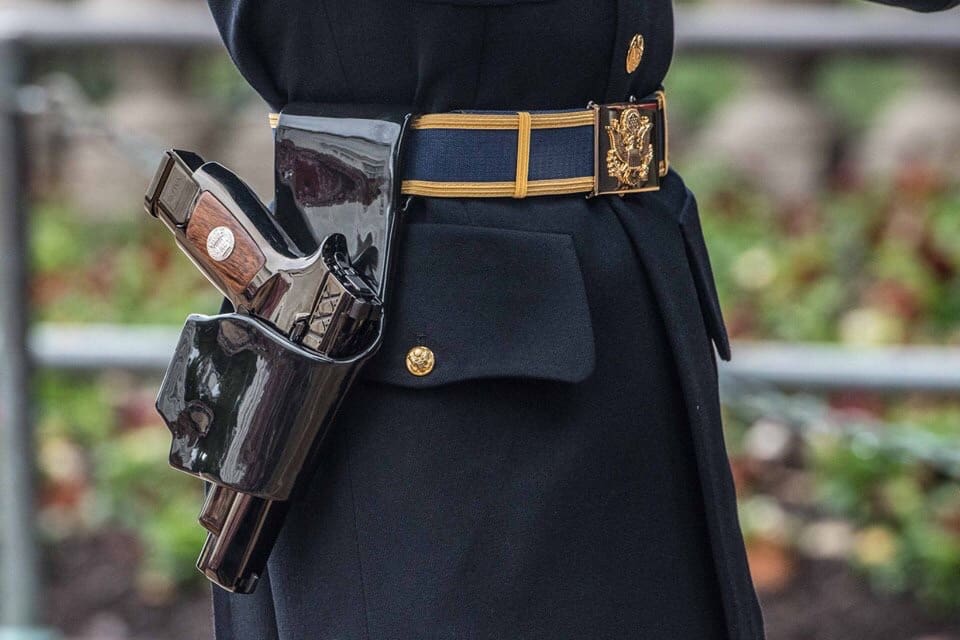
Every Sentinel at the Tomb of the Unknown Soldier in Arlington National Cemetery must memorize the burial locations of nearly 300 prominent veterans before wearing the silver Tomb Guard Identification Badge. TTAG has started a two-part look at the weapons these guards carry, beginning with pistols and saving rifles for the next installment. The guard duty belongs to the 3rd U.S. Infantry Regiment, “The Old Guard,” which took over the post on April 6, 1948. Candidates clear a height and weight check, an initial interview, and a two-week trial before they can start the testing. The excerpt focuses on history and selection, so the hardware details live in the full source.
Key Details
The selection process and the tomb’s history both shape what the guard carries and how the guard is trained. The facts below come from the published material.
- Guard duty timeline: Soldiers from Fort Myer started guarding the tomb in 1926, on daylight shifts only. The job went to 24/7 coverage in 1937.
- The Old Guard: The 3rd U.S. Infantry Regiment took the post on April 6, 1948. The Old Guard also escorts the president and handles military funerals at Arlington.
- Entry requirements: Candidates meet height and weight standards, sit an initial interview, and finish a two-week trial.
- Memorization: During the trial, candidates learn burial locations for nearly 300 prominent veterans plus cemetery history.
- Training: Passing candidates learn the guard-change ceremony, the manual of arms, and how to keep uniforms and weapons immaculate.
- The badge: Sentinels must pass several tests, starting with the manual of arms, to earn the silver Tomb Guard Identification Badge.
- Unknown soldier selection: Four candidate caskets went to France. An American serviceman chose one for Arlington.
- 1921 ceremony: The Navy cruiser USS Olympia carried the remains home. They reached Washington on November 9, 1921. About 90,000 people filed past the Capitol rotunda on November 10. On November 11, President Warren G. Harding placed a Medal of Honor on the tomb.
- Sarcophagus: The original marble slab received a sarcophagus in 1932.
Background
The tomb exists because the country could not identify its dead. Before the Civil War, unidentified remains often went into mass graves or roadside burials. In 1862, the national cemetery system began collecting fallen soldiers. The Civil War Unknowns now rest under the same memorial grounds, and estimates suggest nearly half of that war’s dead were never identified. The Spanish-American War brought the Army’s Quartermaster Corps and a Burial Corps that improved identification. After World War I, roughly 100,000 Americans died. Britain buried its unknown soldier in Westminster Abbey, and France chose the Arc de Triomphe. Congressman Hamilton Fish Jr. of New York, a World War I veteran, proposed bringing home an unknown American in December 1920. That legislation produced the Arlington tomb. Guard duty followed in 1926, and the tomb now sits under federal military control at one of the most visited cemeteries in the country.
Why It Matters for Gun Owners
Most gun owners will never carry on federal ceremonial duty. The practical lesson still applies. The Old Guard does not treat a sidearm as a casual accessory. Candidates spend weeks on procedure before they touch a ceremonial weapon in public. If you carry daily, that discipline should show up in your own habits: clearing your holster, checking your draw, and knowing your gun’s manual of arms before you need it. If you plan to visit Arlington, do not expect to bring a firearm onto cemetery grounds. Federal property runs under its own rules, and a carry permit from your home state does not override them. Check the official Arlington National Cemetery visitor guidance before you go, and plan to watch the guard change, which happens in public view.
DownRange Analysis
Ceremonial military carry does not test the Second Amendment. Under Bruen, the government must justify firearm regulations by pointing to the nation’s historical tradition of regulation. A federal honor guard operating under Army authority is a different question. Nobody is arguing that the Tomb Guard violates the Constitution. The useful question for civilians is how the military trains people to carry. The Army moved its general-issue sidearm to the Sig Sauer P320 family in 2017, which means the ceremonial pistols here may differ from the standard issue. Watch for TTAG’s rifle installment and the pistol specifics in the full source. Right now, the action item is simple: review your own draw, safety checks, and range fundamentals, because the men and women at the tomb rehearse those basics for weeks before anyone sees them perform.