Six Million Kids Estimate Doesn't Prove Range Lead Poisoning
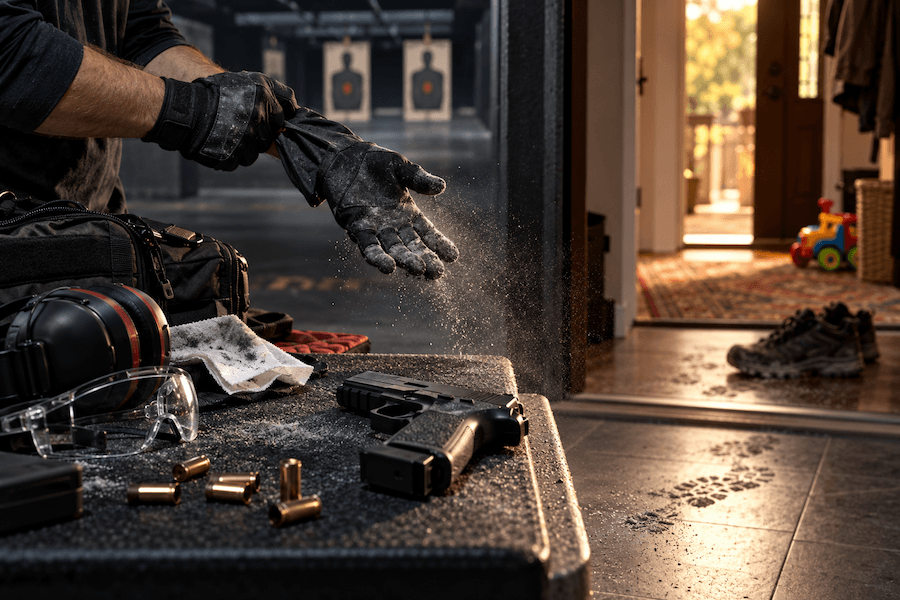
A new study in the American Journal of Preventive Medicine estimates roughly six million American children live in homes where someone shoots lead ammunition and skips post-shooting hygiene. Researchers Christian Hoover and David Hemenway built that number from the December 2024 National Firearm Survey. The Trace amplified the figure with a fear-first framing. The math tells a narrower story. The study measured habits, not blood. It tested no children and proved no link between a range trip and harm. Lead residue on gear is a real hazard, and shooters should handle it like one. But six million describes possible pathways, not confirmed poisonings.
Key Details
The study drew on survey responses rather than laboratory or household testing. Here is what the researchers actually counted:
- Sample: 1,565 adult gun owners who fired a firearm in the previous year.
- Ammunition: Respondents either used lead-based ammunition or did not know what type they fired.
- Hygiene measured: Showering, changing clothes or shoes, and isolating range equipment before it enters the home.
- Headline estimate: About six million children live in households matching those conditions.
- Not measured: Children's blood lead levels, lead dust inside homes, or whether any specific range visit caused exposure.
The Harvard T.H. Chan School of Public Health summary of the research makes a point the advocacy coverage skipped. Future work must show whether specific hygiene steps actually lower childhood blood-lead concentrations. Hoover told The Trace that shooters using lead ammunition should treat the activity as though it were toxic. That wording targets lead residue from shooting. It does not condemn firearms that sit clean in a safe. The distinction matters, and the headline erased it.
Background
Lead has been a known occupational and environmental hazard for decades. The Centers for Disease Control and Prevention sets a blood lead reference value for children of 3.5 micrograms per deciliter and states that no safe blood lead level has been identified. That standard explains why public health researchers care about any pathway from a shooting range to a kid's bloodstream.
The National Institute for Occupational Safety and Health has documented how lead dust from firing ranges settles on skin and clothing. Its firing-range guidance recommends washing exposed skin, changing clothes and shoes, and keeping contaminated gear out of vehicles and homes. A separate NIOSH evaluation of an indoor law-enforcement range recommended lead-removal soap, dedicated range clothing, and steps to keep residue from tracking indoors. Those recommendations focus on workers and indoor facilities, yet the same logic applies to recreational shooters.
Lead ammunition restrictions already exist in some places. California enacted legislation in 2013 that phased in a statewide ban on lead ammunition for hunting, with condor-range rules preceding it. That policy targeted wildlife and scavenger poisoning, not range hygiene. Still, it shows lawmakers have already moved from ammunition content to ammunition use.
Why It Matters for Gun Owners
The people most affected are shooters who load lead bullets or buy cheap bulk ammunition without checking the primer and bullet composition. Competitive shooters, plinkers, and hunters who shoot practice rounds in volume face the most residue. Indoor range users face more, especially at facilities with weak ventilation or irregular cleaning. Households with children, pregnant family members, or anyone with a lead-sensitive medical condition should take the issue seriously.
The fix costs little. Keep your range bag, shooting jacket, and shoes in the garage or a dedicated bin, not the passenger seat or the living room. Wash hands and face before eating. Shower after heavy shooting sessions when you can. Use lead-removal wipes on hands and gear. Wash range clothes separately. If you run an indoor range, ask for its air-handling and cleaning logs. If you rent or join a club, ask the same questions. Watch state legislatures for bills that move from ammunition regulation toward mandated range hygiene, because those bills would reach your gear closet directly.
DownRange Analysis
Under New York State Rifle & Pistol Association v. Bruen, a government restriction on arms-bearing conduct must fit within the nation's historical tradition of firearm regulation. A state mandate forcing shooters to shower or quarantine range gear would face a hard fight on that test. Lawmakers would need to show analogous regulations from the founding era or the Reconstruction era. They cannot. A voluntary hygiene guideline from NIOSH stands on different ground than a criminal penalty for skipping a shower.
The market response will come from ammunition makers and ranges, not from Congress. Expect more lead-free and low-residue offerings, and expect ranges to publish ventilation data as a liability shield. Shooters should act now. Change clothes after the range. Keep lead gear out of the house. Ask your range what its air exchange rate is. Those three steps cost nothing and answer the study's real concern without conceding that shooting is poison.