Federal Court Strikes Down Biden's Ghost Gun Rule
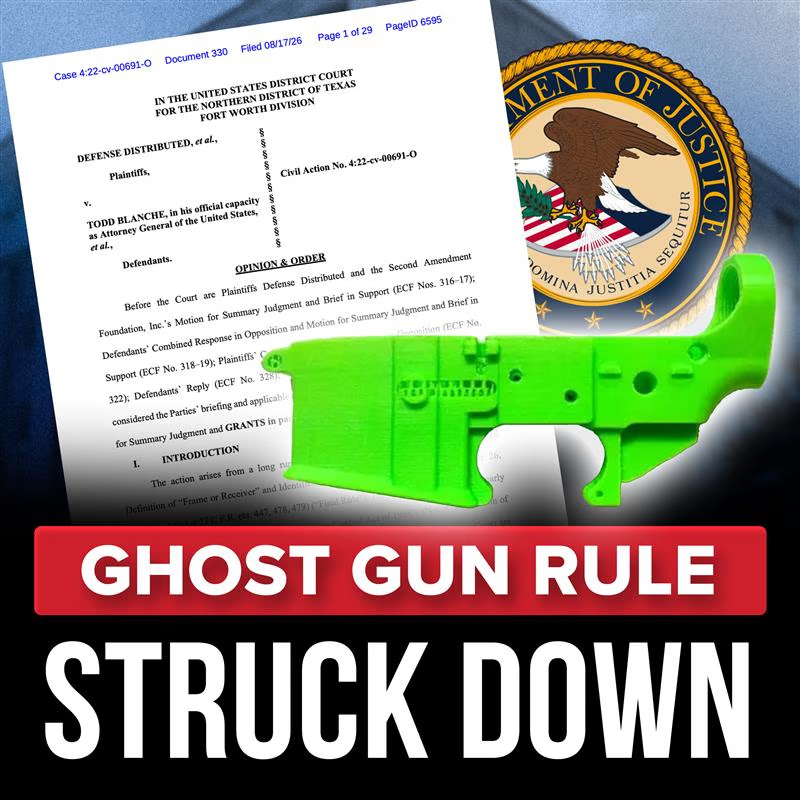
A federal judge killed Biden's ghost gun regulation this week, delivering a major victory to Second Amendment advocates. The rule attempted to regulate unfinished receivers and 80% frames as firearms, requiring serial numbers and background checks. Gun Owners of America (GOA) and other plaintiffs challenged the order on constitutional grounds. The court agreed the rule exceeded ATF authority and violated the Second Amendment.
GOA maintains a separate legal challenge still active in court. That case could produce additional favorable rulings on the same issue. Gun owners should expect Biden's administration to appeal or attempt new regulations targeting unserialized firearms.
Why It Matters for Gun Owners
This ruling protects your ability to manufacture firearms for personal use without federal registration. Home builders and hobbyists can legally complete receivers without ATF interference. The decision affirms that manufacturing rights fall under the Second Amendment—a principle that extends beyond ghost guns.
Enforcement chaos at the ATF creates practical advantages for gun owners. Recent reports show ATF inspectors approved suppressors sold without registration requirements. This signals weak coordination between field agents and headquarters policy. Inconsistent enforcement means some retailers operate with minimal restrictions while others face heavy scrutiny.
A foreign ransomware gang breached the ATF's systems recently, compromising internal communications and enforcement databases. That breach further disrupts federal tracking capabilities. Gun owners should understand that registration systems remain vulnerable and incomplete—another reason to avoid voluntary registration programs.
Background: The Regulatory Battle Over Unfinished Receivers
Biden issued his ghost gun order in April 2022 via executive action. The rule defined 80% receivers and frames as firearms requiring serialization. It mandated background checks and dealer licensing for anyone selling partially completed receivers. The order specifically targeted kits marketed as legal alternatives to regulated firearms.
Gun makers and owners immediately challenged the rule in multiple courts. Federal judges in different districts blocked or restricted the regulation's enforcement. Yesterday's ruling adds substantial legal weight to those challenges. The court found that unfinished receivers don't meet the statutory definition of "firearm" under federal law.
The ATF's regulatory authority comes from the 1968 Gun Control Act. That law defines firearms by specific characteristics: barrel, breach, and firing capability. Most 80% receivers lack these components in their unfinished state. Courts have consistently ruled that incomplete pieces don't qualify as regulated firearms.
GOA's parallel legal challenge focuses on constitutional protections rather than statutory interpretation. That case argues Americans retain the right to manufacture firearms without government oversight. A favorable ruling there would establish broader protections than the recent decision achieved.
DownRange Bottom Line
Federal courts are systematically dismantling Biden-era gun control orders. This week's ghost gun ruling follows similar decisions blocking magazine ban attempts and other executive actions. The pattern shows federal judges applying constitutional standards that restrict ATF regulatory reach.
Gun owners should remain vigilant about appeals and new regulations. The administration will attempt different approaches to restricting unserialized firearms. However, the legal foundation for such rules grows weaker with each court decision.
Enforcement breakdown at the ATF creates a real window for gun owners. Inconsistent inspection standards and ransomware breaches mean the federal system isn't functioning as intended. That reality shapes practical behavior for gun shops and manufacturers navigating unclear regulations.
Keep monitoring federal court filings. GOA's ongoing challenge could produce even stronger protections. Until the Supreme Court definitively rules on manufacturing rights, continued litigation will drive policy.