Most Gun Owners Apply Threadlocker Wrong and Pay the Price
Threadlocker sits in your maintenance kit unused or misapplied, costing you loose scope mounts, failed zero runs, and potentially dangerous malfunctions. The adhesive isn't complicated, but application errors ruin countless firearms annually.
You need the right product for the right job. Loctite 243 (medium-strength, removable) handles 95 percent of gun applications—scope rings, rail systems, gas blocks, trigger guard pins. Loctite 270 (permanent) stays reserved for pinned gas tubes and receiver extensions where disassembly never happens. Most shooters grab the wrong bottle or skip threadlocker entirely, watching fasteners back out after 50 rounds.
Why It Matters for Gun Owners
Loose hardware kills accuracy. Your $2,000 rifle scope zeroed perfectly drifts 6 inches downrange when the ring screws loosen under recoil. That's not a scope problem—that's a maintenance failure.
Threadlocker prevents vibration-induced loosening. Recoil, hammering actions, and bolt cycling create microscopic movement that walks fasteners backward. Steel on steel with no adhesive? Fasteners fail within hundreds of rounds on centerfire rifles, faster on semi-autos. Your backup iron sights shift. Your gas block rotates. Your safety lever dangles.
The fix costs pennies and five minutes per gun. Skip it, and you're chasing zero shifts and replacing parts unnecessarily.
Application Requirements Most Shooters Ignore
Surface preparation determines success. Clean fastener threads with a brass brush or wire wheel until bare metal shows. Remove old threadlocker, dirt, and oil completely. Contaminated threads prevent proper adhesive flow and curing.
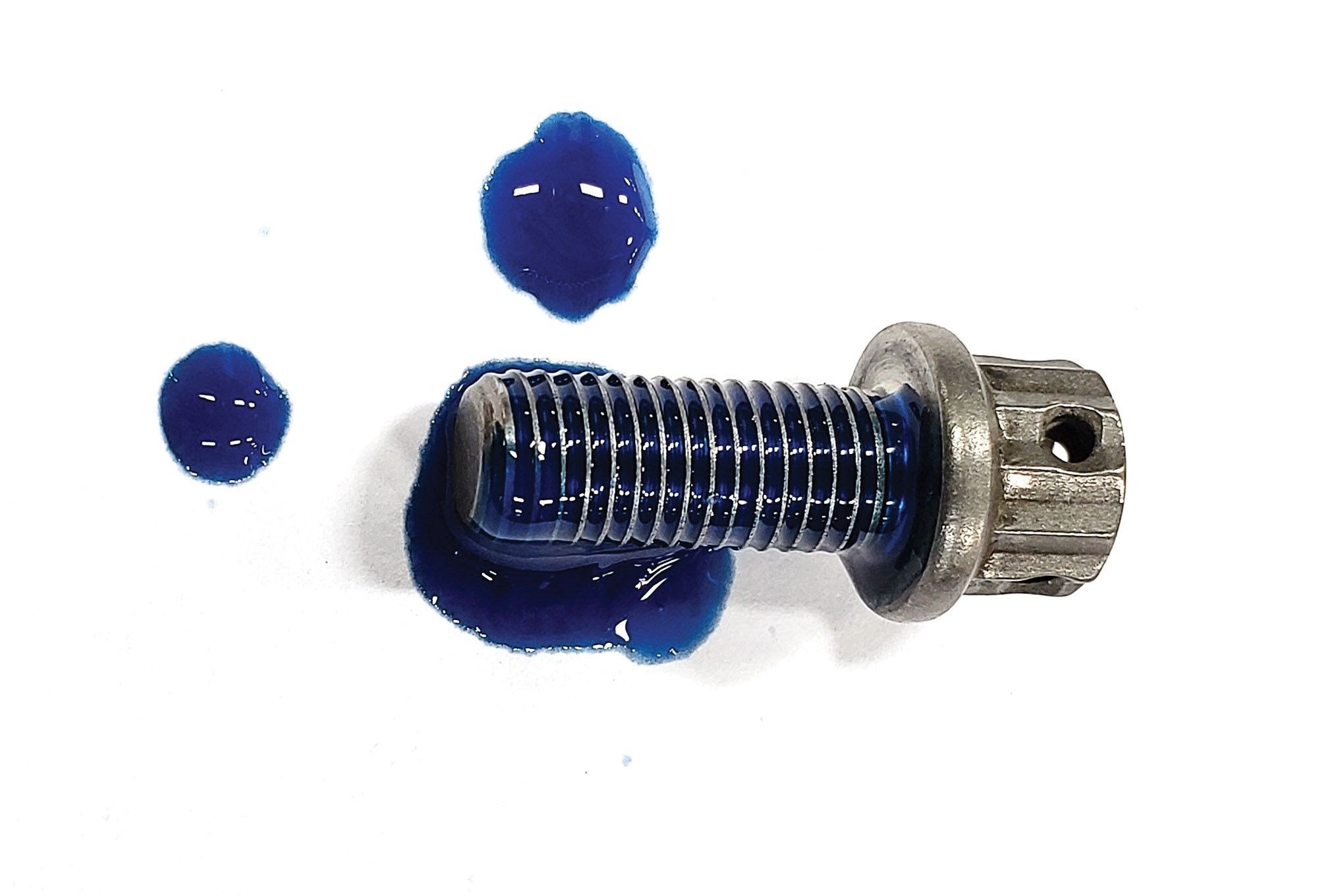
Apply one small drop to the fastener threads—not the hole, not the bolt head. A toothpick works better than the bottle applicator. One drop. Excess threadlocker squeezes onto your rail or receiver finish and hardens there permanently.
Install and tighten the fastener to proper torque specification. Scope rings typically need 20-25 inch-pounds. Gas block screws run 12-18 inch-pounds. A cheap torque wrench ($25) beats guessing. Tight enough to stay put, loose enough to avoid cracking aluminum receivers or splitting plastic furniture.
Let it cure. Loctite 243 requires 24 hours for full strength. You can shoot after two hours, but overnight curing is smarter. Don't touch that gun for a day.
Medium vs. Permanent—Choose Wrong and Suffer
Loctite 243 (blue, medium) removes with normal hand tools. Heat softens it if you ever need disassembly. This belongs on everything you might service: scope rings, rail accessories, stock attachment points, grip screws.
Loctite 270 (red, permanent) requires heat tools and hammers to remove. Reserve it exclusively for parts never coming apart: pinned gas tubes, receiver-extension threadlocker on AR-15 builds, permanently mounted front sights. One application error here costs you either a destroyed part or hours of frustrated heating and beating.
Most gun owners never need red threadlocker. Stick with blue and save yourself the headache.
DownRange Bottom Line
Buy Loctite 243. Clean your fastener threads. Apply one drop. Tighten to spec. Wait 24 hours. Your optics stay zeroed, your accessories stay mounted, your gun stays reliable. Five minutes of maintenance prevents dozens of hours chasing problems that don't exist if you'd done the job right the first time.