Menifee Garage .50 BMG Rifle Slipped Past Three California Bans
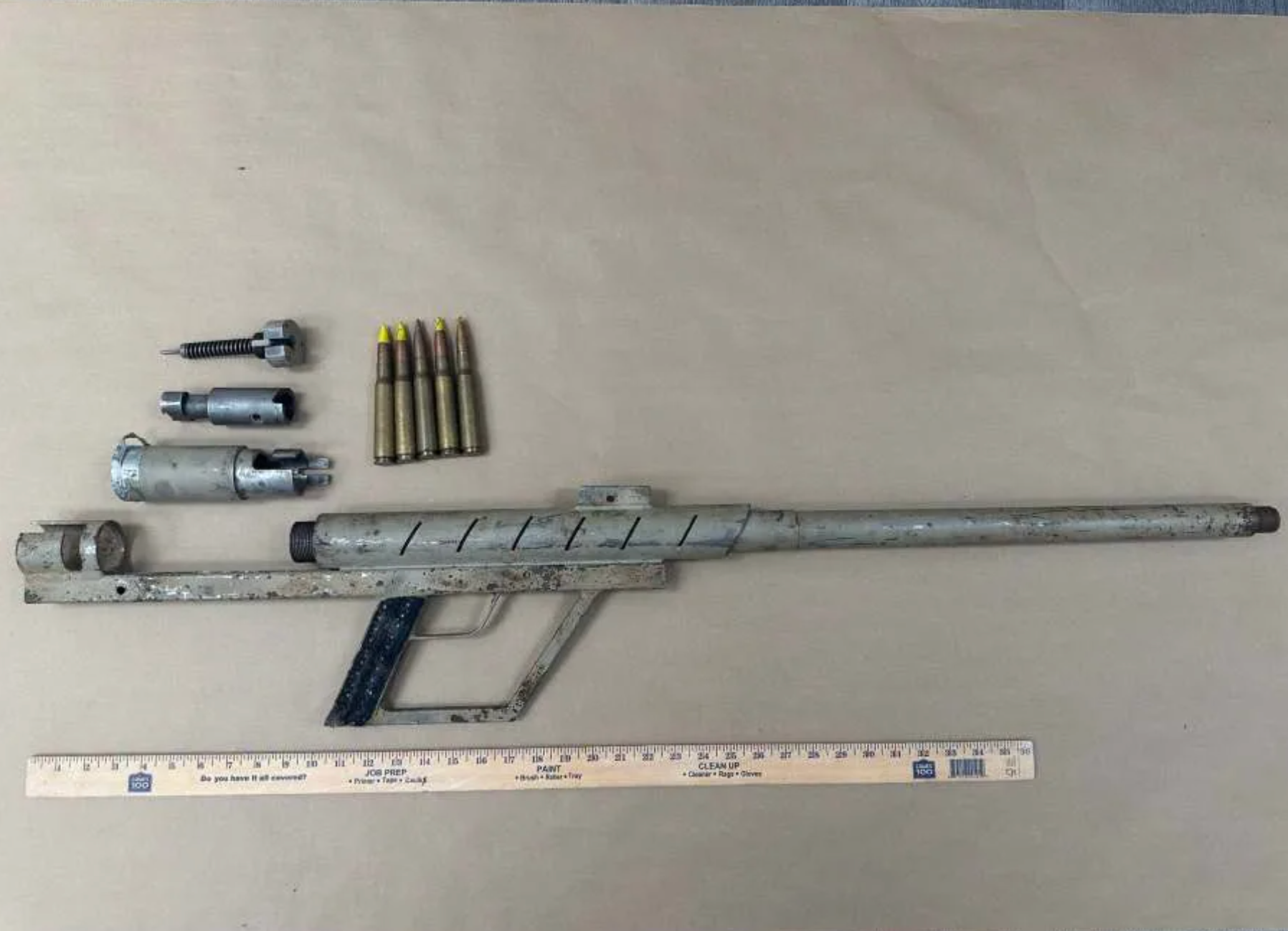
Menifee police in southwest Riverside County recovered a homemade .50-caliber rifle chambered for Browning Machine Gun rounds, and the person holding it was a prohibited person under federal law. The department says the rifle fired as built but skipped several safety features that a factory gun carries. Menifee officers called in the Riverside County Sheriff's Hazardous Device Team to examine and clear it. California already bans unserialized ghost guns and bans .50 BMG rifles outright. This rifle broke at least two of those rules before anyone found it.
Key Details
The facts that matter are simple and ugly:
- Location: Menifee, southwest Riverside County, California.
- Caliber: .50 BMG, the round designed for the Browning M2 heavy machine gun.
- Build: Homemade receiver and barrel assembly, described by police as fully functional.
- Missing parts: Several safety components a factory rifle would include. Police did not list which ones.
- Possessor: A prohibited person, barred under federal law from owning or handling any firearm, factory or homemade.
- Response: Menifee PD requested the Riverside County Sheriff's Hazardous Device Team to examine and clear the rifle.
- State law: California bans unserialized ghost guns and bans .50 BMG rifles.
Police described the rifle as closer to a short-range explosive device than a conventional firearm. That phrasing signals the bomb squad was involved for a reason. A .50 BMG cartridge generates far more pressure than any pistol or standard rifle round. If a homemade chamber or barrel has flaws, or the ammunition is out of spec, the failure point moves from the target to the shooter's hands and face. The department has not released a timeline for the investigation, and the public filing does not include the number of rounds recovered or the charges filed.
Background
California has regulated .50 BMG rifles since 2004, when the state moved to ban their sale and transfer. The law targeted long-range rifles that could penetrate armored vehicles and other hardened targets, and it drew heavy opposition from the shooting community at the time. Lawmakers later pushed the state's ghost gun rules tighter, requiring serial numbers and background checks for the kits and frames that home builders had used to bypass dealers. Federal law also changed. ATF's frame or receiver rule, the so-called ghost gun rule, sought to define which home-built parts count as firearms, and the Supreme Court upheld that rule in 2025.
Federal law already barred prohibited persons from possessing firearms before any of these changes. Under 18 U.S.C. 922(g), felons, certain domestic abusers, and others lose the right to possess any gun, and a homemade rifle triggers the same prohibition as a factory rifle. The Menifee case shows that the legal framework existed on paper before the rifle was built. It did not stop the rifle from being built or possessed. Enforcement only began when police found the gun.
Why It Matters for Gun Owners
Every legal gun owner in California should read this case as a warning about how the state will frame home building. Lawmakers will point to this rifle when they push the next round of rules on ammunition, components, and home manufacturing. Expect the argument to shift from criminal misuse to public safety. Those arguments will reach the machinist who sells a barrel blank or the hobbyist who wants to finish a lower in his garage.
Owners outside California should pay attention too. Any state with a ghost gun statute or a heavy-caliber restriction faces the same argument. If you build your own firearms, check your state's definitions for frames, receivers, and caliber limits before you buy parts. Keep your build documentation, your serial numbers, and your receipts in one place. Do not loan a project rifle to anyone with a prohibiting record, even a relative who swears he is clean. A federal felony charge follows the gun, and the person holding it carries the liability.
DownRange Analysis
Under Bruen, the government must show that a firearms regulation fits the nation's historical tradition of firearm regulation. Prohibiting violent felons from possessing firearms has strong historical support, and courts treat it as presumptively lawful. The Menifee possessor fell squarely inside that category. A ban on .50 BMG rifles is harder to defend under the Bruen framework, because the caliber is not historically exotic and the state has not shown a founding-era analogue for barring it. Expect litigation on that point when the state's next case arrives. The rifle in Menifee does not settle the constitutional question.
The market lesson is narrower. Anyone building heavy-caliber firearms at home without a clear legal path takes on the risk of catastrophic failure and criminal exposure. The fix does not come from another statute. It comes from the same enforcement tools that caught this case. Our advice stays simple. Build only what you can legally own, document every step, and never hand a gun to someone who cannot lawfully hold one.