Charter Arms Returns .44 Special to Compact Carry Market
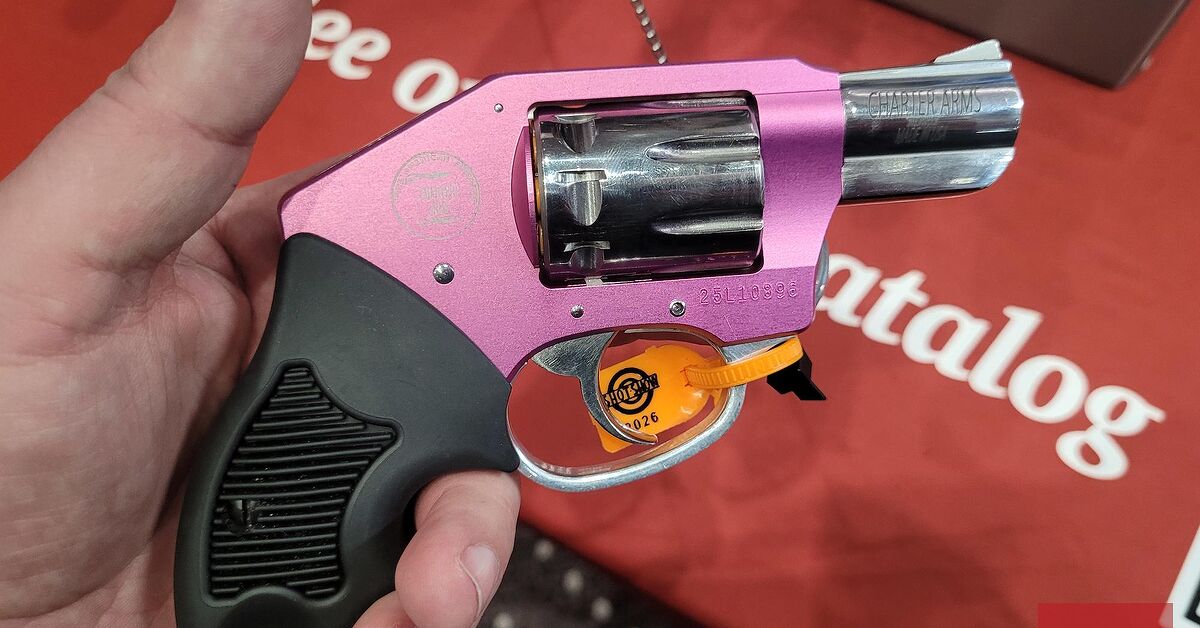
Charter Arms introduced the Walker revolver series in .44 Special, marking the company's return to the concealed carry segment it created with the original Bulldog platform in the late 1970s. The Walker delivers real stopping power in a frame small enough for pocket carry—addressing shooters rejecting marginal .38 Special ballistics without jumping to full-size magnum weapons.
The .44 Special cartridge generates significantly more energy than standard .38 Special or .38 +P loads. Recoil stays manageable compared to .357 Magnum, making the Walker shootable for extended practice sessions. Charter Arms built its reputation on the original Bulldog's simple reliability: no safeties to fumble, proven lockwork, straightforward maintenance.
Why This Matters for Gun Owners
The concealed carry revolver market has contracted over two decades as semi-autos dominated carry selections. For shooters rejecting that trend, options remain limited. The Walker addresses a specific audience: revolver purists, older carriers with arthritis, and anyone who views a manual safety as a liability in stress situations.
The .44 Special sits in a ballistic sweet spot. It outperforms .38 Special by 100+ foot-pounds of energy. It generates less felt recoil than .357 Magnum, reducing flinching and improving shot placement during practice. Ammunition availability has improved steadily over the past decade as ammunition manufacturers recognized the cartridge's comeback among serious carry shooters.
Frame size matters. Compact revolvers under 2 inches in barrel length fit ankle holsters, pocket carry, and deep IWB setups that full-size magnums cannot. The Walker's Bulldog-inspired architecture keeps overall dimensions tight while maintaining a usable grip for adult hands. Charter Arms designed the gun for real-world carry, not range sessions alone.
Reliability concerns vanish with revolver platforms. No feed-related malfunctions. No slide racking under stress. No magazine fumbles in darkness. The Walker's simple double-action trigger requires no safety manipulation—point, press, fire. That simplicity appeals to shooters skeptical of complex firearms.
Background: Charter Arms and the Bulldog Legacy
Charter Arms manufactured the original Bulldog starting in 1973, introducing American shooters to the .44 Special in a pocket-sized frame. That design challenged the prevailing belief that serious carry guns required full-size platforms. The Bulldog proved the concept worked: compact, reliable, powerful enough for defensive encounters.
The company faced financial difficulties over the past two decades, changing ownership multiple times. Production shifted, design updates stalled, and competitor offerings fragmented the market. Charter Arms survived where other revolver manufacturers collapsed because the Bulldog maintained a loyal customer base among active shooters.
The Walker series represents management's decision to reinvest in the concealed carry revolver market. This isn't a new cartridge or experimental design—it's a return to proven territory where Charter Arms holds legitimate credibility.
DownRange Bottom Line
The Walker addresses real demand from shooters tired of .38 Special ballistics or unwilling to manage .357 Magnum recoil in compact frames. Charter Arms enters a market segment with minimal competition and genuine technical advantages over pocket-sized semi-autos. Prices remain unconfirmed, but Bulldog comparables suggest competitive positioning against other compact revolver options. For carry shooters valuing simplicity, proven reliability, and legitimate stopping power in a pocket-sized package, the Walker deserves serious evaluation.