Confederate Griswold Revolver Filled Critical Handgun Gap for Rebel Forces
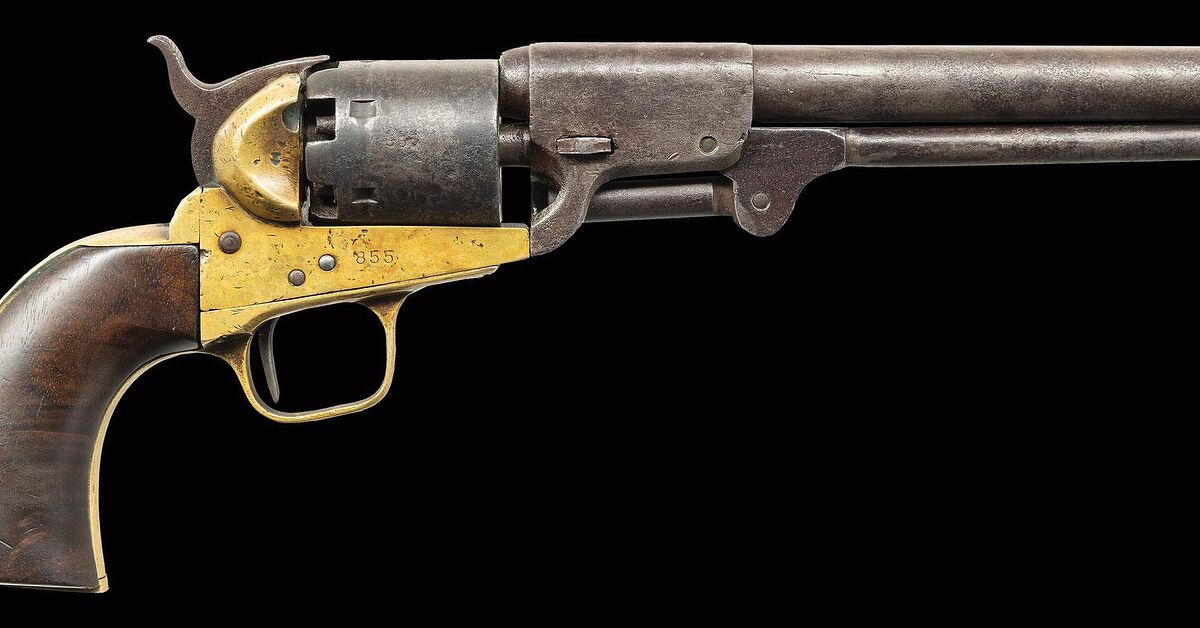
The Confederacy faced an immediate crisis in 1861: they needed firearms, fast. Southern officers who'd served in the U.S. military brought weapons expertise but lacked manufacturing capacity. Federal arsenals fell within Union control. The answer came from Gadsden, Alabama, where the Griswold & Gunnison company built the Griswold revolver—a six-shot .36 caliber handgun that became the South's primary produced sidearm.
The revolver borrowed heavily from existing designs. Its frame mimicked the Colt Model 1851 Navy, a proven platform Union and Confederate soldiers already knew. Griswold manufactured approximately 3,700 revolvers between 1862 and 1865. That output mattered. Every gun meant another officer, sergeant, or cavalryman carried a functional sidearm into battle.
The gun itself measured 10.5 inches overall and weighed roughly 44 ounces loaded. Six .36 caliber chambers held black powder charges, round balls, and percussion caps—standard ammunition for the era. The brass frame distinguished it from the steel-framed Colt. Brass was cheaper to produce and required less industrial infrastructure than steel. That economic reality defined Confederate manufacturing throughout the war.
Why It Matters for Gun Owners
The Griswold revolver represents practical problem-solving under impossible conditions. When supply chains collapse and conventional resources vanish, manufacturers innovate. They use available materials. They adapt proven designs. The Griswold wasn't innovative—it was functional, and that distinction matters.
Civil War collectors seek original Griswold revolvers today. Prices for genuine examples range from $8,000 to $15,000, depending on condition and serial number range. Reproduction models exist for living historians and sport shooters. A quality reproduction runs $400 to $600. These reproductions fire period-correct ammunition and demonstrate why the original design worked for 150 years of military service.
The revolver also illustrates how regional manufacturing shaped conflict. The North's industrial capacity produced standardized weapons in volume. The South improvised with whatever worked. That gap in production capacity eventually determined the war's outcome. Understanding this history shows why firearm supply chains matter in any armed conflict.
Background on Griswold & Gunnison Production
Samuel Griswold and A. Gunnison established their factory in Gadsden before Alabama seceded. They'd worked in firearms manufacturing previously. When Confederate authorities needed revolvers, the company received the contract. They operated from 1862 through Sherman's Georgia campaign in 1864, when Union forces destroyed their manufacturing plant.
Production records show three distinct serial number ranges. Early examples feature higher serial numbers. Later revolvers show lower numbers, suggesting destroyed inventory. Researchers still debate exact production figures—estimates range from 3,700 to 5,900 units. Frame markings read "GRISWOLD & GUNNISON, GADSDEN ALA." followed by serial numbers.
The factory used a mixture of new machinery and hand labor. Skilled gunsmiths formed components while unskilled workers performed assembly and finishing. This hybrid approach allowed faster production than hand-crafting but required less industrial infrastructure than Northern factories.
DownRange Bottom Line
The Griswold revolver solved a real problem with available resources. It worked reliably. It kept fighting soldiers armed. Collectors respect original examples as legitimate pieces of American military history. Reproductions let shooters experience the gun's actual handling characteristics without damaging irreplaceable artifacts.
For gun owners, the Griswold demonstrates why understanding firearms history strengthens your knowledge. These revolvers didn't win battles, but they armed the soldiers who fought them. That practical reality—meeting operational needs with existing materials and proven designs—defines effective firearms engineering across any era.