Abdul El-Sayed's Musket Line Ignores Rifles and Private Artillery
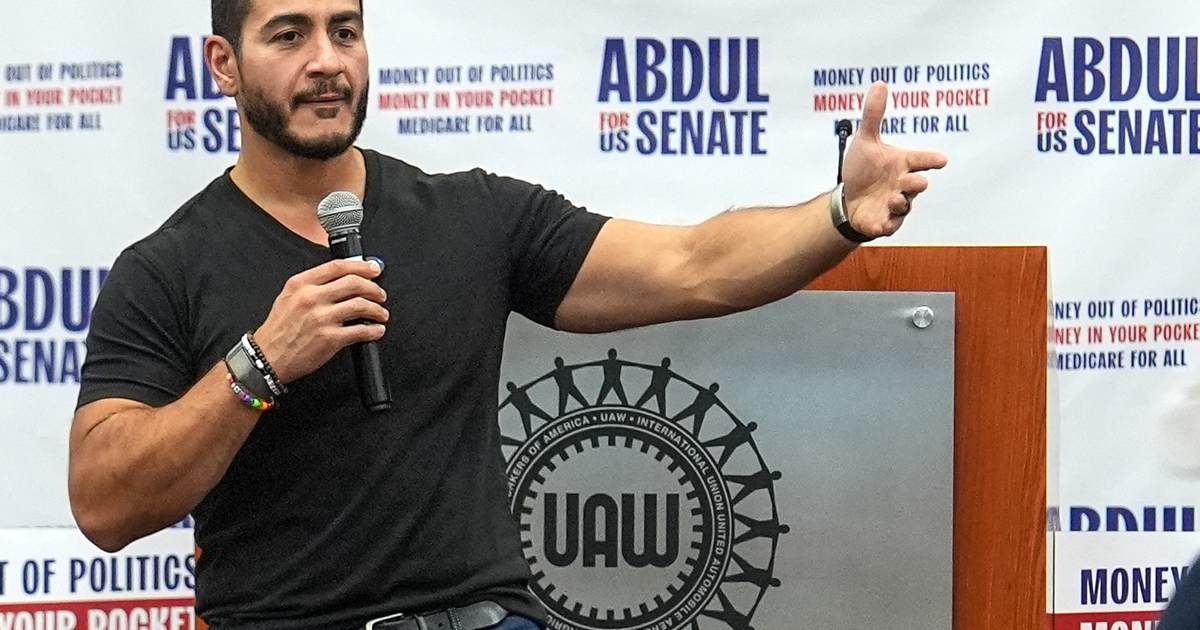
Democrat Abdul El-Sayed said the men who wrote the Second Amendment "had muskets" and that everyone should therefore have equal rights to a musket. Bearing Arms columnist Tom Knighton published a reply on October 27, 2026, calling the line a clever-sounding tactic that falls apart on contact with the historical record. Knighton's core point is simple. The Second Amendment never covered only smoothbore muskets, and the founders' world included rifles, artillery, and plenty of other arms that El-Sayed's logic would also have to address.
Key Details
The argument turns on a few specific facts that Knighton lays out:
- The quote: El-Sayed said the framers "had muskets" and that "everyone should have equal rights to a musket."
- The musket defined: A musket is a smoothbore firearm. The British Brown Bess flintlock used during the American Revolution is the classic example.
- The rifles: Militia members and many other Americans carried rifles, including the Pennsylvania and Kentucky long rifles. Rifling in the barrel improved range and accuracy.
- The scope: Knighton argues rifles were covered by the Second Amendment at the nation's founding, not just smoothbores.
- Artillery: Knighton states that private citizens could lawfully own artillery. He uses this to show the musket framing does not match the founding era at all.
- The charitable reading: Knighton concedes El-Sayed may have meant muzzle-loading hand-held firearms used for hunting or self-defense. He says no one calls muzzle-loading handguns "muskets," though.
- The analogy test: Knighton applies El-Sayed's logic to free speech, the press, and religion. Under that logic, the press would cover only Franklin-era hand presses, and Mormons would lack religious protection because their church formed in 1830.
Background
The Supreme Court settled the basic question in District of Columbia v. Heller (2008). The majority held that the Second Amendment protects an individual right to keep and bear arms, separate from militia service. Justice Scalia's opinion also described the protected arms as those in common use, while noting that the Court has long allowed limits on "dangerous and unusual" weapons. That language matters because it is the only textual hook gun-control advocates have, and it does not support a ban limited to 1790s technology.
Seven years later, New York State Rifle & Pistol Association v. Bruen (2022) set the modern method. Courts must ask whether a modern gun regulation fits the nation's historical tradition of firearm regulation. Bruen struck down New York's requirement that applicants show "proper cause" to carry a handgun outside the home. The decision forces both sides to argue history, which is exactly where El-Sayed's position gets weak. Founding-era evidence shows rifles were common, and private ownership of cannon existed. The musket-only theory requires ignoring that record, and Bruen does not allow that.
Why It Matters for Gun Owners
This is not a fringe talking point. Politicians use "the founders only had muskets" to justify bans on modern semi-automatic rifles and magazines. Your state may already have those rules. Bans on certain semi-automatic rifles are in force in places like California and New Jersey, and similar proposals keep surfacing in Michigan and elsewhere. When a candidate frames the Second Amendment as a musket right, the framing is designed to make modern arms look like a historical accident that can be regulated away.
The practical risk is a shift in how judges and juries hear the issue. Under Bruen, a court asks whether the modern arm has a historical analogue. If lawmakers and advocates convince the public that the Second Amendment covered only muskets, they make it easier to argue that rifles, pistols, and magazines fall outside the right. Gun owners should know the difference between a smoothbore flintlock and a rifled long gun, and they should be able to say so in one sentence. Sharp, accurate answers beat sarcasm when a voter or reporter throws this line at you.
DownRange Analysis
The musket argument does not survive Bruen. Bruen demands historical evidence, and the evidence cuts against El-Sayed. Rifles were common in the founding era, and the Brown Bess was not the only arm in circulation. Private artillery ownership adds another hole, because it shows the founders did not think about arms in narrow terms. Heller's "dangerous and unusual" language gives opponents room to argue about specific modern firearms, so the fight will not end with this one exchange. But "muskets only" is the weakest version of that argument, and it loses on the record.
What should a gun owner do right now? Know the history cold. Learn the Brown Bess, the Pennsylvania long rifle, and the Heller and Bruen holdings. Do not get drawn into sarcasm contests. Answer with facts and keep the analogy test ready. If you live in a state with new restrictions, track the litigation and the legislative calendar. The argument is winnable, but only if gun owners can make it in plain language.