
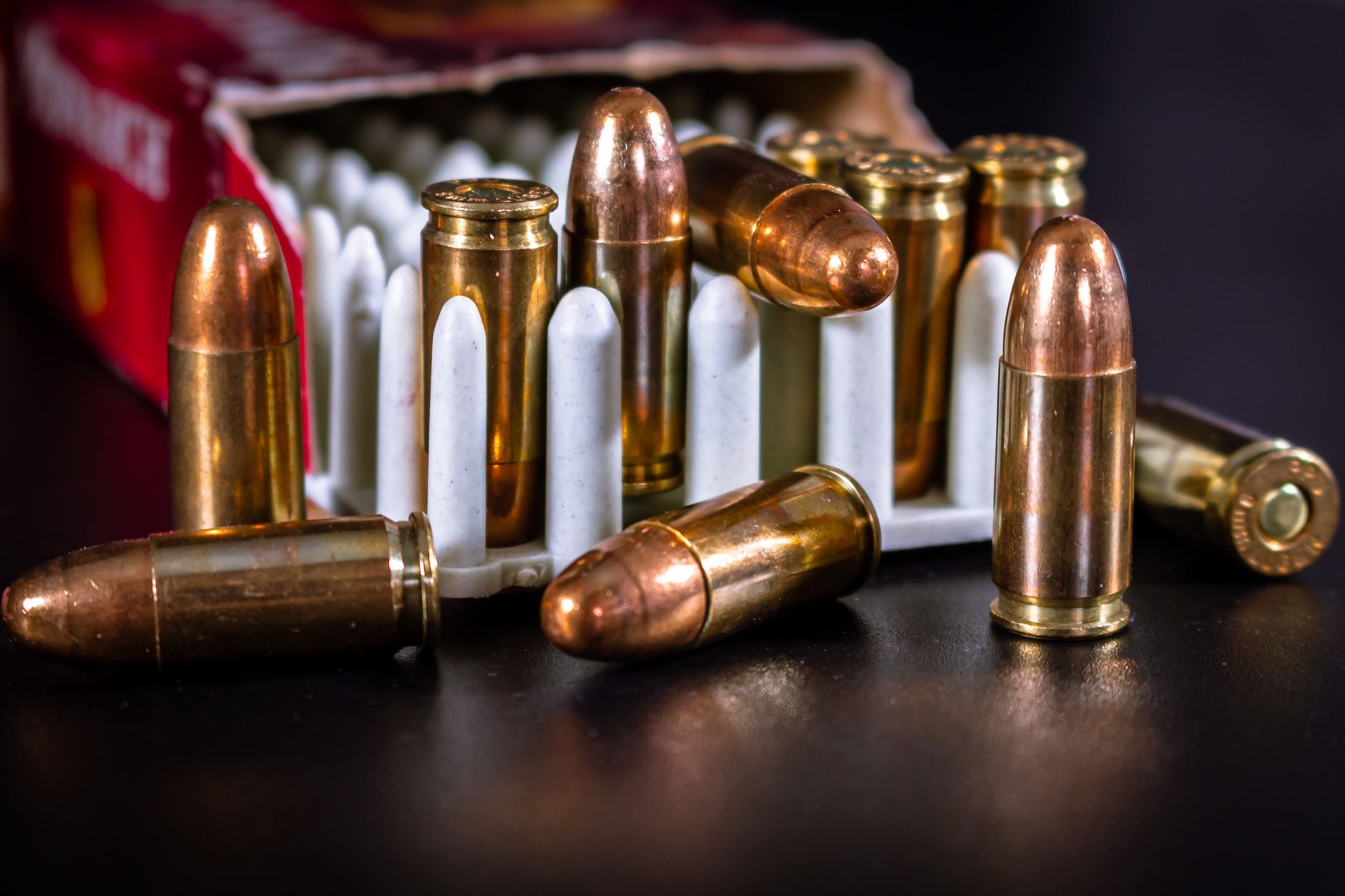
Canadian Ammo Costs More Than Ever, And Here's Why Your Budget Got Crushed in 2025
I walked into my local range last month and nearly choked on my coffee when I saw 9mm Parabellum priced at $0.85 per round. A decade ago, that same round cost me $0.35. This isn't shock value—it's the reality every Canadian shooter is facing right now, and the reasons cut deeper than inflation alone.
Let me put hard numbers on the table. As of January 2025, here's what you're actually paying at major Canadian retailers for common calibers:
- 9mm Parabellum: $0.78–$0.92 per round (50-round box: $39–$46 CAD)
- .308 Winchester: $1.15–$1.55 per round (20-round box: $23–$31 CAD)
- 12-gauge shotshell (2¾" buckshot): $0.68–$0.88 per round (25-round box: $17–$22 CAD)
- .22 Long Rifle: $0.12–$0.18 per round (500-round box: $60–$90 CAD)
Compare that to U.S. pricing, where the same 9mm runs $0.50–$0.65 per round south of the border. We're paying a 30–40% premium just because we live here. That gap isn't accident. It's policy, logistics, and market structure working against us.
Why Canadian Ammunition Costs More Than U.S. Ammunition
First, tariffs and border mechanics. The Canada-U.S.-Mexico Agreement (CUSMA) technically allows duty-free ammunition trade, but that benefit evaporates fast. Import licensing, customs clearance, and the sheer logistics of moving small, high-value goods across the border add 15–20% to the landed cost. Most ammunition sold in Canada either comes from U.S. manufacturers (with these costs baked in) or is imported from overseas at even higher rates.
Second, the Canadian market is smaller. The U.S. has roughly nine times our population and exponentially more shooters. That volume lets American manufacturers run longer production lines, negotiate cheaper primers and powders, and absorb fixed costs across millions of units. We get the short-run pricing penalty every single time.
Third, tax pressure. The federal excise tax on ammunition started at 11% in 2022 and we're still paying it. That 11% applies to wholesale prices, which retailers mark up further. On a $40 box of 9mm, you're paying roughly $4.40 in direct federal excise tax alone. Some provinces layer on HST after that, compounding the hit.
Fourth, retail density matters. If you live outside Toronto, Vancouver, Calgary, or Ottawa, you're buying online—and that means shipping costs get added. Ammunition is classified as dangerous goods, which means hazmat fees, special carriers, and packaging that costs the retailer $8–$15 per order just to move it safely.
Finally, demand inelasticity. Shooters need ammunition to shoot. The market won't shrink just because prices spike. Retailers know this and price accordingly. Competition exists, but not enough to force prices down the way it does in the U.S. market.
Where Canadian Shooters Actually Buy Ammunition in 2025
I've tested the major retailers over the past year. These are the ones worth your time and money:
Wolverine Supplies (Alberta-based, ships nationally) remains the strongest all-around option. Their 9mm pricing sits at $0.78–$0.82 per round for mid-range loads, and they stock everything from budget Tula and Wolf (when available) to Federal, Hornady, and Speer. I ordered 200 rounds of Federal 180-grain .308 last month at $1.28 per round—not cheap, but competitive. Shipping was $12 for a 4-box order. Their inventory moves fast, so if you see what you need, buy it that day.
Ellwood Epps (Ontario, established 1946) prices aggressively on bulk orders. Their 12-gauge Winchester AA shotshells run $0.71 per round in 100-round quantities, which is solid. They're slower to ship than Wolverine—expect 5–7 business days—but their .22LR pricing is consistently the lowest I've found ($0.13–$0.15 per round for Remington and CCI). The website is dated, but inventory is real and prices are honest.
P.A.L. Gun Shop (British Columbia) stocks a surprising range of specialty ammunition and runs frequent bulk discounts. Their .308 match-grade offerings are 5–10% cheaper than other online retailers, though they mark up common pistol rounds more aggressively. Shipping is faster than Ellwood, usually 3–4 days.
I've tested several other online retailers and found them either overpriced or unreliable on stock. Local gun shops are a mixed bag—some have inventory advantage but charge 10–15% premiums. Cabela's and Bass Pro Shops have ammunition sections but their pricing is 5–10% above Wolverine and they often run out of stock first.
The Reloading Question: When Does DIY Make Financial Sense?
If you shoot more than 500 rounds per month, reloading pencils out. I started reloading 9mm in 2023. Here's the economics:
- Setup cost: Press, dies, scale, calipers, primer trays = $300–$500 CAD initial investment
- Per-round cost (9mm): $0.35–$0.42 (primers $60–$75 per 1,000; powder $25–$35 per pound; bullets $0.12–$0.18 each; brass reused)
- Payback period: 2,000–3,000 rounds to recover your initial cost
The catch: primers are harder to source in Canada now. I pay $0.065–$0.075 per primer from Wolverine, compared to $0.035 in the U.S. Powder prices are also inflated. That said, if you're disciplined about brass collection and use quality equipment, you'll still save 50–55% on ammunition cost compared to buying factory rounds. It won't keep you ahead of commercial prices forever, but it's the only lever you have to control costs.
What's Actually Happening With Supply in 2025
Ammunition supply is stabilizing but not improving. Manufacturers are running at 90–95% capacity, and Canadian allocation hasn't increased. Military contracts and law enforcement purchasing have priority in the U.S., which means civilian supplies get filled with what's left. That flow favors the American market, and we get overflow.
Expect 2025 prices to hold steady or tick up another 3–5% by year-end. Budget accordingly. Buy what you use regularly, don't speculate on price drops, and if Wolverine or Ellwood Epps has stock when you check, buy it that day. The days of affordable ammunition in Canada are over. You're managing costs now, not shopping for deals.