
The Legal Minefield of Defending Your Home in Canada
You can legally shoot someone breaking into your house in Canada. But the moment you do, the Crown will scrutinize every second of what happened before, during, and after that shot. Self-defense law here isn't about feeling threatened—it's about what a judge determines was a reasonable response to an actual threat. I've watched homeowners get charged despite being on their own property, and I've seen others walk free under identical circumstances. The difference came down to how well they understood Criminal Code Section 34 and what evidence they had.
Section 34: What the Law Actually Says You Can Do
Section 34 replaced the old self-defense rules in 2013, and most Canadian gun owners still don't understand it properly. The law says you can use force—including lethal force—if you reasonably believe you're facing an unlawful force threat. But "reasonably believe" is the sticking point. A judge isn't asking what you believed in that moment. They're asking what a reasonable person in your exact circumstances would have believed.
The courts look at five specific factors:
- The nature of the threat you faced
- Whether you knew or could have known the person's identity
- Whether the threat was imminent
- Whether you had a way out or could have retreated safely
- Whether the force you used was proportional to the threat
That last one matters most for shooters. Using a firearm against someone who had their hands up, was backing away, or posed no immediate physical danger will put you in front of a Crown prosecutor. I'm not saying you can't shoot—I'm saying the courts will measure every detail against what a "reasonable person" would have done.
Real Canadian Cases: What Happened When Homeowners Pulled Triggers
In 2013, a homeowner in Nova Scotia shot and killed an intruder who'd forced his way inside. He faced murder charges. The Crown's case hinged on the fact that the intruder was shot from behind—suggesting he was fleeing and no longer posed a threat. The homeowner was acquitted, but only after a trial that cost him tens of thousands in legal fees and years of his life in limbo.
Contrast that with the Saskatchewan case where a farmer was charged after shooting at individuals trespassing on his property at night. He wasn't even convicted, but again—he sat through a trial. The court found his belief in an imminent threat was reasonable because of prior break-ins on rural properties in that area and the time of night, but the farmer had to prove that to a judge.
Then there's the cautionary tale from Ontario. A homeowner confronted someone in his garage at 2 AM, they struggled, and the homeowner used his firearm. He was charged with aggravated assault, not murder or manslaughter—but he was still charged. The prosecution argued he had other options available. He eventually pleaded guilty to a lesser charge rather than risk conviction at trial.
What these cases tell you: the courts believe you have a responsibility to retreat if you safely can. They don't recognize your home as an automatic "defend at all costs" zone the way some American states do. You're expected to leave if there's a reasonable exit. That's the law in Canada.
The Safe Storage Problem Nobody Talks About
Here's where Canadian firearms law gets genuinely difficult. Restricted firearms—which includes virtually every handgun and most modern rifle platforms—must be stored locked with ammunition stored separately and locked. The regulations are explicit: locked container, locked in a vault, or at a licensed gun range. That's when you're not using it.
But if you keep a restricted firearm accessible for home defense, you're violating storage laws. If you keep it safely locked in a safe or vault as the law requires, you won't access it fast enough in an emergency. That's the bind. Non-restricted rifles (most bolt-action hunting rifles, lever-actions, many shotguns) have less stringent storage rules, but they're impractical for home defense in tight residential spaces.
The practical reality: most Canadian gun owners who keep firearms for home defense store them in quick-access safes that technically violate federal storage regs but can be opened in seconds. You accept that risk to have a functional defense tool. The law essentially forces you to choose between legal compliance and operational readiness.
What Actually Matters in Court
I've spoken with several lawyers who handle firearms charges. They all say the same thing: evidence preservation is everything. Security camera footage showing the intruder's actions, 911 calls proving you called police, witness statements, medical records documenting injuries—these items transform a case. If you shoot someone, the courts need to see objective evidence of why the threat was real and immediate.
The jury or judge will also look at your actions afterward. Did you stay on scene? Call 911 immediately? Allow paramedics to help the injured person? Canadian courts view cooperating with law enforcement and first responders as evidence of someone acting in genuine self-defense, not taking advantage of a situation.
The Best Legal Options for Home Defense
Given the storage restrictions, your practical options narrow quickly:
- Non-restricted shotguns: A Mossberg 500, Remington 870, or similar pump-action 12-gauge meets storage requirements and delivers devastating stopping power. They're reliable, simple, and legally defensible as home-defense tools.
- Non-restricted rifles: A .308 bolt-action rifle or 5.56 semi-automatic (Ruger Mini-14, SKS) can be legally stored more flexibly and are effective at home-defense distances.
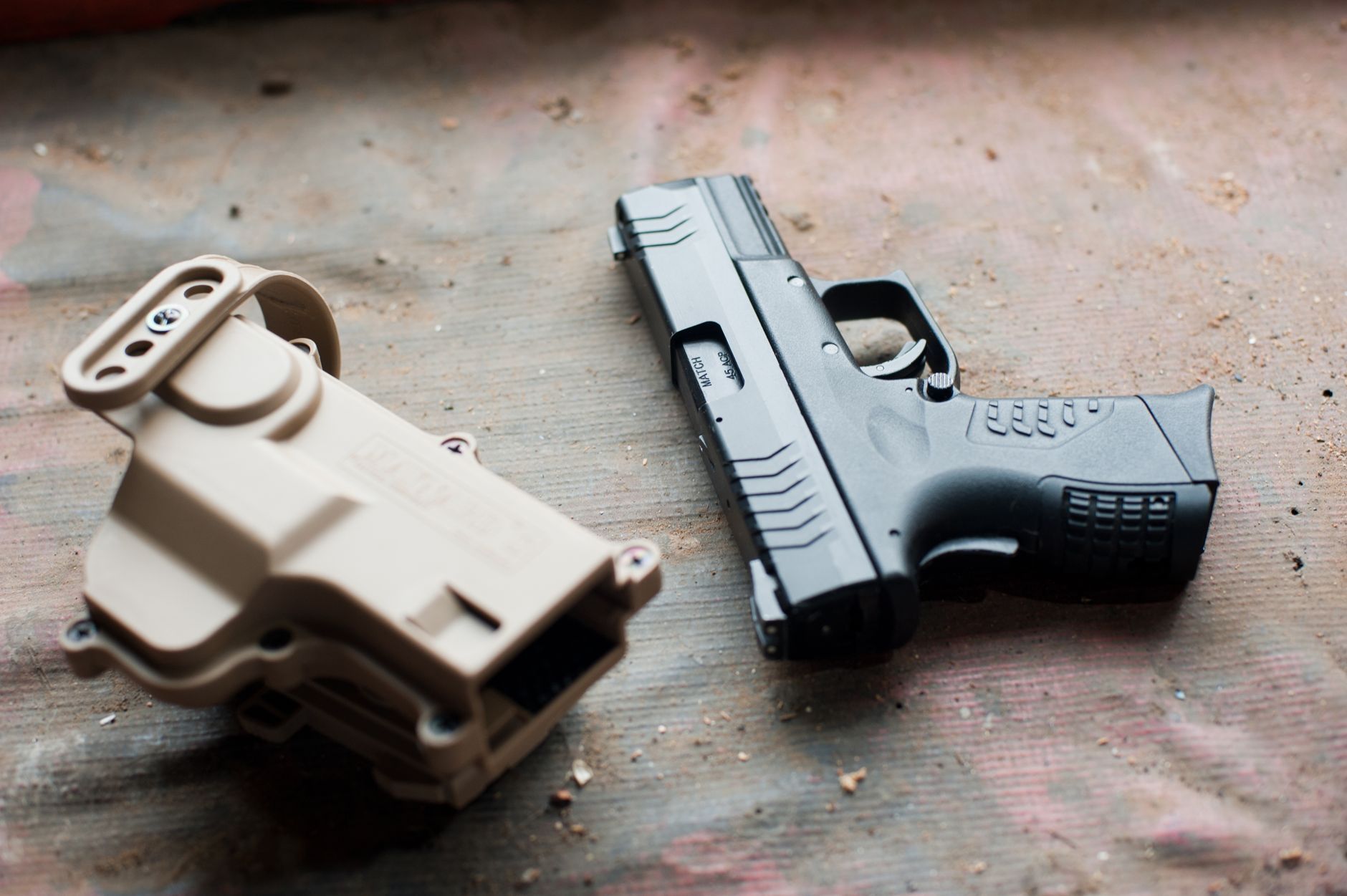
- Quick-access restricted firearm: If you're willing to operate in that gray area, a semi-automatic handgun in a biometric safe (less than 2-second access) offers compact home-defense capability, but understand you're potentially violating storage regulations.
I lean toward non-restricted shotguns for Canadian home defense. The law allows faster access without technical violations, they're devastating at typical engagement distances, and the courts view them as legitimate home-defense tools without debate.
Whatever you choose, understand this: owning a firearm for home defense means accepting legal complexity. You need to know Section 34 cold, you need to understand storage law, and you need to recognize that using lethal force will trigger a legal process regardless of how justified the shooting was. That's the Canadian reality. Plan accordingly.