
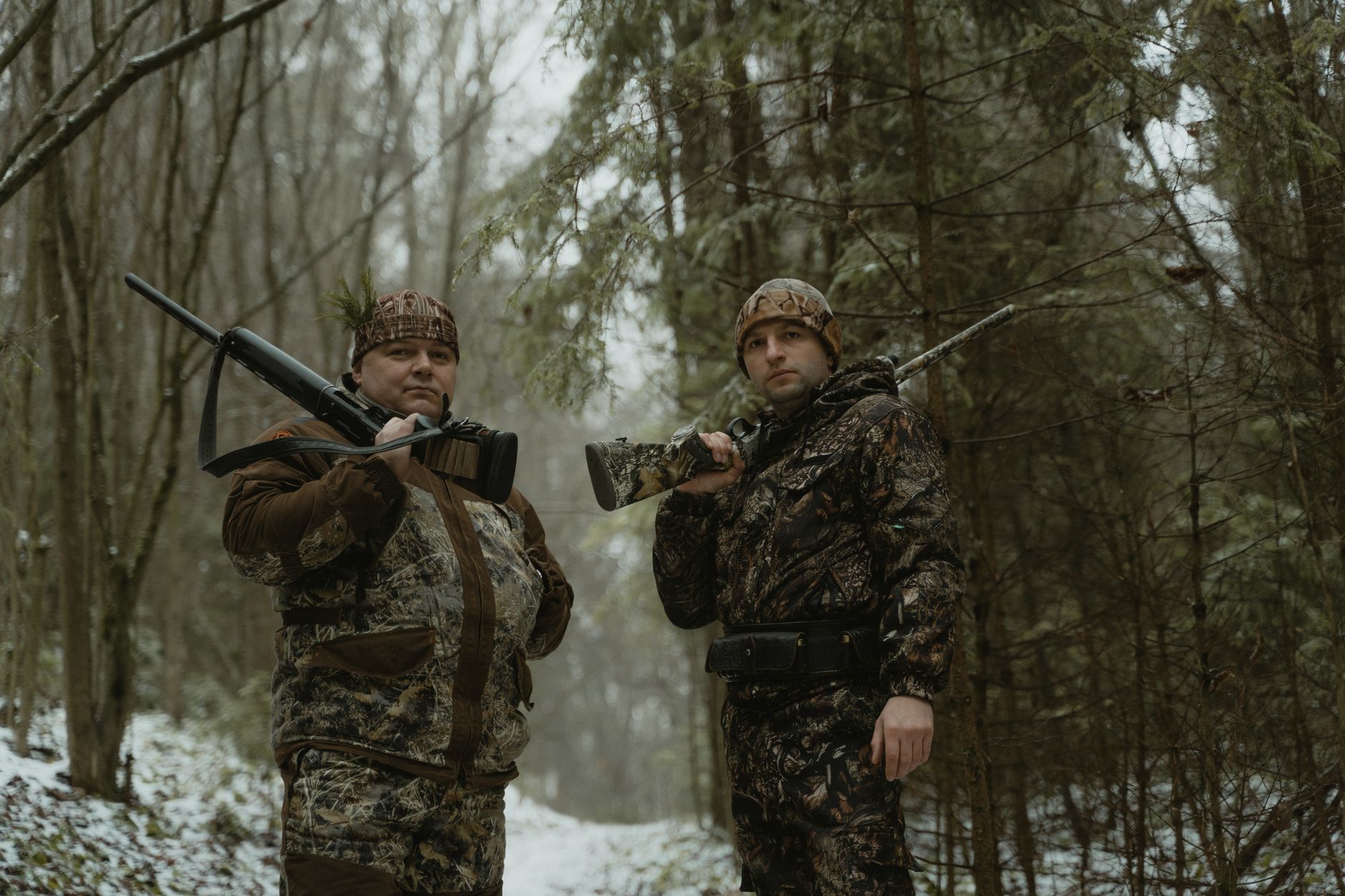
Hunting Season 2025: Provincial Dates, Licensing, and What Gear Actually Works
The opening of hunting season across Canada in 2025 happens on different dates depending on where you're headed, and getting the timing wrong costs you season—and money. British Columbia's general hunting season for deer and elk runs September 1 through December 15. Alberta's mule deer and white-tailed season opens September 1 and closes December 31, while their elk rut hunt kicks off September 1 through November 15. Saskatchewan's general big game season starts September 1 through December 31 for most species. Manitoba's deer season opens October 1 and runs through December 31. Ontario splits their hunting into zones with gun seasons typically opening October 4 through November 15 for most of Southern Ontario, while Northern Ontario often starts earlier in September. Quebec's white-tailed deer season opens September 28 through November 10 in most regions, though specific zones vary significantly.
Before you even think about buying tags, understand that non-resident licensing in Canada means different things in each province. BC requires non-residents to hire a guide or participate in an outfitter program for most big game hunting—you can't just show up with a non-resident license and hunt independently. Alberta and Saskatchewan are more accessible: you can purchase over-the-counter non-resident licenses for most species, though moose, elk, and bighorn sheep draw-based tags are harder to come by. Manitoba, Ontario, and Quebec all have their own non-resident licensing systems. Ontario's non-resident hunting license costs around $150, plus tag fees that vary by species. Quebec allows non-residents to hunt, but they must report harvest within seven days. The real lesson: contact your target province's Ministry of Natural Resources at least three months before your planned hunt. These systems change annually, and a phone call takes 20 minutes. Getting it wrong on the ground costs you your hunt and potentially fines up to $10,000.
Legal Firearms: Know What Your Province Actually Allows
Canada's firearms regulations for hunting are nothing like the US. Every province bans centerfire semi-automatic rifles for hunting—full stop. That means your AR-15, regardless of caliber, stays home. What you can use depends on provincial rules, but the baseline for big game across most of Canada is a bolt-action rifle, lever-action rifle, or pump-action shotgun with slugs.
- Bolt-action rifles: Legal everywhere. Industry standard for serious hunters. Tikka T3x, Weatherby Mark V, Remington 700, Winchester Model 70.
- Lever-action rifles: Legal in most provinces. Marlin 1895, Winchester Model 1895, Henry Big Boy. Some provinces restrict them to shorter ranges due to trajectory limitations.
- Pump-action shotguns: Excellent for slug hunting in heavily wooded areas. Mossberg 500, Remington 870, Winchester SXP. Magazine capacity is limited to two rounds in most provinces during hunting season.
- Double-barrel or single-shot shotguns: Perfectly legal and widely used. Stoeger coach guns are affordable and reliable.
Handguns are illegal for hunting big game everywhere in Canada. Air rifles and crossbows have their own seasons in some provinces, but we're talking firearms here. Ontario and Quebec have specific restrictions on caliber minimums—Ontario requires a minimum of .243 Winchester for deer—so verify your specific province's published hunting regulations. Don't guess. The regulations are online, free, and updated annually.
Storage and Transport: One Mistake Costs You Your License
Canadian firearms transport law is stricter than Americans expect. Your rifle cannot be loaded while in a vehicle. Period. The firearm must be unloaded and either locked in a case or equipped with a locking device (cable lock, breach lock, or trigger lock). Ammunition travels separately—ideally in a locked compartment. During hunting trips, if you're staying at a camp overnight, your firearm must be stored securely. A rifle locked in a vehicle bed isn't secure; a hard case with a cable through the action and locked to a fixed point is secure. This isn't paranoia—it's the Firearms Act (R.S.C. 1985, c. F-27).
When you're actively hunting and carrying your rifle, it must be unloaded except when you're in position and actually hunting. Crossing fences, walking between hunting areas, or driving to a new spot—unloaded. Magazine locked in your pack. Yes, this slows you down. Yes, it works. I've been hunting Canadian wilderness for 18 years without a single charge because the rules are simple and I follow them.
Best Cartridges by Game: What Actually Works
Moose: You need a heavy, premium bullet that holds together at high velocity. .300 Winchester Magnum with 180-grain Nosler Partition or Accubond is the standard across the country. .338 Winchester Magnum is overkill for most situations but works. .280 Remington is the lower limit if you're a confident shooter placing bullets precisely. Don't go lighter. Moose weigh 600–900 pounds, and a wounded moose is a disaster.
Elk: .300 Winchester Magnum is again the baseline. 7mm Remington Magnum works if you practice. .270 Winchester can work at closer ranges with good shot placement. The issue with elk is distance and wind deflection—a magnum cartridge gives you velocity to buck wind and carries energy downrange. Federal Premium, Hornady, or Remington factory loads with premium bullets—Nosler Accubond or similar—are reliable.
Deer: .243 Winchester, 7mm-08 Remington, or .308 Winchester handle white-tailed and mule deer cleanly. Anything more is comfort for the shooter, not necessity. Lighter recoil means better accuracy for most people, and 130-grain bullets from a .270 or 140-grain from a 7mm work fine. Factory ammunition from Winchester or Remington is accurate enough.
Black bear: .30-06 Springfield or .308 Winchester with 180-grain ammunition is standard. Bears are tougher than their weight suggests—aim for the boiler room (behind the front shoulder, one-third up the body), and use solid construction bullets. A .300 magnum is unnecessary but popular among western hunters.
The real factor isn't the cartridge—it's your accuracy. A hit with a .243 beats a miss with a .338 every single time. Practice before season opens. Zero your rifle at 100 yards, shoot groups from field positions (prone, sitting, kneeling), and know exactly what your gun does past 200 yards. That's how seasons are successful.