
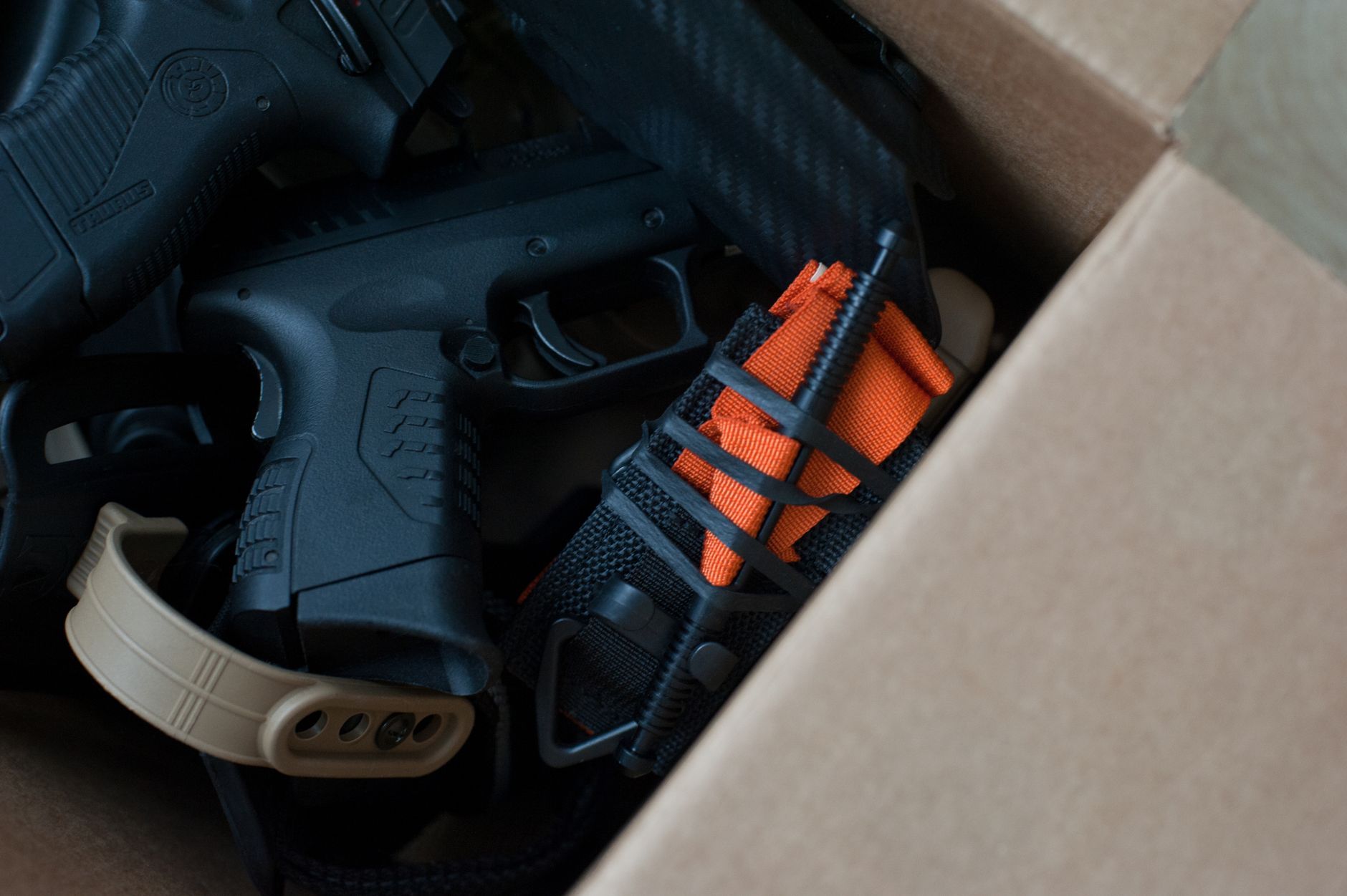
The Restricted Life: What Actually Happens When You Own Handguns in Canada
You can own handguns in Canada. Full stop. But the moment you do, you're living under a ruleset that makes owning a rifle look like a vacation. I've held an RPAL since 2009, transported dozens of restricted firearms to ranges and competitions, and sat through more CFO interviews than I care to remember. The gap between what people think the law says and what it actually says is where most gun owners get into trouble.
The RPAL is Your Foundation, Not Your Freedom
First fact: you need a Restricted PAL (RPAL) to own, buy, or possess any restricted firearm in Canada. Full stop. A regular PAL gets you rifles and shotguns. An RPAL gets you handguns, some semi-autos, and a handful of other restricted guns. Getting there requires everything your regular PAL needed—Firearms Safety Course, Criminal Record Check, spousal notification—plus a separate interview with your local Chief Firearms Officer (CFO).
That CFO interview is the gate. I've watched guys breeze through in 15 minutes and others get grilled for an hour. The CFO wants to know why you want restricted firearms. "Collecting" works. "Sport shooting" works. "Home defense" doesn't. Not in Canada. Never in Canada. That answer will get you denied on the spot. You're also required to explain your storage plan before you even walk into that office, and they will verify it. I've had CFOs show up at my place unannounced to check my safe.
The RPAL costs roughly $150 in application fees and takes 3-6 months. In some provinces it's faster. In others—looking at you, Ontario—it can drag on longer. Plan ahead. Don't apply for your RPAL expecting to walk into a gun shop next week.
Storage: The Rules Are Absolute
Once your RPAL arrives, you live by storage rules that are not suggestions. The Firearms Act is specific, and the CFO doesn't negotiate.
- At home: Every restricted firearm must be stored in a locked safe or vault. The gun itself and all ammunition must be locked separately. You can't store ammo in the same container as the gun. Some guys use a secondary lock on the trigger guard, but that doesn't satisfy the requirement—the gun still needs to be in a locked container or room. A Cannon Safe or Fort Knox safe runs $800-$2,500, depending on size. That's not optional. That's your baseline.
- In a vehicle: Locked container. Gun locked, ammo locked separately. Period. I've seen guys get ticketed for stopping at a coffee shop with a handgun in a semi-secure range bag. The fine isn't the worst part—it's the seizure and the investigation that follows.
- At someone else's house: Same rules apply. If you're storing your restricted firearm at a friend's place, it still needs to be in a locked safe, and the friend needs to know the conditions of storage. If the CFO finds out your gun is sitting in a closet at your buddy's cabin, both of you are liable.
I keep my restricted firearms in a TL-30 safe bolted to the floor in my basement. Overkill? Maybe. But I don't get phone calls from the CFO when they audit my storage.
Authorization to Transport (ATT): You Need Permission to Move Your Gun
This is the rule that surprises new RPAL holders the most. You cannot simply load a restricted firearm into your car and drive to the range. You need an Authorization to Transport (ATT) issued by your CFO.
An ATT specifies exactly where you can move your gun: your home address and your approved range(s). You name the specific ranges on the application. The CFO approves them. You can transport to those locations only. If you want to use a different range, you apply for a new ATT. I've got three ATTs registered with three different ranges.
The transport route doesn't have to be direct, but it has to be reasonable. You can't stop at the mall on the way to the range. You can stop for gas. You can stop for a bathroom break. You cannot go anywhere else. You need to keep your ATT with you at all times when transporting.
ATTs are free, but getting approval takes 2-4 weeks. Plan around this timeline. If you apply for an ATT on Friday expecting to shoot on Monday, you're disappointed.
What Happens at a Traffic Stop
You're driving to the range. A cop pulls you over for speeding. Your restricted firearm is locked in the back seat in a locked case. What now?
First: you tell the officer immediately that you have a restricted firearm in the vehicle. You do not wait for them to ask. You do not try to hide it. You hand over your RPAL and your ATT. You tell them exactly where the gun is and that it's locked. You keep your hands visible.
The officer will call it in. They'll verify your RPAL, check your ATT, confirm you're authorized to be transporting to that location. If everything checks out, you get your ticket for speeding (or whatever) and you go. If your ATT doesn't match your route, or if your RPAL is expired, or if the location you're transporting to isn't listed on your authorization, you're getting detained and your firearm is being seized.
That seizure means a police investigation. It means paperwork. It means potential charges. I know guys who've lost guns for six months while the Crown's office decided whether to press charges for a technical ATT violation.
Range-Only Means Range-Only
Your RPAL and ATT are not permits to carry. They are not permits to have a restricted firearm available for home defense. They are permits to store your gun at home and transport it to an approved shooting range. That's it. If you keep a loaded handgun on your nightstand "just in case," you're committing a criminal offense. Storage laws apply 24/7, regardless of intent.
Some people think the rules will change in a home-invasion scenario. They won't. The law doesn't have an exception for emergencies. If you use a firearm for self-defense in Canada, you'll go to court, and the first thing the Crown will ask is whether you had legal storage and legal authorization. Illegal storage makes your legal right to use force disappear.
Common Legal Mistakes I See
Not updating your address on your RPAL. You move to a new house and forget to notify the CFO. Your RPAL is now tied to a different address. When you get pulled over, your storage address doesn't match. Seizure. Investigation. Avoid it by notifying the CFO within 30 days of any move.
Letting your RPAL lapse. You get busy. You forget to renew. Your RPAL expires while you own restricted firearms. That's illegal possession. Get a calendar reminder for 90 days before your renewal date.
Sharing ATT details. Your buddy wants to use your range ATT. You think it's no big deal. It is. ATTs are personal. Lending your ATT to someone else is a violation. They need their own RPAL and their own ATT.
The restricted firearm system in Canada is precise and unforgiving.