
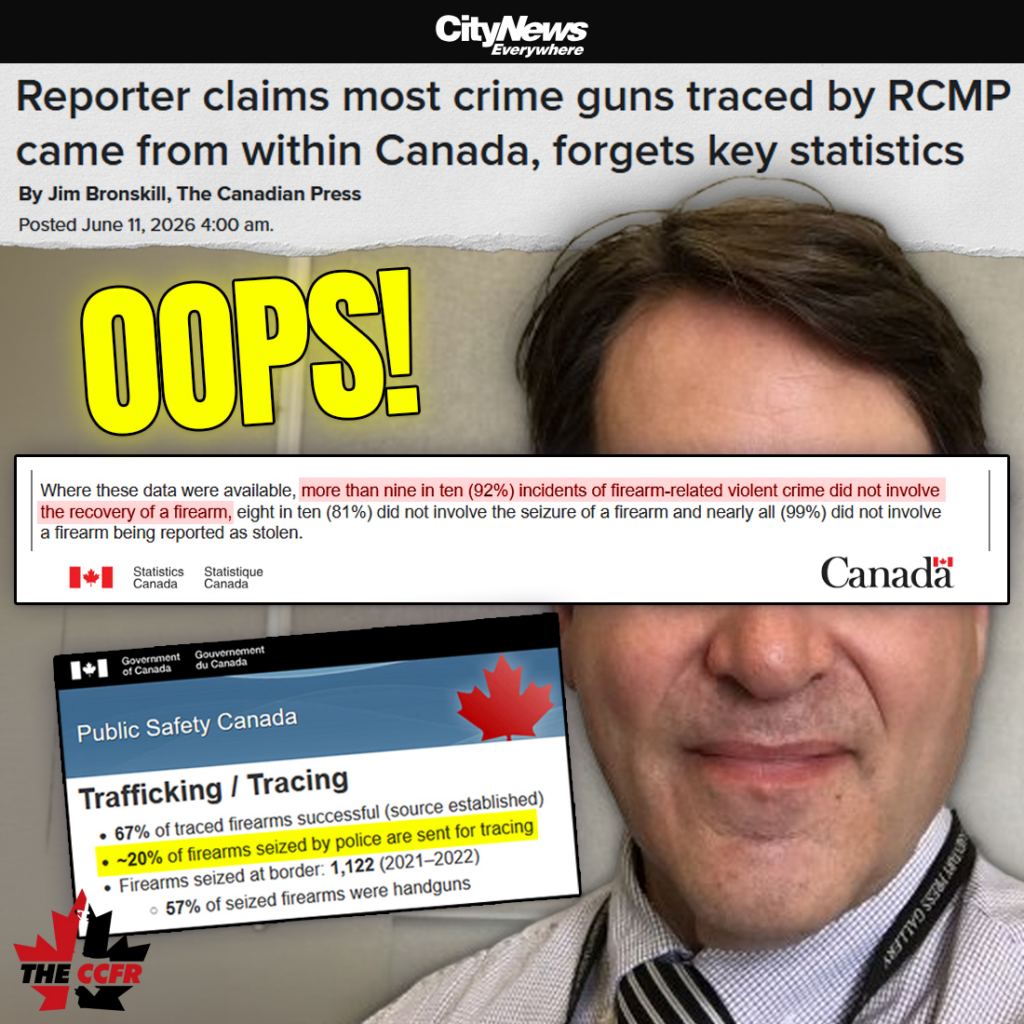
RCMP Crime Gun Data Doesn't Match Law Enforcement Reality
Canadian Press published a story in June 2026 reporting that 71% of RCMP-traced crime guns originate domestically—a figure that directly contradicts what law enforcement agencies have consistently documented. The Canadian Coalition for Firearm Rights (CCFR) examined the claim and found significant data integrity problems underpinning the statistic. The reporting came from journalist Jim Bronskill and raised immediate red flags among observers tracking Canadian firearms policy.
Key Details
- The 71% domestic-sourcing figure contradicts established law enforcement findings on crime gun origins
- CCFR investigation identified methodological flaws in how the RCMP data was collected and reported
- The discrepancy suggests sloppy data handling rather than accurate crime gun tracing methodology
- This is the second major Canadian media narrative on firearms that doesn't survive scrutiny when examined against actual law enforcement records
Why It Matters for Gun Owners
Bad data drives bad policy. When governments publish inflated domestic-sourcing percentages for crime guns, they justify stricter civilian restrictions based on false premises. If 71% of traced crime guns were actually domestic, it would theoretically support arguments that restricting legal gun owners prevents crime. But Canadian law enforcement has consistently shown that smuggled and illegally imported firearms represent the majority source for guns used in crimes. When advocacy groups and media amplify flawed numbers without verification, gun owners lose the ability to counter policy arguments with facts. The real data matters because it demonstrates that punishing licensed firearms owners doesn't address the actual smuggling and organized crime networks that supply criminal weapons.
DownRange Analysis
This pattern of misreported crime gun statistics isn't accidental. The 71% domestic claim conveniently supports a narrative requiring tighter civilian restrictions. When independent analysis finds the data doesn't hold up, it reveals either incompetence in data management or deliberate misrepresentation. Either way, gun owners should demand transparency in how RCMP traces crime guns and what percentage actually come from legal domestic sources versus smuggling networks. The CCFR's willingness to dig into the numbers and challenge the claim is exactly what needs to happen every time government agencies release firearms statistics. Ask for methodology, cross-reference against law enforcement reports, and don't accept percentages that don't align with established agency findings. Canada's gun owners have the receipts—and the scrutiny matters.