Amtrak Will Let You Carry Guns Aboard Starting January 2027
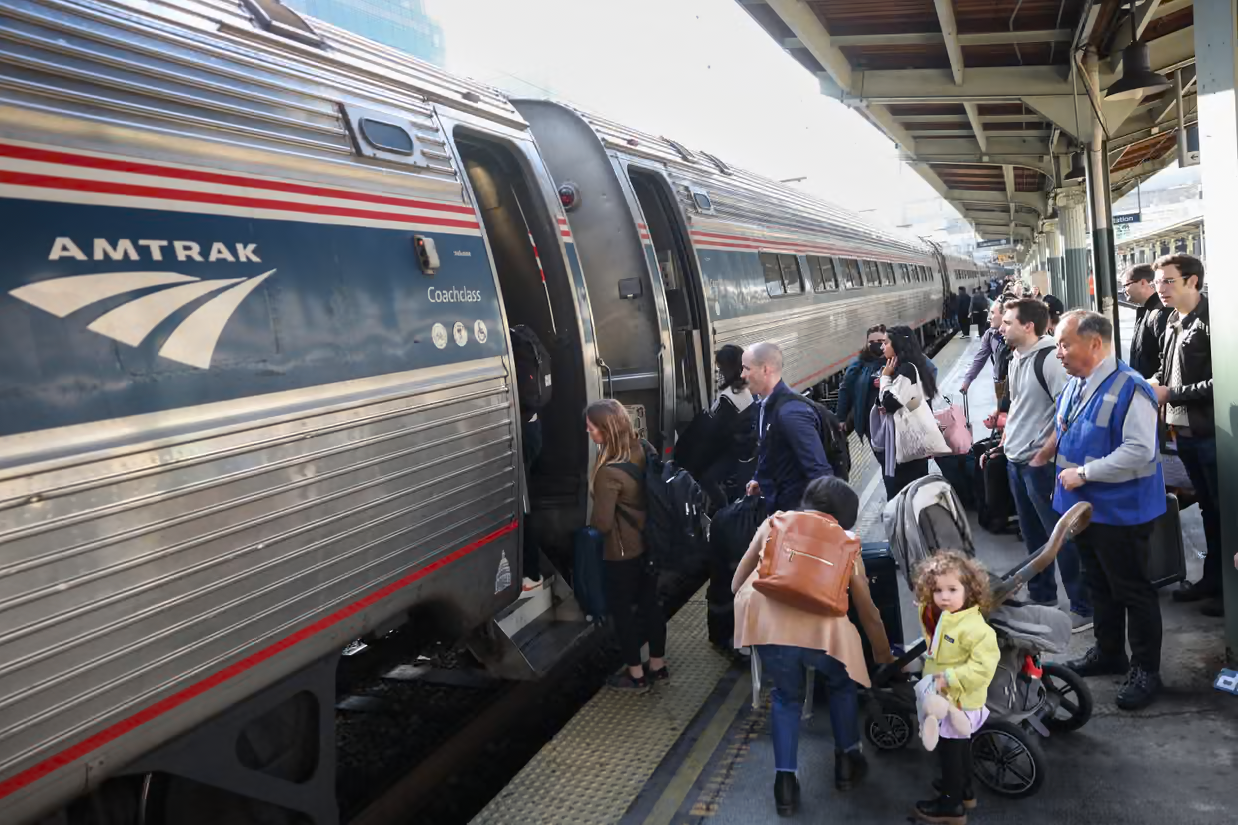
Amtrak will allow passengers to bring firearms onto its intercity trains beginning in January 2027, according to the Transport Workers Union. Under the planned protocols, a gun owner hands a cased firearm to a station agent, who fastens an Amtrak-owned combination lock to the case. The passenger keeps the case with them on board. At the destination, an agent at the arrival station removes the lock. The TWU, which represents 360 onboard service employees, wants no part of it. John Feltz, the union's International Rail Division director, called the plan "sheer lunacy." Amtrak had previously said it was weighing the change as the Trump administration pushed to loosen federal rules on transporting weapons. No timeline had been set until now.
Key Details
The plan rests on a simple mechanism: a personal lock box that never leaves Amtrak's control at the handoff points. Here is what the union has disclosed:
- Start date: January 2027, per the TWU.
- Carry method: Personal lock boxes holding cased firearms.
- Origin step: A station agent attaches a combination lock owned by Amtrak.
- Destination step: An agent at the arrival station removes the Amtrak lock.
- Union size: 360 onboard service employees represented by the TWU.
- Union spokesman: John Feltz, International Rail Division director.
Feltz made two specific objections. He compared the rail policy to airline rules, noting that passengers cannot carry a gun onto a plane and must check it in luggage. He asked why trains, with passengers packed into confined cars, should be treated differently. He also raised two failure scenarios: a defective case or lock, or a rider using brute force to break into a locked weapon. He argued either one would endanger riders and crew. The union has not published test data or a formal grievance, so the claims rest on its own assessment.
Background
Amtrak is a federally chartered corporation created by Congress in 1970. It runs on federal subsidies and has long barred firearms from its trains. The rail network's security model has never resembled an airport checkpoint. Amtrak stations generally lack the walk-through metal detectors and X-ray screening that TSA applies at airports. Passengers board with bags that nobody screens for weapons, which means the current rule depends on passengers complying with a ban rather than on a physical barrier. The air travel model the union cites is older and more specific. Federal regulations allow passengers to transport unloaded firearms in checked baggage, inside a locked hard-sided container, after declaring them to the airline. Airlines and TSA treat the locked case as the control point. Amtrak's proposal borrows that logic but moves the handoff to a station agent and adds a rail-specific lock. The change also follows a broader federal push to loosen restrictions on carrying firearms in transit, which the Trump administration has pursued. Amtrak had not set a date for the policy until the union disclosed January 2027.
Why It Matters for Gun Owners
If this policy takes effect as described, it applies to anyone who rides Amtrak with a firearm. The affected traveler base is large in the Northeast Corridor, where Amtrak's busiest routes run between Boston, New York, Philadelphia, Washington, and Virginia. Several of those states impose their own transport and carry restrictions, and a federal rule does not override them. A passenger who boards in a state with strict permit requirements needs to confirm that state law allows the trip and that the destination state allows the firearm. The Amtrak lock will not supply that legal cover. Practical preparation matters more than the policy debate. Owners should use a hard case that meets Amtrak's specifications once published, keep ammunition packed separately, and expect the handoff to take time at both stations. Read the final protocol before booking, and keep proof of the transfer. Watch for the official Amtrak notice, since the union's description is the only detail currently public. Also watch for a union grievance or a federal review, either of which could delay or change the rollout.
DownRange Analysis
Under New York State Rifle & Pistol Association v. Bruen (2022), a restriction on carrying must fit within the nation's historical tradition of firearm regulation. Amtrak is a corporation, not a government regulator. Its rules are private policy, and the constitutional question is narrower. The more important test is whether state and local laws still restrict carry on the trip. A federal permission slip does not extend Second Amendment protection into states that ban the carry in question. For the market, a legal rail carry option could move some travelers off the highway and create demand for compliant hard cases and travel-specific storage. Manufacturers making TSA-compliant cases already serve airline travelers, so the rail policy is a small new market rather than a new product category. The union's lock-failure argument is the one to watch. A defective lock is an engineering problem, and a case rated for checked baggage should resist casual force. If Amtrak publishes specifications, the case standard will matter more than the union's rhetoric. Right now, pack a compliant hard case, verify your home and destination state laws, and do not treat a corporate lock as a legal shield.