Raskin's Judiciary Gavel Would Put Private-Sale Checks on the Table
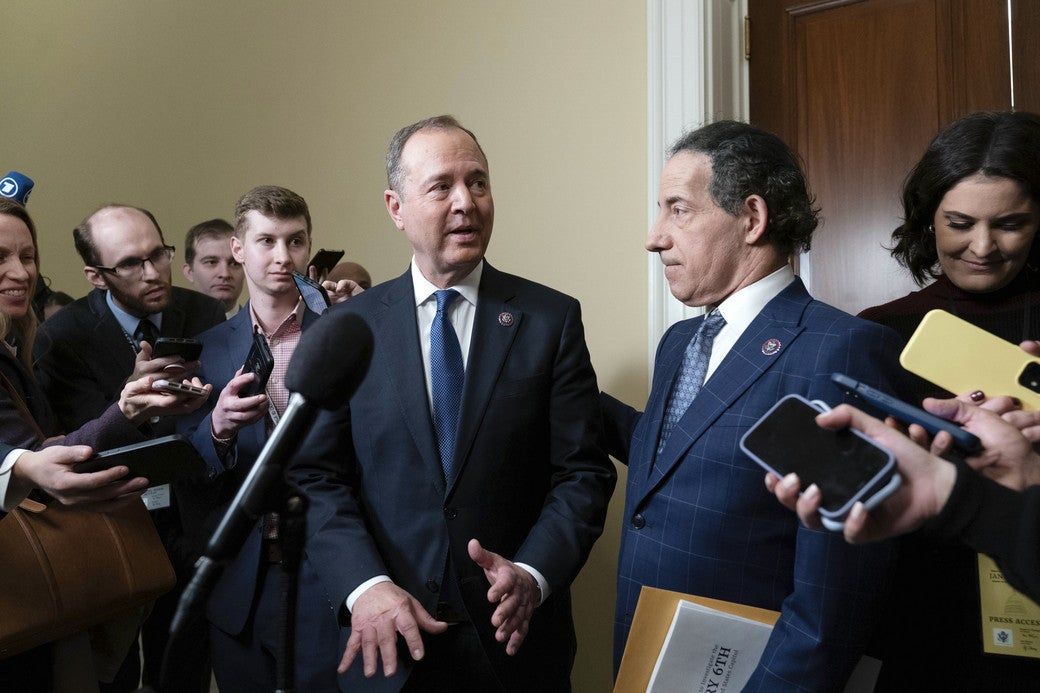
Rep. Jamie Raskin (D-Maryland) says gun control would sit near the top of his list if he takes the gavel as chairman of the House Judiciary Committee. The Baltimore Banner reports that Raskin plans to push a slate of restrictions from that post. His headline item is universal background checks on private gun sales, placed on the same footing as checks already required for retail transactions. He also says he will try to close what he calls gun-sale loopholes. The same report says he signaled a possible move to impeach President Donald Trump. The chairmanship is not yet his. It depends on which party controls the House, and Raskin currently serves as the committee's top Democrat.
Key Details
The facts on the table are specific, and they point in one direction.
- Who: Rep. Jamie Raskin, D-Maryland, a Judiciary Committee Democrat who wants the chairmanship.
- Source: The Baltimore Banner, which reported his comments on the committee agenda.
- Stated priority: Closing gun-sale loopholes, with private-sale background checks as the centerpiece.
- Permit-to-purchase: Raskin introduced this legislation in 2025. It was his second attempt at the measure. The 2025 version covered handguns only.
- Position history: He has backed checks on every sale and called for prohibitions on so-called 'assault weapons.' The gun prohibition lobby endorses him.
- Pistol brace debate: During a June 2023 House floor debate on pistol braces, Raskin argued that gun makers should not spread AR-15s with stabilizing braces. He named mass shootings in Dayton, Ohio; Boulder, Colorado; Colorado Springs; and Nashville, Tennessee.
- Rhetoric: In the same speech he said that a foreign government doing this would prompt a declaration of war. He also accused the Second Amendment crowd of reading the amendment in a 'strange and distorted way.'
Background
Raskin's position is not new. He has spent years on the Judiciary Committee and has argued for stricter federal rules since the early 2020s. His permit-to-purchase push follows a long line of proposals that gun owners have treated as registration by another name. Universal background checks have been a Democratic goal for more than a decade. Federal law requires checks on sales by licensed dealers, but private transfers between unlicensed people generally fall outside that requirement, and the Bipartisan Safer Communities Act of 2022 did not close that gap. The Supreme Court's 2022 decision in New York State Rifle & Pistol Association v. Bruen set a new test. Courts now ask whether a modern regulation fits the nation's historical tradition of firearm regulation. That test has reshaped challenges across the country. In 2023, ATF issued a rule that treated many pistol braced firearms as short-barreled rifles. A federal court in Texas vacated that rule in 2024. Raskin's 2023 floor speech came during that fight, when the braces rule was still in effect. Maryland already runs a handgun qualification license and a permit regime, and the Fourth Circuit has upheld the state's assault weapons ban.
Why It Matters for Gun Owners
If Raskin chairs the committee, the practical impact lands on people who buy and sell guns outside a dealer counter. That includes Maryland residents, anyone who sells a firearm to a friend or neighbor, and buyers at gun shows and online marketplaces. A private-sale background check mandate would turn an informal transfer into a federal paperwork event. Watch the wording of any bill closely. Gun owners should check whether a proposal includes exemptions for gifts, inheritances, temporary loans at ranges, and transfers between family members. Permit-to-purchase legislation carries a different threat. A license requirement that gates every purchase, even one limited to handguns, shifts the system from checks to permission. Carriers in Maryland and nationwide should also track how the 2025 handgun-only version would expand if the scope grows in a future draft. Raskin has never hidden his goal. The practical question is which bill reaches the floor first and what it says.
DownRange Analysis
Start with Bruen. Universal background checks are easier to defend than registries or permit gates. Courts have generally accepted checks as a condition on sales, and the government can point to the existing federal check system as a template. The weak point is enforcement. A check on a private sale requires a method to conduct it, and any scheme that creates a record of transfers invites the registration argument gun owners already make. Permit-to-purchase is a harder case. Bruen's footnote 9 said shall-issue licensing regimes are presumptively constitutional, which gives states room. But a permit tied to every purchase, with discretion over approval and delay, invites challenges under the same text-and-history test. Expect litigation in any state that adopts the model. Right now, gun owners should do three things. Document every private transfer you make. Know your state's rules before you sell across state lines. Call your representative and ask where they stand on private-sale checks and permit-to-purchase before the bill number appears.