DOJ Stops Enforcing Under-21 Handgun Sales Ban; Senators Revolt
Twenty Democratic senators want the Justice Department to explain why it stopped enforcing the federal ban on handgun sales by licensed dealers to adults 18 to 20. In an October 19 letter to Attorney General Todd Blanche, Sen. Jack Reed and Sen. Sheldon Whitehouse, both of Rhode Island, joined Sen. Chris Murphy of Connecticut and their colleagues in calling the policy an “enormous risk” to public safety. The fight started when DOJ concluded the ban violates the Second Amendment. DOJ now says it will not enforce the law against sellers or buyers. The senators argue that dropping enforcement by executive fiat is the real problem, not the age limit itself.
Key Details
The sequence of events is short and specific:
- September 17: DOJ issued a formal Office of Legal Counsel opinion concluding that 18 U.S.C. § 922(b)(1) is unconstitutional as applied to qualified adults under 21.
- Later, in a brief to the Fifth Circuit: DOJ stated it will not enforce 922(b)(1) or (c)(1) against any sellers or purchasers.
- October 19: Twenty Democratic senators sent a letter to AG Blanche demanding answers.
- Early October: Nearly 175 Democratic House members sent a separate letter to the DOJ director demanding that the department reverse course and resume enforcement.
The senators cite four mass shootings: Robb Elementary in Uvalde, Texas, where an 18-year-old killed 19 students and two teachers; a Buffalo, New York supermarket; an Indianapolis FedEx facility; and Marjory Stoneman Douglas High School in Parkland, Florida. Their letter also quotes the OLC opinion’s acknowledgment that age-based restrictions have “deeply divided members of the federal bench.”
The senators demand five categories of material: DOJ’s legal authority for halting criminal and civil enforcement; all legal materials behind the decision; any public-safety analysis DOJ performed; and a full list of investigations, prosecutions and enforcement actions affected, including matters declined, suspended or dismissed, with reasons for each.
Background
The Gun Control Act of 1968 created the federal framework for licensed dealers. Section 922(b)(1) bars an FFL from selling handguns to anyone under 21, and it has stood for more than five decades. Courts have been split on whether the age line survives modern review. In January 2025, a Fifth Circuit panel in Reese v. ATF held that the federal ban on 18-to-20-year-old handgun purchases from licensed dealers violates the Second Amendment. The Fourth Circuit went the other way in McCoy v. ATF, upholding the federal restriction. The Eleventh Circuit, sitting en banc, upheld Florida’s under-21 rifle purchase law in NRA v. Bondi.
The Supreme Court’s Bruen decision in 2022 requires the government to show that a firearm regulation fits within the nation’s historical tradition of firearm regulation. Rahimi in 2024 refined that test but kept the historical analysis at its core. The DOJ opinion applies that framework to the under-21 handgun ban and reaches the conclusion the Fifth Circuit reached in Reese.
Why It Matters for Gun Owners
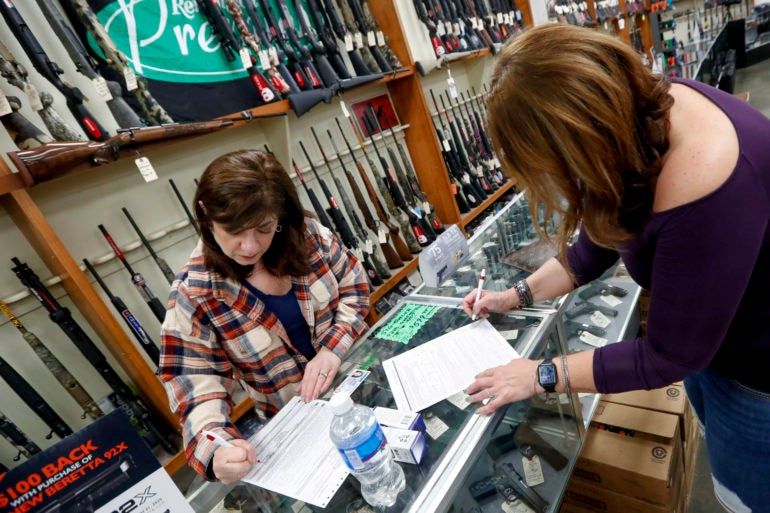
Adults 18 to 20 are the people most directly affected. Under the current DOJ position, licensed dealers in jurisdictions where the Fifth Circuit’s reasoning applies have less federal legal exposure when they sell handguns to young adults. The Fifth Circuit covers Texas, Louisiana and Mississippi. Dealers outside that circuit still face the statute, and DOJ’s non-enforcement stance does not bind a private plaintiff or a state prosecutor.
State law is the hidden variable. Many states set their own minimum ages for handgun purchases and carry permits. A federal non-enforcement decision does not repeal those statutes. If you are 18 to 20, check your state’s age rules before you walk into a shop. If you run a store, confirm your state’s rules and your own policy before you make a sale.
Watch three things. First, whether DOJ responds to the October 19 letter and what it produces. Second, whether the Fifth Circuit or another circuit issues a ruling that changes the picture. Third, whether Congress moves a bill that either codifies or repeals the age line. Any of those developments could change the rules quickly.
DownRange Analysis
The senators’ letter does not make a constitutional argument. It argues that a split among federal judges and an executive decision to stop enforcing a law are reasons to be alarmed. Under Bruen, the question is whether the government can point to historical analogues for disarming 18-to-20-year-olds. Militia laws from the founding era commonly reached men of that age, which cuts against the claim that young adults fall outside the Second Amendment’s protection. The senators’ Uvalde and Parkland examples also involved rifles, not handguns, so this opinion would not have changed any of those outcomes.
Executive non-enforcement is a legitimate concern, and gun owners should not cheer it blindly. A future administration could reverse course with the same stroke of a pen. The durable fix is a court ruling, and ultimately a Supreme Court decision. Until then, the rule is whatever the courts in your circuit say it is.
Right now, gun owners should do three things. Know your state’s age requirements. Keep records of every purchase. Contact your representatives if you want Congress to settle the question in statute. Read the source for the full letter text before you form a final view.