New York's Body Armor Ban Falls in Federal Court, For Now
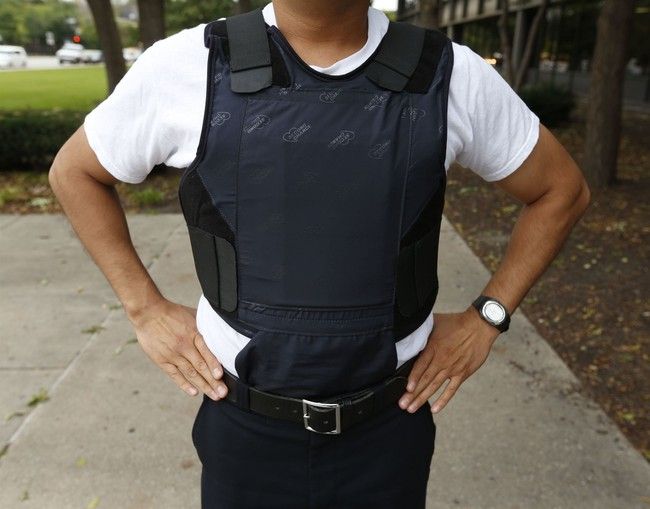
A federal judge has ruled that New York's ban on civilian body armor violates the Second Amendment. U.S. District Judge John L. Sinatra Jr. issued the decision in a case brought by Firearms Policy Coalition, several individual plaintiffs, and attorney Nicolas Rotsko. The ruling strikes down the state's prohibition on the sale and use of body armor by ordinary citizens. Sinatra did not make the order effective right away. He stayed it for 14 days so New York can appeal to the Second Circuit. Until that appeal runs its course, the ban remains enforceable in practice, and no New Yorker should buy a vest based on this ruling alone.
Key Details
The opinion turns on a simple question: is body armor an "arm" protected by the Second Amendment? Sinatra said yes. He pointed to the Supreme Court's definition in District of Columbia v. Heller, which described arms as "weapons of offence or armour of defence." Once the text applied, the burden shifted to New York to justify the ban with historical analogues.
- Court: U.S. District Court, presided over by Judge John L. Sinatra Jr.
- Plaintiffs: Firearms Policy Coalition and individual plaintiffs, represented by Nicolas Rotsko
- Common use: Tens of thousands of body armor units sell every year nationwide.
- Legal status elsewhere: Body armor is legal to possess in 49 of the 50 states.
- State's historical argument: New York claimed a "centuries-long historical tradition" of regulating body armor. Sinatra said the state could not identify a single body armor regulation enacted after ratification. The state leaned on foreign law predating the nation's founding.
- "Unusually dangerous" argument: The state tried to fit the ban under the Second Circuit's standard from Lamont, 153 F.4th 227. It argued that synthetic materials like Kevlar emerged only in the late 19th and 20th centuries.
- Supreme Court review: The Court granted certiorari in Grant v. Higgins, 146 S. Ct. 2811 (2026), which involves that same Lamont framework.
- Stay: The order takes effect only after 14 days, which gives New York time to seek appellate relief.
Background
Heller, decided in 2008, established that the Second Amendment protects an individual right and covers weapons in common use for lawful purposes. The decision also said that the right extends to "bearable arms" beyond those that existed in 1791. Lower courts spent years arguing over whether that language covered modern technology.
New York State Rifle & Pistol Association v. Bruen, decided in 2022, replaced the old interest-balancing tests with a text-and-history standard. Under Bruen, the government must show that a modern regulation fits within the nation's historical tradition of firearm regulation. Courts apply that test by comparing analogues in both how and why a law restricts the right. Bruen also rejected the notion that a state can justify a restriction merely by pointing to public safety benefits.
The Second Circuit has developed its own approach to arms that are "unusually dangerous," a concept rooted in Heller's dicta on "dangerous and unusual weapons." New York has leaned on that framework in cases like this one. The Supreme Court's decision to take up Grant v. Higgins means the justices will eventually weigh in on the framework that New York is now relying on.
Why It Matters for Gun Owners
This ruling directly affects anyone who lives in New York, works there, or travels through it with body armor. Plate carriers, soft vests, and concealable armor all fall within the reach of the ban the judge just struck. Until the Second Circuit acts, that prohibition still applies. A plaintiff win on paper does not protect you from a charge during a traffic stop.
Watch for three things. First, watch the state's appeal and any motion to stay the district court's order. If the Second Circuit grants a stay pending appeal, the ruling stays on paper for months or longer. Second, watch the docket in Grant v. Higgins. A Supreme Court opinion on the unusually dangerous standard could reshape this case regardless of how the Second Circuit rules. Third, watch New York's legislature. Albany has a long record of responding to court losses with new statutes.
Gun owners who carry body armor in other states should check the rules before entering New York. A vest that is legal in Pennsylvania or Texas can become a crime the moment you cross the state line.
DownRange Analysis
The textual argument here is strong. If Heller defined arms as including armor of defense, a ban on a common defensive item needs serious historical support. New York could not produce it. Reaching back to foreign law from before the founding is a weak move under Bruen, which asks for analogues from the founding era and the era of the Fourteenth Amendment. Sinatra correctly rejected the idea that technological change erases constitutional protection. Applying that logic to modern handguns would be absurd, and the state's own argument invites that comparison.
The stay is the real story. The Second Circuit has a long track record of upholding New York's gun laws, so expect the appeal to succeed in suspending the injunction. The Supreme Court may ultimately decide whether the unusually dangerous framework survives at all. If it does not, New York loses its best tool for defending this ban.
What should a gun owner do right now? Do not buy or import body armor for use in New York based on this ruling. Keep records of any lawful purchase made outside the state. Support the litigation through Firearms Policy Coalition and contact your state representatives. And read the Grant v. Higgins docket, because that decision will matter more than any single district court opinion.