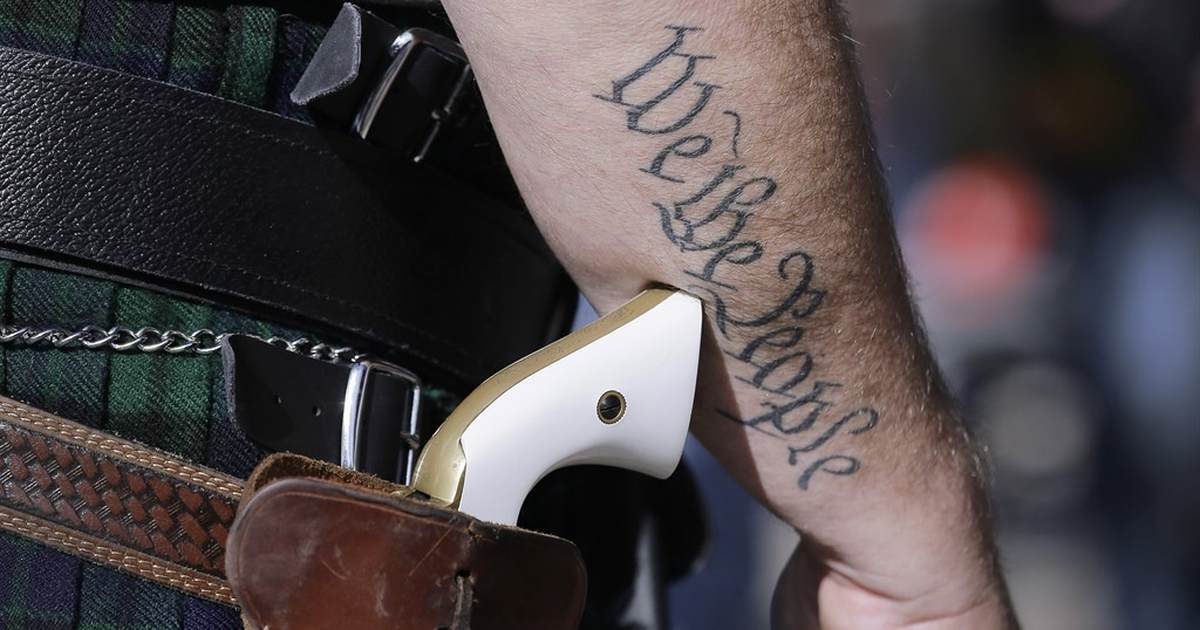
Arizona Democrats Now Hold Every Lever on Red Flag Bill
Arizona Democrats now control the governor's office, the House and the Senate. Lawmakers Gutierrez and Travers say they intend to pursue a red flag bill when the Legislature reconvenes in January. The idea would let judges order guns removed from people deemed a threat. Republican Gov. Doug Ducey first pushed it nearly a decade ago, and a GOP-controlled Legislature killed it. The Arizona Citizens Defense League, which has beaten back similar bills with Republican allies for years, now faces a Capitol where its votes may not be enough to stop a new version.
Key Details
The facts on the table are straightforward, and they should worry anyone who carries in Arizona.
- Party control: Democrats hold the House, the Senate and the governor's office, a combination the state has not seen in decades.
- Sponsors: Gutierrez and Travers have publicly committed to changes in the 2027 session, which begins in January.
- Original push: Ducey argued that Arizona needed red flag laws so judges could remove firearms from people who pose a threat.
- Failure point: After the GOP majority rebuffed him, Ducey said politics blocked the effort. That ended it for the rest of his term, which ran through 2022.
- Opposition: The Arizona Citizens Defense League describes itself as a grassroots group whose stated goal is to stop bad bills and pass pro-gun-rights legislation. It has partnered with Republican legislators for years to defeat this kind of measure.
- Vote math: The group may no longer have enough votes at the Capitol to block a bill outright.
Democrats have tried to pass similar measures since the Ducey effort stalled. Their current advantage is the first time they have had unified control in this decade, which changes the odds for any proposal that reaches a floor vote.
Background
Red flag laws, also called extreme risk protection orders, allow a court to temporarily remove firearms from a person after a petition alleges they pose a danger to themselves or others. Florida passed one in 2018 after the Marjory Stoneman Douglas High School shooting. Other states followed in the years after, with many adopting similar procedures. Arizona's debate traces back to the 2011 shooting in Tucson that wounded then-Rep. Gabby Giffords and killed six people. The shooter, Jared Loughner, had a history of mental health problems that drew attention before the attack. Arizona already allows involuntary commitment for mental health evaluation for up to 72 hours, a point that critics of red flag laws raise often. The U.S. Supreme Court's 2022 decision in New York State Rifle & Pistol Association v. Bruen set a new test for gun laws. Courts now ask whether a regulation fits the nation's historical tradition of firearm regulation. Red flag laws have become a central test case under that standard.
Why It Matters for Gun Owners
A red flag law does not require a conviction. It requires a petition, a hearing and, in many versions, an order issued before the gun owner can respond fully. Anyone who owns a handgun, a hunting rifle or an AR-platform rifle in Arizona falls under the reach of a law like this. Family members, roommates and former partners often file these petitions, so the people who can trigger a seizure extend well beyond law enforcement. Arizona has a large population of concealed carry permit holders and sport shooters, and all of them would face the process. Watch the bill numbers when session opens in January. Track which committee hears the bill first, which members sign on as sponsors and whether any Republican co-sponsors appear. A single GOP signature would let supporters call the measure bipartisan, which matters for public messaging and for any future court defense. Check your county sheriff's and prosecutor's positions, and know who represents your district before the hearings begin.
DownRange Analysis
Bruen makes this bill harder to defend than its sponsors admit. Supporters point to the 2024 Supreme Court decision in United States v. Rahimi, which upheld a federal ban on guns for people under domestic violence restraining orders. That ruling gives red flag advocates a template, because it tied the restriction to a specific finding of dangerousness made by a court. Expect a fight over whether a temporary, ex parte order without a full trial matches that template. Gun owners should not treat a court challenge as a guaranteed win. Litigation takes years, and seized guns often stay seized while the case moves. The market impact will be small in the short run, but demand for lawful storage, legal defense funds and membership in groups like the Arizona Citizens Defense League will rise if the bill advances. Right now, the actionable step is simple. Join the ACDL, contact your legislators before January, and document your lawful ownership. Carry the same discipline you bring to the range into the Capitol: show up, testify and name names.