Armed Dad Who Heard Gunshots Killed Silver Rail Shooter
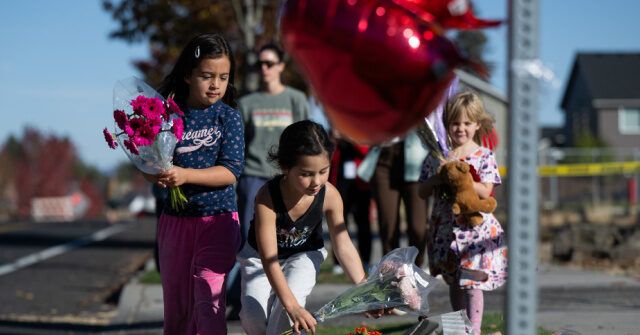
A concealed-carry father killed a 16-year-old gunman inside Silver Rail Elementary School. Law enforcement said a bystander shot the attacker dead. The New York Post identified that bystander as Kaylub Giamanco, a 36-year-old carpenter and father of two daughters who attend the school. Giamanco was driving past the building during his lunch break when he heard gunshots. He went inside. He found the shooter and killed him. The attacker had already killed four people before Giamanco reached him. One armed civilian ended a school shooting that had already claimed four lives.
Key Details
The facts that matter here are specific, and they come from the New York Post's reporting, which law enforcement's account supports:
- Location: Silver Rail Elementary School.
- Bystander: Kaylub Giamanco, 36, a carpenter who carries a concealed firearm.
- Family connection: Giamanco is the father of two daughters who attend the school.
- Trigger event: He heard gunshots while driving by during his lunch break.
- Action taken: He entered the building and cornered the shooter in the school's special-education room.
- Outcome: He killed the 16-year-old attacker. Police said the shooter died from a bystander's gunfire.
- Casualties before intervention: The shooter killed four people before Giamanco stopped him.
- Aftermath: One of Giamanco's siblings told the Post that he is consumed by guilt over the people he could not save.
The sibling's account points to the emotional weight an armed citizen carries after a shooting, even a successful one. The timeline also shows how fast these events move. Giamanco did not need a plan or a tactical team. He needed a firearm, a decision, and the willingness to go toward the sound of gunfire.
Background
Armed citizens have stopped active shooters before, and the record shows it works when the defender is present and capable. In September 2019, Jack Wilson, a volunteer security member with a concealed handgun, shot and killed an attacker at the West Freeway Church of Christ in White Settlement, Texas. That incident followed the same pattern: the attacker died before police arrived, and the armed defender ended the threat without a long delay.
The contrast with Uvalde matters. In May 2022, officers at Robb Elementary waited more than an hour before confronting the gunman, who killed 19 children and two teachers. That failure became a national argument about police response times, and it shifted the debate toward individual self-reliance.
The legal backdrop also changed. In June 2022, the Supreme Court decided New York State Rifle & Pistol Association v. Bruen. The ruling struck down New York's 'proper cause' requirement for public carry and set a text, history, and tradition test for evaluating gun laws. Courts now need historical analogues to uphold restrictions. Gun owners have a stronger foundation for carrying in public than they did before that decision.
Why It Matters for Gun Owners
Parents who carry face the most immediate question. Many states restrict or prohibit carry on school property, and the federal Gun-Free School Zones Act of 1990 bars firearms within 1,000 feet of a school. That statute includes exceptions for people licensed under state law, but those exceptions do not override every state's rules. A license that lets you carry on a public street may not let you carry into a school parking lot. Check the statute in your state before you drive your kids to school with a gun on your hip.
Teachers and school staff face a different calculation. Most districts ban staff carry, and some states have created narrow programs that allow trained, armed employees. If your district has a policy, know it. If your state has a program, learn what training it requires.
Every carrier should plan for the moment police arrive. Responding officers see a gunman and cannot distinguish a good guy from a bad one at first glance. Keep your hands visible, follow commands immediately, and do not carry a weapon in your hand when officers enter. Train on those responses before you need them.
DownRange Analysis
Armed defense of others sits squarely inside the historical tradition Bruen requires courts to examine. Founding-era law recognized the right to defend oneself and those nearby. The harder question is whether school carry bans survive. Bruen itself signaled that 'sensitive places' restrictions could stand, and most courts have treated schools as sensitive. Expect school bans to hold in most jurisdictions, which means the fight stays in state legislatures and school boards.
The market will respond. Concealed-carry training classes, compact carry pistols, and quality holsters will see demand from parents who now picture themselves in Giamanco's position. Buy the training first. A gun you cannot run under stress does nothing for your kids.
What should you do right now? Pull up your state's school-zone statute and read it. Confirm your permit covers the places you go daily. Take a force-on-force or scenario-based course if you have not. Then decide, sober and in advance, what you will do when you hear gunfire. Giamanco's story shows the outcome can change. It also shows the cost stays with the defender.