Charlottesville Taco Bell Shooter Cooperated, and Police See Self-Defense
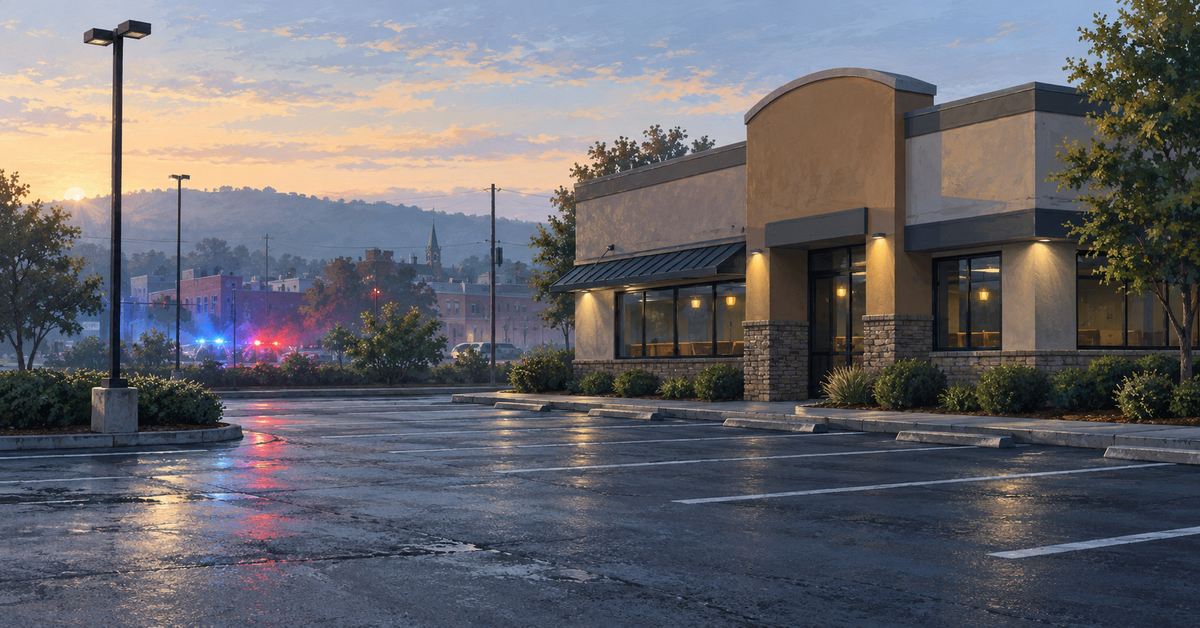
Charlottesville Police Chief Michael Kochis says investigators preliminarily see self-defense in a shooting at the Taco Bell on 5th Street. He made the assessment on a Tuesday in November, roughly three weeks after the October 25 shooting in the parking lot at 1158 5th Street Extended. Police are now consulting the commonwealth's attorney about charges. The person who fired stayed on scene and cooperated. The chief called his read preliminary, and no final charging decision has been announced.
Key Details
The timeline and injuries come from the department's initial release and the chief's later comments, as reported by Cville Right Now.
- Date and time: Officers responded around 9 a.m. on October 25 to a report of a disturbance involving a weapon.
- Location: The Taco Bell parking lot at 1158 5th Street Extended, Charlottesville, Virginia.
- Injuries: One person had a gunshot wound to the shoulder. Police described the injuries as non-life-threatening.
- Transport: Officers located the wounded person and arranged transport to UVA Medical Center.
- Relationship: Police said the two people knew each other.
- Suspects: Officers were not searching for another suspect.
- Sequence: Per Chief Kochis, one person produced a weapon first. The other person then drew a firearm and fired.
- Cooperation: The person who fired remained at the scene and cooperated with officers.
- Status: The original release said the investigation remained open and charges were pending.
The chief's assessment has not been tested in court. Nothing public yet shows a charging decision, a grand jury action, or a finding that the shooter was legally justified.
Background
Virginia treats justified self-defense as a complete defense to a criminal charge. The question prosecutors ask is whether the shooter reasonably believed he faced imminent death or serious bodily harm, and whether he used force proportional to that threat. Virginia does not require a person to retreat before defending himself in a place he has a right to be, though the rule has limits. A person who starts a fight generally cannot claim self-defense for the fight he started. Those two issues will drive any charging decision in this case: who produced a weapon first, and whether the shooter had a reasonable fear once he did.
The U.S. Supreme Court's 2022 decision in New York State Rifle & Pistol Association v. Bruen struck down New York's proper-cause requirement for public carry and set a text-and-history test for gun laws. Bruen did not change the common-law self-defense rules that prosecutors apply after a shooting. Virginia issues concealed handgun permits under Va. Code § 18.2-308, and permit holders who shoot someone still face the same self-defense analysis as anyone else. Charlottesville's commonwealth's attorney makes the final charging call.
Why It Matters for Gun Owners
Every legal gun owner should understand one thing from this case. A shooting does not end with the first 911 call. It ends with a prosecutor's decision, and that decision can take weeks. The shooter in this case stayed, cooperated, and told officers his side. Those choices matter. Walking away or refusing to talk can make a justified shooting look like something else to a prosecutor reading a police report.
Gun owners carrying in Virginia and across the mid-Atlantic should also note the timing of the police statement. Chief Kochis described a weapon being produced before the gun was fired. That detail carries weight. Anyone who carries needs to know that the first person to show a weapon can become the central question in a self-defense case, and that disclosure rules and witness accounts will decide how that question gets answered.
The National 911 Program advises callers to give the location, a callback number, the nature of the emergency, and injury information. It also tells callers to follow the call taker's instructions and stay on the line until released. Those steps help responders reach the wounded person faster, and they put a clear first record on file for the shooter.
DownRange Analysis
On the facts released so far, this looks like a textbook self-defense posture under Virginia law. One person produced a weapon. The other fired. The shooter stayed and cooperated. The injury was not life-threatening, which suggests a shot that stopped the threat rather than a volley. Still, a preliminary read from a police chief is not a dismissal. Prosecutors will want witness statements, video from the Taco Bell lot if it exists, and proof of who escalated first.
Under Bruen, a self-defense justification is not a gun-control question. Courts apply the same common-law logic they always have. The real risk for gun owners is process, not statute. A justified shooting can still cost a shooter thousands in legal fees and months of uncertainty.
What should a gun owner do right now? Carry legally. Know your state's self-defense rules. Keep your permit current. If you ever fire, call 911, stay on the line, and say nothing beyond the basic facts until you have a lawyer. Watch the Charlottesville commonwealth's attorney's office for the charging decision, which will show how Virginia prosecutors handle a shooting where a weapon came out first.