Nashville Security Guard Fires After Coffee Assault; DA Reviews Shooting
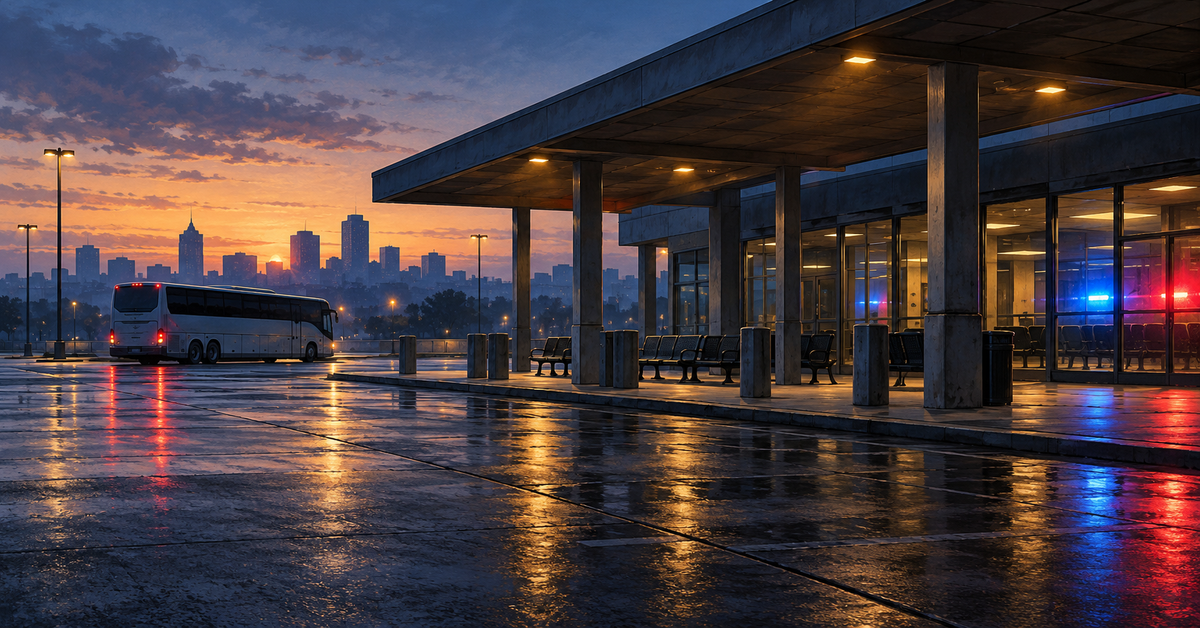
Nashville police are still deciding whether security guard Douglas West was justified when he shot Jacorey McIntosh outside the downtown Greyhound station on Oct. 25. Detectives plan to take the case to the district attorney before deciding whether West faces charges. McIntosh, 22, was booked Sunday night on aggravated assault after treatment for wounds to his hip and leg. A judicial commissioner set bond at $10,000. That assault charge concerns the attack on West. It does not answer whether West's gunfire was lawful. As of the latest local follow-up, no charging decision on West had been announced.
Key Details
The timeline matters, and police have laid out a specific sequence:
- Time and place: The confrontation happened around 7:25 a.m. outside the downtown Greyhound station.
- Earlier order: West, 39, told detectives he had told McIntosh to leave roughly 45 minutes before the fight.
- The initial attack: According to the Metro Nashville Police Department, McIntosh returned while West talked with a co-worker, threw hot coffee in his face and struck him.
- Injuries to West: Police said West was knocked down twice and hit in the head with a firearm magazine that had fallen from his security vest. Detectives documented burns and contusions on his face and head.
- Surveillance account: Investigators said a surveillance camera recorded McIntosh charging twice and punching West on the ground. West then stood, drew his gun and fired after McIntosh moved slightly toward him again.
- Physical evidence: WSMV reported that no weapon was found on McIntosh. Police did recover the magazine they say he used during the assault.
- Separate recording: FOX 17 reported on a 911 call in which West described being struck with his own magazine. That recording is distinct from the surveillance footage police describe.
Background
Self-defense shootings by armed civilians turn on a narrow question: did the person reasonably believe deadly force was necessary to stop an imminent threat? The Supreme Court tightened the test in New York State Rifle & Pistol Association v. Bruen (2022), which requires historical analogues when a state restricts carry in public. Bruen did not change the basic self-defense question. It made the government's burden to justify carry rules heavier. Tennessee has allowed permitless carry since 2021, so a licensed guard and an ordinary carrier generally answer to the same use-of-force standards. Private security employment does not create a special police power. Vanderbilt law professor Christopher Slobogin, quoted by WSMV, described private guards as generally held to civilian self-defense standards. That framing puts West's conduct in the same category as any armed citizen who fires at a close-range attacker. Prosecutors usually weigh whether the threat was still active at the moment of the shot, not just whether the attacker started the fight.
Why It Matters for Gun Owners
This case shows how a single incident can produce two separate legal questions. The attacker can face assault charges while the defender's shooting remains under review. Gun owners who carry for work or personal protection should understand that distinction before they need it. Guards and concealed carriers in Tennessee face the same scrutiny that follows any defensive shooting, including the question of whether force continued after the threat ended. Video will drive that analysis. Surveillance footage, bystander recordings, and 911 audio can each tell a different part of the story, and investigators will compare them. Carriers should expect that their own actions, from the first verbal exchange onward, will be measured frame by frame. A stable posture, clear commands, retreat when practical, and a deliberate pause before drawing reduce the risk of a split-second decision looking like a revenge shot on video. Anyone who carries should also know that a magazine or vest can get knocked loose in a fight, so carry equipment needs to stay secure.
DownRange Analysis
On the facts police have released, the case turns on timing. A coffee attack followed by punches on the ground can justify a defensive response. Whether West was justified in firing depends on whether McIntosh still posed a threat when the shots were fired. The surveillance account says he moved slightly toward West again. That movement will get close scrutiny, because a small step can read as renewed attack or as a man stumbling back. Bruen does not change this analysis. It only raises the government's burden when it restricts carry. Here, the self-defense question is ordinary, and the video will answer it. Gun owners should do three things now. Document every incident in writing soon after it happens. Request police and medical help immediately after any assault. Give 911 your location and callback number, describe injuries accurately, and stay on the line until the dispatcher releases you.