New Jersey Permit Holders Must Re-Qualify Within Two Years of Renewal
New Jersey permit-to-carry holders must complete one re-qualification within two years of each permit renewal. The qualification certificate has to meet minimum state requirements to count. Bearing Arms columnist John Petrolino, an NRA-certified pistol, rifle and shotgun instructor, uses that rule to make a broader argument: mandatory training is a burden on a civil right, and the way to handle it is to show up as a serious student. His column also takes aim at a commenter who questioned why gun owners fight permit fees but accept extra requirements from training facilities.
Key Details
The core requirement is narrow, and it applies to a specific group of people. Here is what the column establishes:
- Who: Holders of New Jersey permits to carry.
- What: One re-qualification per renewal cycle.
- When: Within two years of each permit renewal.
- Standard: The qualification certificate must meet minimum requirements to be valid.
- Author: John Petrolino, a U.S. Merchant Marine veteran, award-winning journalist, author of Decoding Firearms, and volunteer director on the board of the Citizens Committee for the Right to Keep and Bear Arms.
Petrolino's core point is that required training is a cost. He does not argue the constitutionality of training mandates in this piece. He says the burden exists whether or not it is good policy, and that a carrier who wants to stay on the right side of the law has to satisfy it. He describes fatigue as the main enemy. Renewal training gets treated as a box to check, and the author wants readers to resist that habit.
The column also quotes an online commenter who complained that New Jersey training facilities add requirements on top of state rules. Petrolino's response is that the gun community fights permitting officials over added fees and extra hurdles, yet it accepts similar add-ons from private trainers without the same objection. He says anyone can train with whomever they choose, and New Jersey's standards are what they are.
Background
New Jersey has long run one of the most restrictive carry systems in the country. Carry requires a permit issued by the state, and applicants face a documented vetting process before a permit issues. Training and qualification rules have layered onto that process over time. The re-qualification requirement in the column is one piece of that framework, tied to renewal rather than initial issuance.
The constitutional backdrop changed in June 2022. In New York State Rifle & Pistol Association v. Bruen, the Supreme Court struck down New York's proper-cause requirement for public carry. The majority set a test: when the Second Amendment's plain text covers a person's conduct, the government must justify its regulation by showing it fits the nation's historical tradition of firearm regulation. The Court also made clear that shall-issue licensing with objective criteria remains a different question from discretionary licensing. That distinction matters for training mandates. An objective, uniformly applied training standard looks very different from a subjective hurdle that officials can use to deny applicants.
Why It Matters for Gun Owners
If you carry in New Jersey, this rule applies to you at renewal. Missing the window or submitting a certificate that fails the minimum standards puts your permit at risk. Check the date on your current permit and count back two years from the next renewal. Then confirm that your qualification course is approved and that the certificate paperwork meets the state's minimums before you pay for the class.
Non-residents and gun owners in other states should also pay attention. New Jersey's rules have a habit of spreading. Permitting regimes in other states have copied features of New Jersey's system, and a re-qualification requirement with objective standards is the kind of rule that gets cited as a model. Watch your own state legislature for bills that add training to initial or renewal licensing. Testify early, and bring data on cost, availability of approved courses, and travel burden.
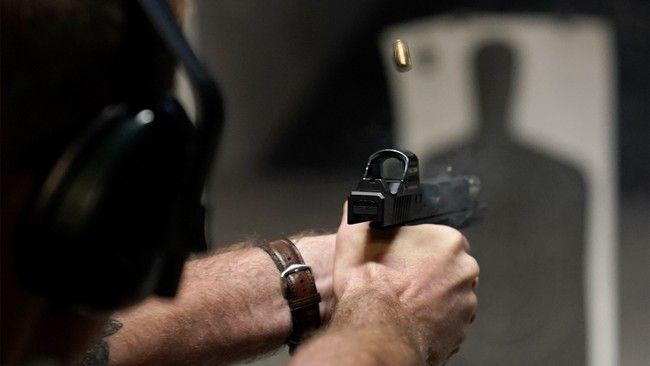
Training quality matters too. A course that teaches you to clear a malfunction, draw from a holster and shoot under time pressure builds skills you will use. A course that only checks a box leaves you no better prepared. Pick the instructor first and the certificate second.
DownRange Analysis
Petrolino is right that mandatory training is a burden. He is also right that the burden is real whether or not you like it. Where we part ways is on the mindset. A permit requirement is a condition on a right, and the community should keep saying so. Accepting the requirement as the cost of doing business does not concede that the requirement is sound policy.
Under Bruen, the question is whether a training mandate is objective and uniformly applied, and whether the state can tie it to a historical tradition of regulating firearms. Renewal training with a fixed window and defined minimums has a stronger argument than an open-ended, discretionary training requirement. Fees and seat-time costs that price out lawful carriers invite a challenge under the same logic. The gun community should push on those specifics rather than on training as a concept.
What should a New Jersey carrier do right now? Calendar the renewal and the two-year re-qualification window. Verify that your course meets the minimum certificate requirements before you sit down. Train to get better, because the skills outlast the paperwork. And if you want the requirement changed, document the costs and the failures of the process and put them in front of your legislators.