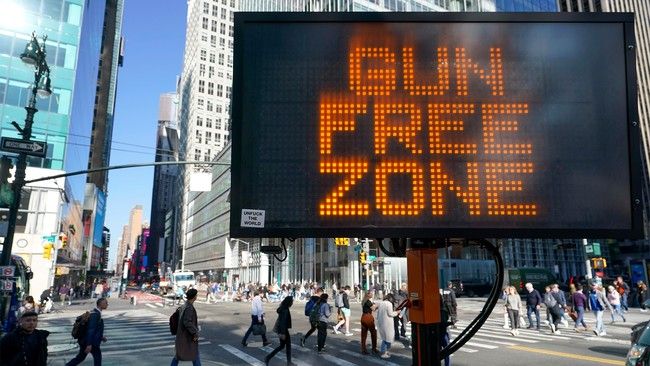
Stratford Council Kills Carry Ban on All Town Property
The Stratford, Connecticut town council voted unanimously on October 13 to reject an ordinance that would have banned carrying firearms on all town-owned property. Mayor David Chess proposed the measure. He called it a “natural extension” of existing bans at the police station and in the town’s schools. Gun owners filled the meeting room and pushed back hard. Stratford Guns and Ammo owner Lorenzo Whilby called the ordinance government overreach. The proposal died the same night it reached a vote. Bearing Arms published its report on October 20, 2026, drawing on Connecticut Public Radio’s coverage of the meeting.
Key Details
The numbers and specifics that mattered at the October 13 meeting:
- Vote: The Stratford town council voted unanimously against the ordinance.
- Scope: The ordinance covered all town property, not just buildings. That included Town Hall, the Parks Department, and other town-owned land.
- Proposer: Mayor David Chess argued the ban “made sense” to extend the restrictions already in place at the police station and schools.
- Carve-out: The draft exempted people holding valid carry licenses.
- Opposition: Lorenzo Whilby, owner of Stratford Guns and Ammo, told the council that residents should be able to protect themselves in Stratford. Several other residents raised similar objections.
- Chess’s stated motive: He said the goal was to protect the community and that no other motive existed.
- Future: The council chair said the ordinance will not come back up for a vote.
- State context: Connecticut bans open carry. A pending lawsuit challenges the state’s prohibition on selling semi-automatic pistols that can be easily converted to fully automatic fire.
Background
Stratford’s proposal did not appear in a vacuum. Connecticut already restricts carry through a permit system, and the state has layered on sensitive-place rules for decades. Police stations and schools sit on the list of locations where lawful carry is already prohibited or tightly limited. Chess’s argument built on that foundation. He wanted to apply the same logic to everything a municipality owns. The legal frame shifted in 2022. In New York State Rifle & Pistol Association v. Bruen, the Supreme Court struck down New York’s discretionary carry permit system. The Court also set a new test. Modern gun regulations must match the nation’s historical tradition of firearms regulation. That test does not stop governments from restricting guns in certain places. It does require them to point to historical analogues. Since then, federal courts have wrestled with how many public spaces can qualify as “sensitive places.” Second Circuit decisions, which cover Connecticut, have upheld some restrictions while striking others. Stratford’s ordinance would have tested that line at the municipal level, which is where the fight often starts.
Why It Matters for Gun Owners
This vote matters for every Connecticut permit holder who walks through a town hall, a park, or a municipal lot. A town-wide carry ban does not sit on a map. It turns a routine errand into a potential felony charge for anyone who misreads signage or the boundary of a parcel. Ordinances like Stratford’s also tend to spread. A council that tries one template often hands the same draft to the next town. If you carry in Connecticut, check the permit’s scope and the posted rules before you enter any public building or park. Do not assume that a town-owned lot is open ground because the state allows carry on public streets. Watch your local council agendas, especially for items labeled “public safety,” “facilities,” or “parks use.” Those are the places where sensitive-place ordinances usually hide. Residents who want to fight these measures need to show up at the first reading, not the final vote. Stratford gun owners won this round by filling the room. The same tactic works anywhere.
DownRange Analysis
Stratford’s ordinance would have failed under a serious Bruen analysis. The mayor pointed to police stations and schools, which have historical analogues in sensitive-place doctrine. Parks, municipal lots, and administrative offices do not. A ban that covers every town-owned acre looks less like tradition and more like a general prohibition with a permit exception. Courts have rejected sweeping sensitive-place bans before, and a town council has even less room than the state to justify one. The market reaction matters too. Local gun shops like Stratford Guns and Ammo depend on permit holders who train, shoot, and carry. Each restriction that shrinks where those holders can legally go pushes some of them toward disengagement. Connecticut already sits among the most restrictive states in the country. Every additional carve-out erodes the value of the permit the state issues. What should a gun owner do right now? Know your permit’s exact limits. Map the public buildings and parks you visit regularly. Email your council members if a similar item appears on your town’s agenda, and show up in person if it gets scheduled. The Stratford council chair says this proposal is dead. Treat that as a promise worth verifying, not a guarantee.