FBI Data Reveals Who Actually Commits and Commits Murder in America
The FBI's Uniform Crime Reporting program released fresh murder statistics that demolish popular narratives about American violence. The data cuts through political spin and shows exactly who commits homicides, who becomes victims, and how firearms factor into the equation.
Most homicides happen between people who know each other. Strangers kill strangers far less often than media coverage suggests. The demographics matter—and they contradict talking points from both sides of the gun debate.
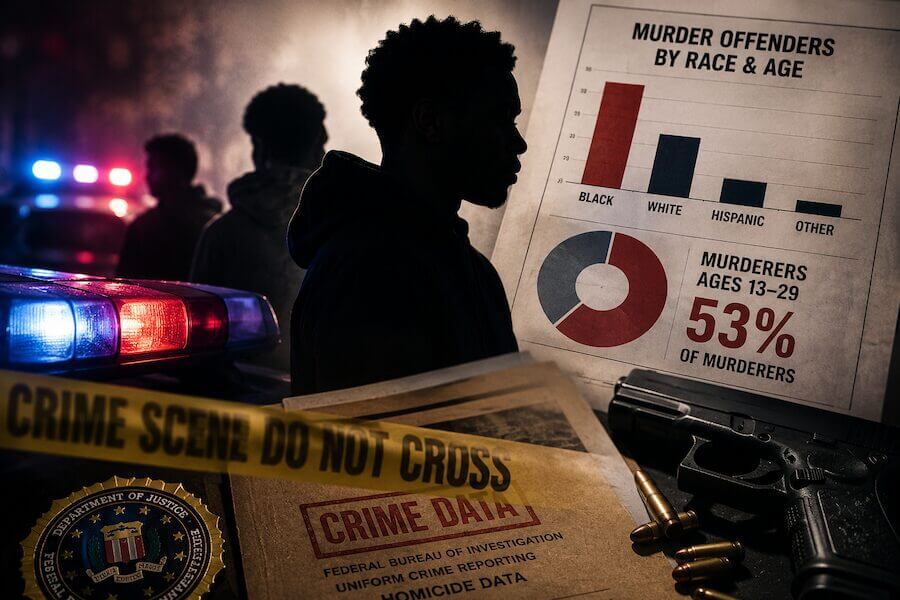
Black Americans represent 13% of the U.S. population but account for roughly 50% of homicide victims and about 50% of homicide offenders. This isn't a gun problem; it's a violence problem concentrated in specific communities plagued by gang activity, drug trafficking, and poverty. Suicides by firearm outnumber homicides 3-to-1, yet anti-gun politicians lump them together to inflate "gun death" statistics.
Why It Matters for Gun Owners
This data matters because it exposes the intellectual dishonesty in "common sense gun control" arguments. When politicians claim "assault weapons" drive murder rates, they ignore FBI data showing handguns account for more murders than rifles—all rifles combined, including so-called assault weapons.
Rifles of any type kill fewer Americans annually than knives, hands, and feet. In 2022, 454 murders involved rifles. Nearly 2,000 involved knives. Yet the political energy focuses on banning rifles.
Law-abiding gun owners know this: criminals don't follow laws. They obtain guns illegally and use them in gang violence, not mass shootings. The FBI data proves that targeting gun owners through restrictive legislation does nothing to address the actual violence drivers—gang activity, drug markets, and urban poverty.
Gun owners defending themselves legally rarely appear in these homicide statistics. When they do, it's often classified incorrectly or lumped with criminal violence. Self-defense shootings that stop crimes never make the same headlines.
Background on the Data
The FBI collects murder data from law enforcement agencies nationwide. The Uniform Crime Reporting program shows weapons used, victim-offender relationships, circumstances, and demographics. This transparency should inform policy—but it doesn't, because the data conflicts with predetermined narratives.
Context matters. Homicide rates spike in cities with gang presence and drug markets. Chicago, Detroit, Baltimore, and St. Louis see disproportionate violence despite having some of America's strictest gun laws. Meanwhile, rural and suburban America with higher gun ownership sees lower violence rates.
The data also shows most murders are single-victim, single-offender incidents. Mass shootings kill fewer Americans than medical errors, swimming pool drownings, or dog attacks. Yet mass shootings dominate political discourse and drive gun bans.
DownRange Bottom Line
FBI data tells a story politicians don't want told. Murder in America is concentrated, predictable, and linked to organized crime—not lawful gun ownership. Handguns, not rifles, dominate homicide statistics. Most victims and offenders know each other.
This means anti-gun policy targets the wrong problem. It punishes millions of responsible owners while ignoring gang violence, drug trafficking, and crime in specific neighborhoods. Gun owners understand what the data shows: criminals are the problem, not firearms or their owners.
Until politicians address root causes—gang violence, drug markets, poverty—murder rates won't drop. Until they stop demonizing gun owners and focus on criminals, the debate will remain dishonest. The FBI data is there. Read it. Share it. It's the truth they want buried.