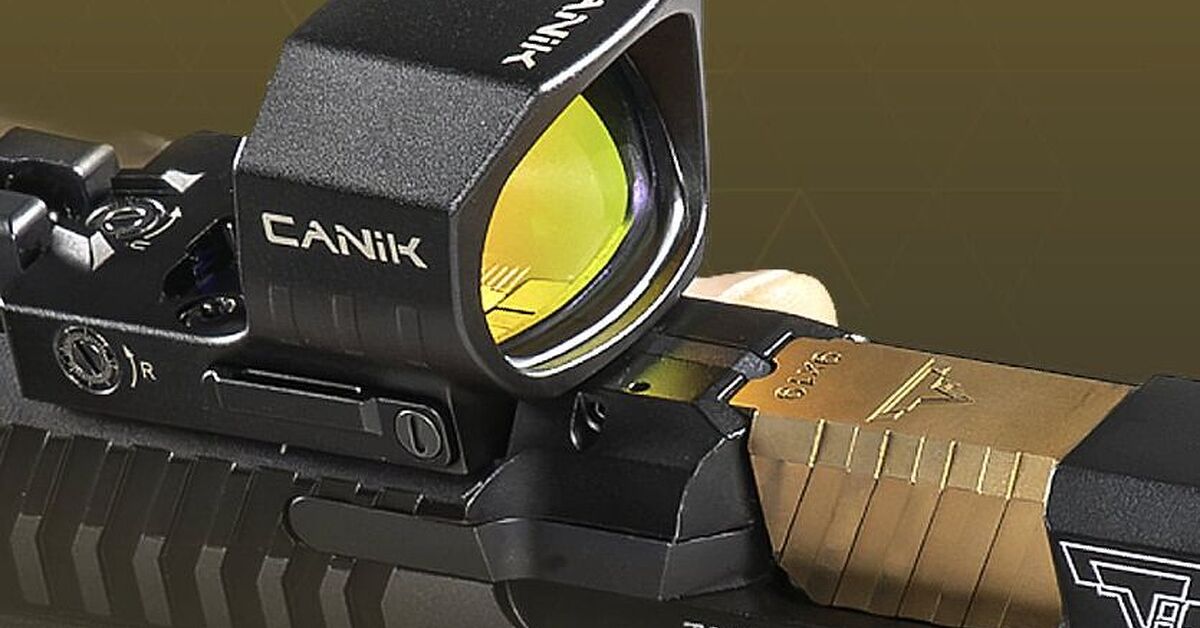
SIG's XRAY9-CUAS Puts Lead-Computing Reticle on Counter-Drone Guns
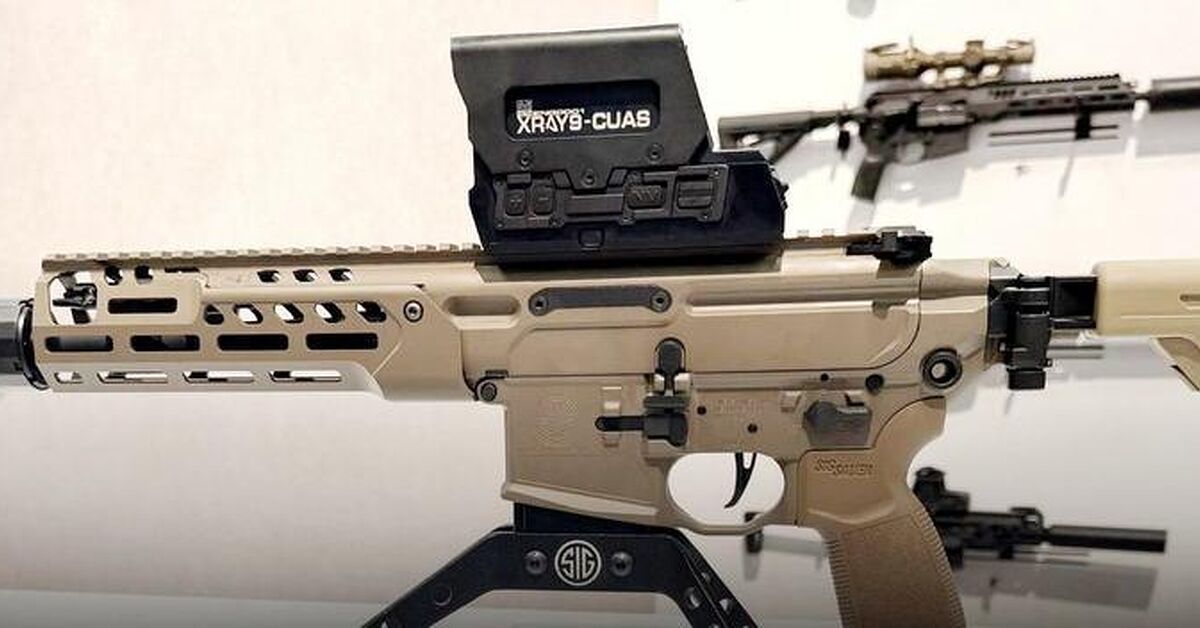
SIG Sauer unveiled the XRAY9-CUAS, a counter-unmanned aircraft systems electro-optic sight, at the AUSA show. The optic mounts to a counter-UAS weapon system and calculates where a moving drone will be when the round arrives. A short-wave infrared (SWIR) laser rangefinder measures distance, while onboard slew-rate sensors track the target's speed and vector. The optic then generates a dynamic reticle that moves to account for that motion. The company pitches the system for soldiers who need to hit small, fast aircraft without stopping to estimate lead. Engagement range runs up to 300 yards, though real performance depends on drone size.
Key Details
The XRAY9-CUAS borrows its targeting approach from the fire control system in SIG Sauer's remote-controlled weapon station. The specifications SIG published are:
- Dimensions: 5.25 x 2.5 x 3.3 inches (133 x 64 x 84 mm)
- Weight: 24 oz (680 g)
- Battery life: up to 50 hours of continuous use
- Display: 640x480
- Window: 48mm clear aperture
- Engagement range: up to 300 yards (274 m), varying by drone size
- Sensor options: CMOS and thermal integration for day, night and fused fire control
Andy York, President of SIG Sauer Electro-Optics, says the company fast-tracked the XRAY9-CUAS because today's battlefield needs the capability. He ties the remote weapon station and electro-optics work to the company's focus on supporting soldiers. Ryan Scott, Director of Advanced Concepts, says SIG is doubling the square footage and workforce at its North Carolina facility through a multi-million-dollar expansion covering R&D, engineering, manufacturing and training. The broader unmanned lineup includes the fixed-wing SCYTHE, the SABER quadcopter and the M-HORNET 22 LR payload attachment. At AUSA, SIG shares booth #8015 in Hall E with the M250, the MMG, the new XM8 carbine, hybrid ammunition and the RCWS.
Background
Lead computation is not new. Anti-aircraft gunners faced the same problem for over a century: a fast aircraft moves while the projectile flies. Early fire control relied on rangefinders and mechanical lead computers. The British Kerrison Predictor, used with anti-aircraft guns in World War II, solved for target course and speed and fed the gun's aim automatically. Modern fire control replaced those mechanisms with digital sensors and ballistic solvers, but the physics has not changed.
What has changed is the threat. Small drones now fly low, fast and cheaply in large numbers, and conventional air defense is often too expensive to spend on them. That gap pushed militaries toward cheaper counter-UAS options, including directed fire from infantry-portable weapons. SIG's remote weapon station work gives the company a base to build from. The XRAY9-CUAS moves that targeting logic onto a sight a soldier can use without a vehicle-mounted computer.
Why It Matters for Gun Owners
Most civilian shooters will not buy this optic. It targets military and government buyers, and the sale and export of counter-UAS hardware sits under tight government control. Still, the technology has a habit of trickling down. Ballistic calculators, laser rangefinders and reticles that shift with range already sit on civilian rifles and scopes. A reticle that compensates for target motion is the next logical step, and that makes this announcement worth watching.
The legal side matters more for civilians than the hardware does. Drones fly in federally regulated airspace, and the FAA controls it. Most states and localities restrict discharging firearms in populated areas, and shooting at an aircraft can bring federal charges on top of local ones. If a neighbor's drone annoys you, a sight that calculates lead does not make a shot legal. Document the drone, report it to local law enforcement, and keep your rifle in the safe. Hunters and sport shooters who run clay targets or steel should practice leading moving targets now, because that skill transfers to any future moving-reticle optic.
DownRange Analysis
The Second Amendment question here is narrow. Bruen asks whether a modern firearm regulation fits the nation's historical tradition of firearm regulation. A military fire control sight sold to government buyers does not raise that question. The real pressure point comes when optics like this reach the civilian market. Expect any commercial version to face the same questions about shooting near aircraft that already apply to drone-related incidents. Nobody has ruled on a civilian counter-drone shooting case that turns on lead-computing optics, so do not assume the technology creates legal cover.
From a market view, SIG is betting that counter-UAS demand will keep growing. The expansion in North Carolina points that way. For gun owners, the practical takeaway is simple. Learn the physics of lead, understand how your current optic handles range and motion, and treat any drone shot as a legal liability first and a skill test second. Watch for SIG's published reticle imagery, since the company has not yet shown how the display works.