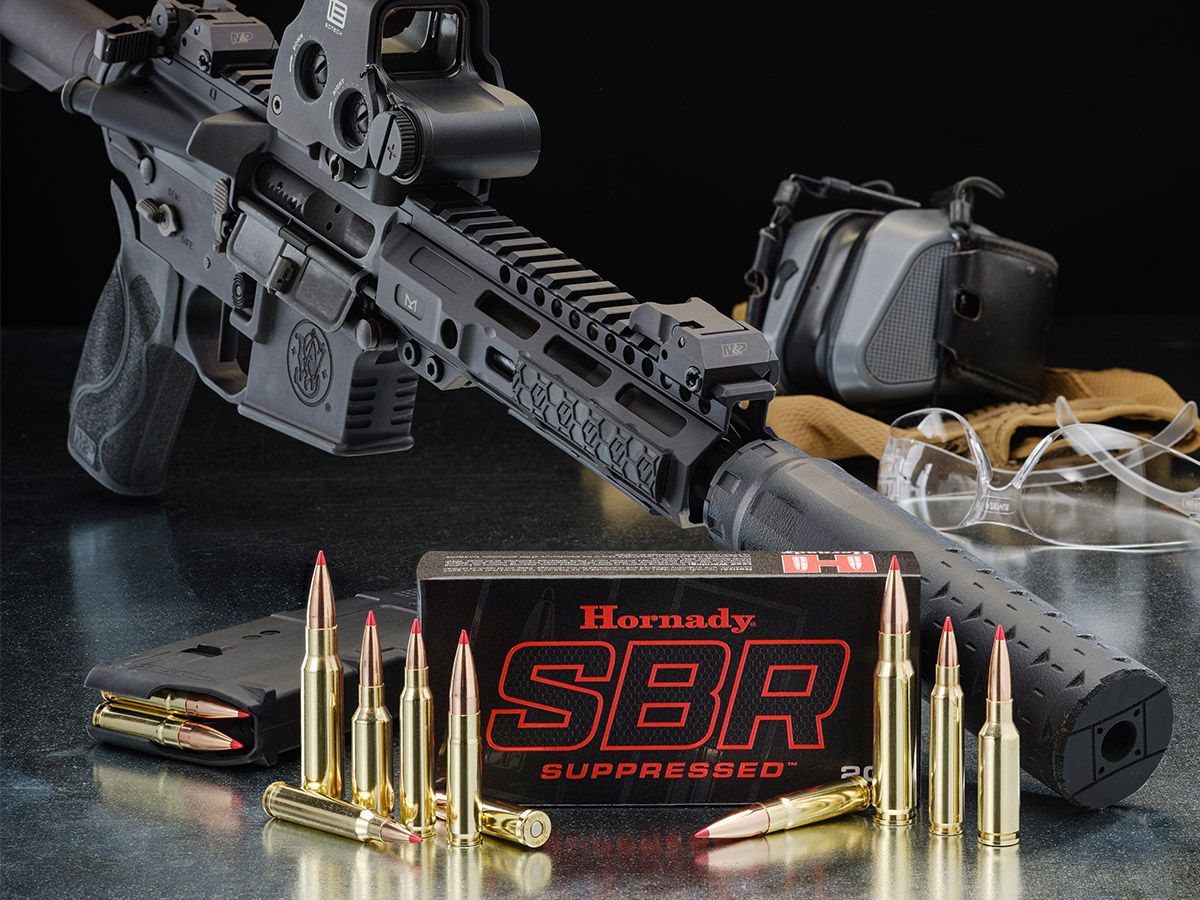
Hornady Builds Four Loads Just for Suppressed Short-Barrel Rifles
Hornady released four supersonic loads designed for short-barreled rifles with suppressors attached. The lineup covers 5.56 NATO, 6mm ARC, 300 BLK, and .308 Winchester, and every load uses an ELD Match bullet. Hornady says the ammo cuts the pressure and fouling that standard supersonic loads create in compact guns. Gun Digest published the first look on October 16, 2026. The release targets a shooter base that has grown fast since the federal NFA tax on suppressors and short-barreled rifles dropped to zero.
Key Details
Hornady lists four loads in the new SBR Suppressed Supersonic line. Each one carries a published velocity:
- 5.56 NATO: 73-grain ELD Match at 2,425 fps
- 6mm ARC: 108-grain ELD Match at 2,620 fps
- 300 BLK: 178-grain ELD Match at 1,725 fps
- .308 Winchester: 178-grain ELD Match at 2,525 fps
Hornady says the loads were tuned for short barrels and suppressor use. The stated goals are optimized velocity, controlled pressure, and better bullet performance from a short tube. The company also claims less carbon and residue buildup in the action, which means fewer cleaning sessions. These numbers come from Hornady's published specifications. Independent chronograph data is not yet available, so treat the velocities as the manufacturer's figures until someone verifies them. The 300 BLK load runs the slowest of the four, which fits a heavier 178-grain bullet pushed through a short barrel.
Background
Most supersonic rifle ammunition gets engineered around barrels of 16 inches or longer. That matters because powder burns on a timeline. Cut the barrel and some powder exits the muzzle unburned, while pressure can spike at the chamber. Suppressors add back pressure and change gas dynamics further. Shooters who run standard ammo through a 10.5-inch upper with a can often see more soot, harder bolt cycling, and faster wear on gas system components.
The old workaround was subsonic ammunition. Subsonic loads avoid many of these problems, but they sacrifice velocity and trajectory. That tradeoff hurts anyone shooting past 200 yards or running a cartridge that needs speed to perform. Hornady's new line tries to close that gap by keeping the supersonic speed and tuning the powder and pressure for a short, suppressed system.
The federal tax change set the stage. Before January 1, 2026, buyers paid a $200 transfer tax on each suppressor and SBR. Congress eliminated that tax for these items in 2025 legislation, and the $200 stamp no longer applies to them. Background checks and the NFA registration process remain in place. The result is a market where compact, suppressed builds cost far less to get into than before.
Why It Matters for Gun Owners
If you own an SBR with a suppressor, your ammo choice affects how often you clean and how fast parts wear. Anyone running a 300 BLK or 5.56 pistol-length upper with a can knows the carbon problem well. A load built for that exact setup could cut maintenance time and extend the life of your gas system, bolt carrier, and buffer spring. The 6mm ARC and .308 loads also open options for hunters and precision shooters who want a short, quiet rifle without giving up performance.
Watch the rifle you own. Hornady lists the ammo as built for SBRs with suppressors, but the company has not published a list of tested rifles, barrel lengths, or suppressor models. Check the load data and test your own system before you carry it into the field. If your rifle runs a non-adjustable gas system, you may see different results than a shooter with an adjustable gas block. Run a few magazines, clean the gun, and log the fouling pattern before you trust the ammo for serious work.
Owners in suppressor-friendly states such as Texas, Arizona, Florida, and Tennessee will see the most demand for compact suppressed builds. Shops in those markets should expect questions about which load matches which barrel length.
DownRange Analysis
Hornady is solving a real problem. Factory ammo has never been designed for a 9- or 10-inch barrel with a can bolted on the end. A purpose-built load makes sense, and the company's ELD Match bullets carry a strong accuracy reputation. The question is whether the claims hold up under real use. Velocity numbers are easy to publish. Long-term fouling and pressure data takes thousands of rounds across multiple rifles.
From a legal standpoint, this product does not raise Bruen questions. Ammunition sits well inside the Second Amendment's protection, and no regulation restricts a specialized load. The bigger story is market timing. With the tax gone, more buyers will build short, suppressed rifles, and those buyers will look for ammo tuned to their setup. Expect other manufacturers to follow with their own short-barrel lines.
What should you do right now? Read the published data, shoot a box through your own SBR before you rely on it, and watch for independent testing from reliable sources. Keep your cleaning kit close. Short-barrel suppressed rifles still demand attention, and no ammo replaces basic maintenance.