Remington's .280 Launched in 1957 Into a Market Ruled by the .270
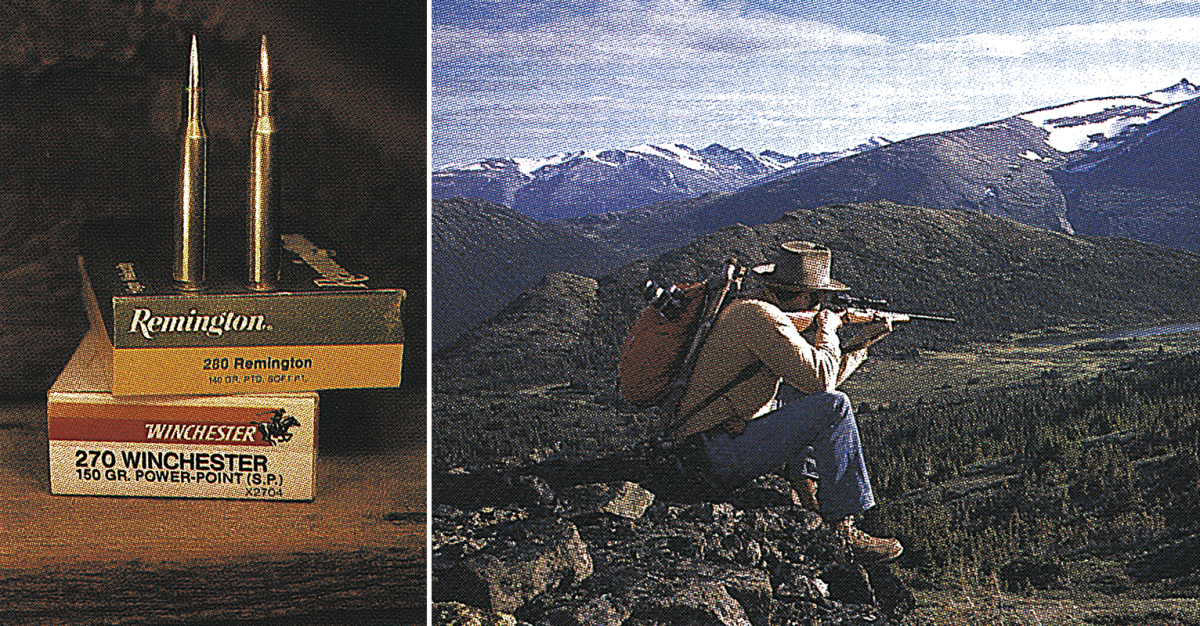
Remington introduced the .280 in 1957, and the cartridge struggled from its first day on the shelf. It started life as a .30-06 case necked down to hold a .284-inch bullet, and it looked like a close cousin of the .270 Winchester that Shooting Editor Jack O'Connor had spent decades promoting in Outdoor Life. Gun writers, who usually hyped new rounds, barely mentioned it. Hunters who already owned a .270 saw no reason to buy a second, nearly identical cartridge. The .280 did not die because it failed in the field. It died because it arrived at the wrong time and in the wrong shadow.
Key Details
The source piece, a reprint of an April 1989 Outdoor Life article, lays out the commercial problems behind the .280's weak launch. The facts that matter:
- 1957: Remington introduced the .280, the first of four debuts the cartridge would make over the years.
- Parent case: The .280 was a .30-06 case necked down to a .284-inch bullet.
- Deliberate differentiation: Engineers gave the .280 a slightly longer shoulder so it could not be chambered accidentally in a .270 rifle, a safety-minded move that also underlined how similar the two cartridges looked on paper.
- Crowded field: Remington released the .280 among roughly a dozen new cartridges introduced in the late 1950s, including the .243 Winchester and the .338 Winchester Magnum.
- Launch rifle: The .280's initial companion firearm was Remington's Model 742 autoloader, a self-loading design rather than the accurate bolt-action rifles that had built the .270's reputation.
- O'Connor's column: O'Connor's first column as Shooting Editor ran in November 1939. He argued that the .30-06 was too much gun for the average hunter who fired only a few boxes of high-power ammunition each year.
Background
The .270 Winchester arrived in 1925, chambered in Winchester's bolt-action rifles. It offered a light bullet at high velocity, which ran against the American preference for heavy, slow bullets from lever guns. O'Connor, a former college professor who became Shooting Editor of Outdoor Life in 1939, made the .270 his personal crusade. He coined the term mountain rifle to describe a light, flat-shooting, mild-recoiling rifle that a hunter could carry all day. By the years after World War II, returning veterans bought guns and read his columns. The .270 became a fixture of American hunting, and any new cartridge in a similar size range had to beat a legend to earn a place in gun racks. Remington's engineers chose the .30-06 case as their starting point, which tied the .280 to a cartridge that most hunters already considered too heavy for everyday use. That left the .280 squeezed between two established rounds, with no clear identity of its own.
Why It Matters for Gun Owners
If you hunt with a .270 or a .30-06, the .280's history explains why your rifle market looks the way it does. Manufacturers that launch a cartridge close to an existing one face a hard sell, even when the ballistics are sound. Shooters who own a .270 today still find a deep pool of factory ammunition, reloading data, and aftermarket support. A newcomer in the same niche must offer something clearly better, not merely different. Check the cartridge before buying a rifle. Ask what it does that your current caliber cannot, and whether you can buy ammunition for it in ten years. Also verify chamber markings carefully. The .280's longer shoulder was a deliberate safeguard, and a rifle with mismatched chambering creates a real hazard if the wrong cartridge gets loaded. Reading the headstamp and the rifle's markings before every hunt costs nothing and prevents a catastrophic failure.
DownRange Analysis
The .280 is a case study in market timing, not a failure of physics. A 7mm-class bullet at .284 inch launched from a .30-06 case delivers real energy and flat trajectories for elk and deer. Its problem was that Remington asked hunters to replace a proven cartridge with a near-copy. Bruen does not touch this question. No court ruling bans a cartridge, and the Second Amendment protects your right to choose the arms you carry and hunt with. The market, however, decides which rounds survive, and it has always punished duplication. Gun owners should treat new calibers the way they treat new handguns: test them before buying, and favor rounds backed by a deep catalog of ammunition and components. If you own a .270, keep it, load it well, and skip the hype. If you are shopping for a long-range deer rifle today, ask whether the cartridge fills a gap or simply repeats one. The .280 shows that the answer decides whether a round lives or dies.