The Soviet RPD's Real Problem Is Its Belts, Not Its Design
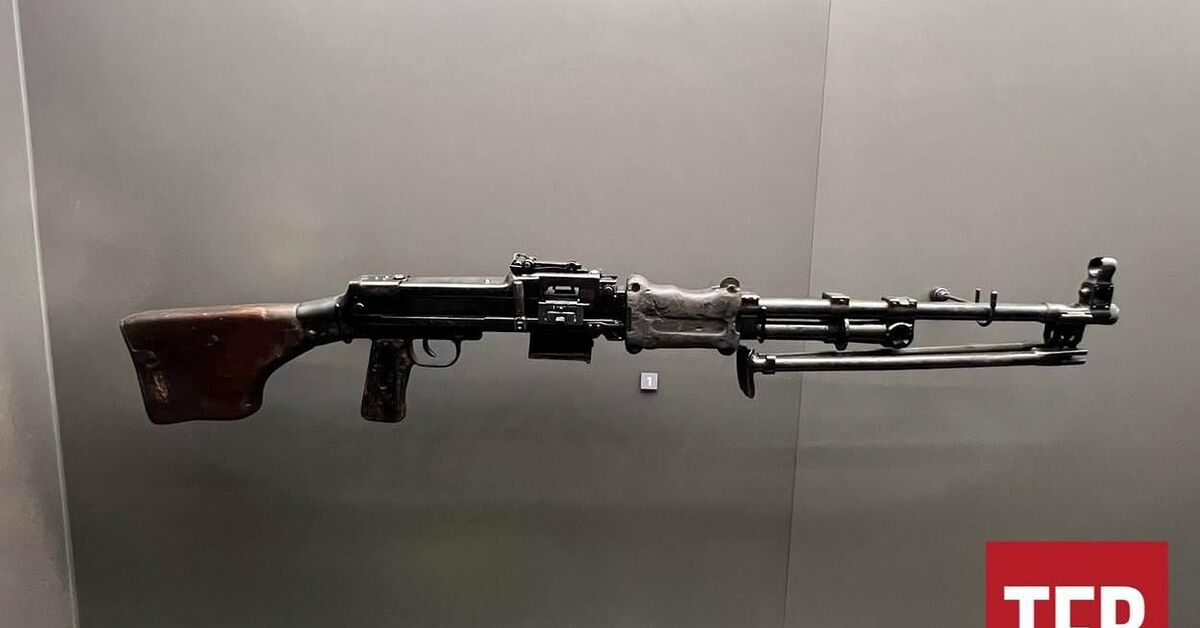
The biggest obstacle to modernizing the Soviet RPD is not the gun. It is the ammunition belt. Lynndon Schooler, an open-source weapons analyst and former US Army infantryman, makes that case in The Firearm Blog, arguing that anyone upgrading the old light machine gun should start with feed components. The RPD entered Soviet service in 1949 alongside the AK and SKS. Its 7.62x39mm chambering and mass-production design spread across Warsaw Pact and client-state armies, and many of those rifles still sit in storage. Schooler's point is simple: a nation with thousands of RPDs and 7.62x39 ammunition can extend service life without buying new guns, but only if the belts work.
Key Details
The source lays out the basic specifications and the modernization problems that come with them. Key points:
- Adoption: The RPD was adopted in 1949, alongside the AK and SKS.
- Development: Soviet planners developed it in the final years of World War II to complement the 7.62x39mm intermediate cartridge, which followed the German 7.92x33mm during the war.
- Feed system: The gun fed from a 100-round belt, carried in 50-round sections in a drum.
- Weight: Roughly 16.3 lbs.
- Successor: The RPK arrived in 1959, prioritizing parts commonality over suppressive fire. The RPD began phasing out in the 1960s.
- Optics history: Original RPDs used iron sights. Later Polish guns received side rails for early night-vision optics.
- Barrel: The RPD has no quick-change barrel. Schooler calls that a minor issue on modern fixed-barrel designs, though he would still prefer one for heat management and clearing squibs or case separations.
- Proposed upgrades: An optics mount on the feed tray cover, a handguard with M1913 rails or M-LOK slots, and a weapon-mounted ammunition pouch holding around 200 rounds.
- Belt wear: Violent action beats belts as the gun feeds, degrading tolerances over time, and rounds shift, causing malfunctions. Schooler says old belts are worn, rusted, and prone to failure. New belts must supplement any new old stock.
Background
The RPD came from a specific postwar requirement. Soviet designers wanted a squad automatic weapon that matched the 7.62x39mm round used in the AK family. That round sat between a full-power rifle cartridge and a pistol cartridge, so it gave the gun useful range without the weight of a full-size rifle machine gun. The RPD used belts instead of magazines, which made it a true light machine gun rather than a rifle with a big magazine. The design prioritized reliability and cheap production over modern convenience. Its era's materials and manufacturing methods shaped every part.
The Soviet army replaced it in the late 1950s. The RPK, adopted in 1959, shared more parts with the AKM rifle and gave up some sustained-fire capability to simplify logistics. The RPD faded from front-line service through the 1960s, but it never disappeared from arsenals. Warsaw Pact and client-state stocks kept it in use for decades, and the gun remains a common sight in conflict zones worldwide.
Why It Matters for Gun Owners
Most American readers will never touch a real RPD. The gun is a machine gun under federal law. Any select-fire RPD in the United States falls under the National Firearms Act, requiring an approved ATF Form 4 transfer and a $200 transfer tax for each transfer. The Hughes Amendment of 1986 closed the civilian machine gun registry to new transfers, so any legal RPD in private hands must trace back to a pre-May 1986 registration. Converting a semi-automatic version to fire automatically without that paperwork is a federal felony under 18 U.S.C. 922(o).
Owners and collectors should watch the parts market. Belts are the weak link, and the source makes clear that replacements are the real bottleneck. Fixed-barrel designs are less of a concern for civilian owners than the feed system. States add their own limits on top of federal law. California and New York both restrict machine guns, accessories, and many features on semi-automatic firearms, so check local statutes before buying or building anything in this family. If you own a legal RPD, inspect belts for wear, rust, and bent links before every range trip.
DownRange Analysis
The Bruen test asks whether a modern gun law fits the nation's historical tradition of firearm regulation. Machine gun restrictions will likely survive that test. Courts have long treated machine guns as unusually dangerous and subject to regulation, and 922(o) has not fallen. The fight that matters for owners is not about the RPD's design. It is about the paperwork and the parts supply.
The market implication is clear. Demand for pre-1986 transferable guns already commands high prices. Anyone chasing a legal RPD should budget for the tax stamp, the wait, and the possibility that parts cost more than the gun. What should a gun owner do now? Start with research. Read the source, verify the registration history of any gun you consider, and talk to an NFA-savvy dealer or attorney before you wire money. Keep belts, feed components, and barrels in mind before you buy the gun.