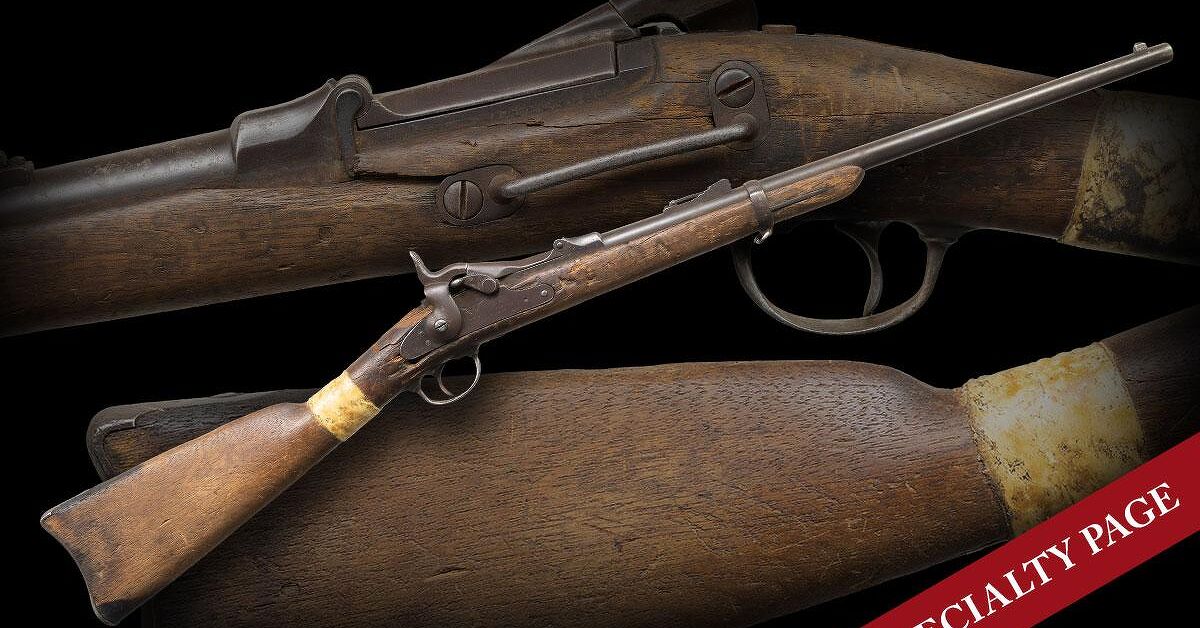
Springfield Trapdoor Dominated Western Frontier Despite Winchester Marketing
The Springfield trapdoor rifle equipped U.S. Army cavalry and infantry units across the frontier—not the Winchester '73 that captured popular imagination. Single-shot design delivered faster practical rate of fire and harder-hitting ballistics than competing repeaters. Government procurement decisions favored the trapdoor's proven reliability and devastating stopping power over magazine-fed alternatives during Western expansion.
Trained marksmen wielding the trapdoor achieved superior combat effectiveness compared to soldiers armed with Winchester and competing repeating rifles. The .45-70 Government cartridge punched through targets with authority that magazine-fed systems couldn't match at engagement distances typical of cavalry operations. Military records and field reports consistently validated the trapdoor's performance during Indian campaigns, proving that ammunition power and shot placement beat round count.
Why It Matters for Gun Owners Today
This history exposes a critical flaw in modern shooting culture: the assumption that higher magazine capacity guarantees combat effectiveness. The Springfield trapdoor proved that shot placement, caliber selection, and operator skill determined outcomes in actual combat. Gun owners chasing magazine capacity or tactical features often miss what actually mattered in the field: reliable systems that deliver hits with authority.
Whether you're evaluating a carry gun, competition rifle, or home-defense setup, the trapdoor lesson applies directly. Slower, harder-hitting, battle-proven systems consistently outperform faster platforms lacking accuracy or stopping power. Government adoption wasn't marketing hype—it was performance validation under real conditions where soldiers faced actual threats. Modern defensive shooters should evaluate their gear using similar criteria: reliability under stress, shot placement capability, and terminal ballistics.
The trapdoor's legacy teaches that you don't need ten rounds if you can place one shot accurately with a caliber that stops threats. Magazine-fed rifles have advantages, but those advantages disappear when the operator can't hit targets consistently or the cartridge lacks stopping authority.
Background on Trapdoor Adoption and Performance
The Springfield model 1873 trapdoor rifle entered service after the Civil War, replacing the Spencer repeating rifle. Despite Winchester marketing efforts positioning repeaters as superior, the military selected the trapdoor based on field-tested performance criteria. Durability, reliability, and ballistic performance in combat conditions trumped magazine capacity in procurement decisions made by officers who understood frontier warfare demands.
Cavalry regiments armed with trapdoors fought effectively against mounted warriors across the Great Plains and Southwest territories. The .45-70 Government round delivered energy and penetration that Winchester .44-40 and competing cartridges couldn't replicate. Officers noted that trapdoor-equipped troops consistently won engagements against repeater-armed adversaries, validating the Army's choice repeatedly through decades of frontier service.
Springfield manufactured trapdoors in multiple variants from 1873 through 1898, producing over 400,000 rifles in total. Many remain in shootable condition today, chambered in the potent .45-70 Government round that remains effective for hunting and target shooting applications.
DownRange Bottom Line
Surplus trapdoor rifles represent exceptional values for shooters who understand historical context and practical ballistics. These .45-70 systems deliver performance that modern shooters often chase with complicated tactical setups costing three times the price. If you're evaluating defensive or hunting rifle systems, remember what the frontier proved: reliability, accuracy, and stopping power beat magazine capacity every time. Buy based on what works, not what marketing claims.