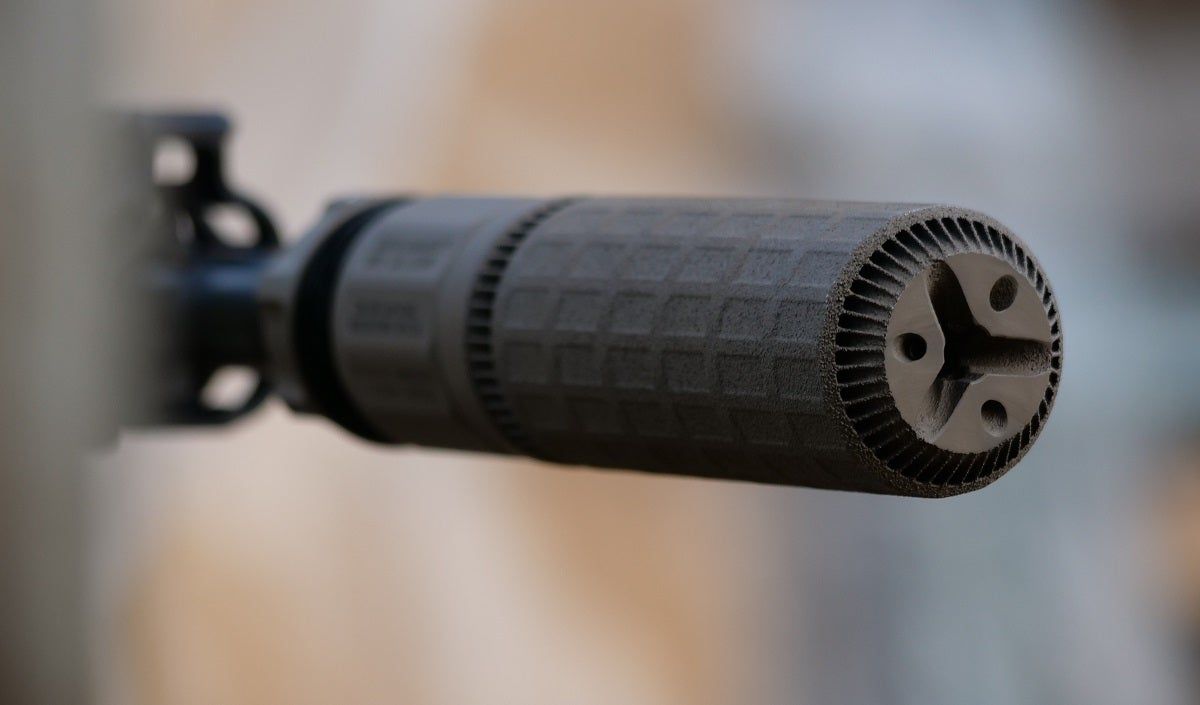
Griffin HRT-556 AM Achieves Low Backpressure Without Suppression Sacrifice
Griffin Armament's HRT-556 AM suppressor cuts backpressure significantly while maintaining suppression levels that match established 5.56 cans. Testing against multiple competitors confirms the claim holds up in real-world conditions.
Low backpressure matters. Less gas cycling back into your rifle means softer recoil impulse, easier shot follow-up, and reduced carrier tilt. For AR carbines, that translates to faster target reacquisition and less wear on bolt carrier groups over thousands of rounds.
The HRT-556 AM measures 6.5 inches long and weighs 8.7 ounces. Titanium construction keeps weight down without sacrificing durability. The suppressor attaches via direct-thread to 1/2-28 muzzles, requiring no additional adapter.
Suppression levels matter too. Firing 5.56 NATO M855A1 rounds through the HRT-556 AM produced 129-131 dB at the shooter's ear position. That puts it competitive with SilencerCo Omega 300, Dead Air Sandman-K, and Surefire RC2 cans. Subsonic .300 Blackout loads dropped to 121-124 dB—genuinely hearing-safe territory for suppressed rifle work.
The test rifle was a 16-inch Colt 6920 with rifle-length gas tube. Same platform across all comparative tests. Backpressure reduction showed measurably. With no suppressor, the rifle cycled at baseline. Adding popular 5.56 suppressors increased bolt thrust and carrier velocity. The HRT-556 AM kept that number down, reducing stress on critical components.
Why It Matters for Gun Owners
Daily carriers and competitive shooters both benefit from lower backpressure. Your AR carbine was designed around a specific gas pressure curve. Adding a suppressor typically increases that pressure, forcing the bolt carrier faster and harder. This accelerates wear.
Lower backpressure means your gun runs closer to original specifications. Shot-to-shot consistency improves. Recoil management gets easier. Magazine changes don't require resetting your hold as aggressively.
Price sits at $549 retail. That positions it between budget options and premium cans from Surefire ($850+) and Dead Air ($700+). For shooters running multiple AR platforms, the direct-thread option means you can move it between rifles without buying additional adapters.
Durability matters. Titanium construction handles sustained fire better than aluminum. Military and law enforcement have proven titanium suppressors outperform lighter materials when shooting high volumes. The HRT-556 AM is rated for full-auto fire despite civilian ownership restrictions—that engineering margin counts for reliability.
Background
Griffin Armament built reputation on gas management. The company's earlier SDS (Sealed Divergent System) technology reduced backpressure through internal baffle design. The HRT-556 AM refines that approach with updated geometry and materials.
Previous Griffin suppressors performed well but carried weight penalties. Users wanted lower backpressure without titanium pricing. The HRT-556 AM addresses that middle ground—titanium strength, competitive price point, and measurably reduced backpressure.
Industry trend shifted toward acknowledging backpressure impact. Years of ignoring it meant AR owners accepted higher bolt velocity as normal. Griffin and competitors now offer legitimate alternatives that prove lower pressure doesn't mean lower suppression.
DownRange Bottom Line
The HRT-556 AM works. Buy one if you run 5.56 AR platforms and want genuine suppression with measurably lower backpressure. The $549 price competes fairly. Titanium durability justifies it. Direct-thread attachment fits most modern barrels without adapters.
Suppressors aren't optional anymore—they're practical. The HRT-556 AM keeps your rifle running right while getting the job done quietly. That's what serious shooters need.